Where to See
Where to See Koalas in the Wild
Compare Raymond Island, Kangaroo Island, Magnetic Island, and the Otways for wild koalas, with access, tours, welfare, fire safety, and conservation context.
Read guide →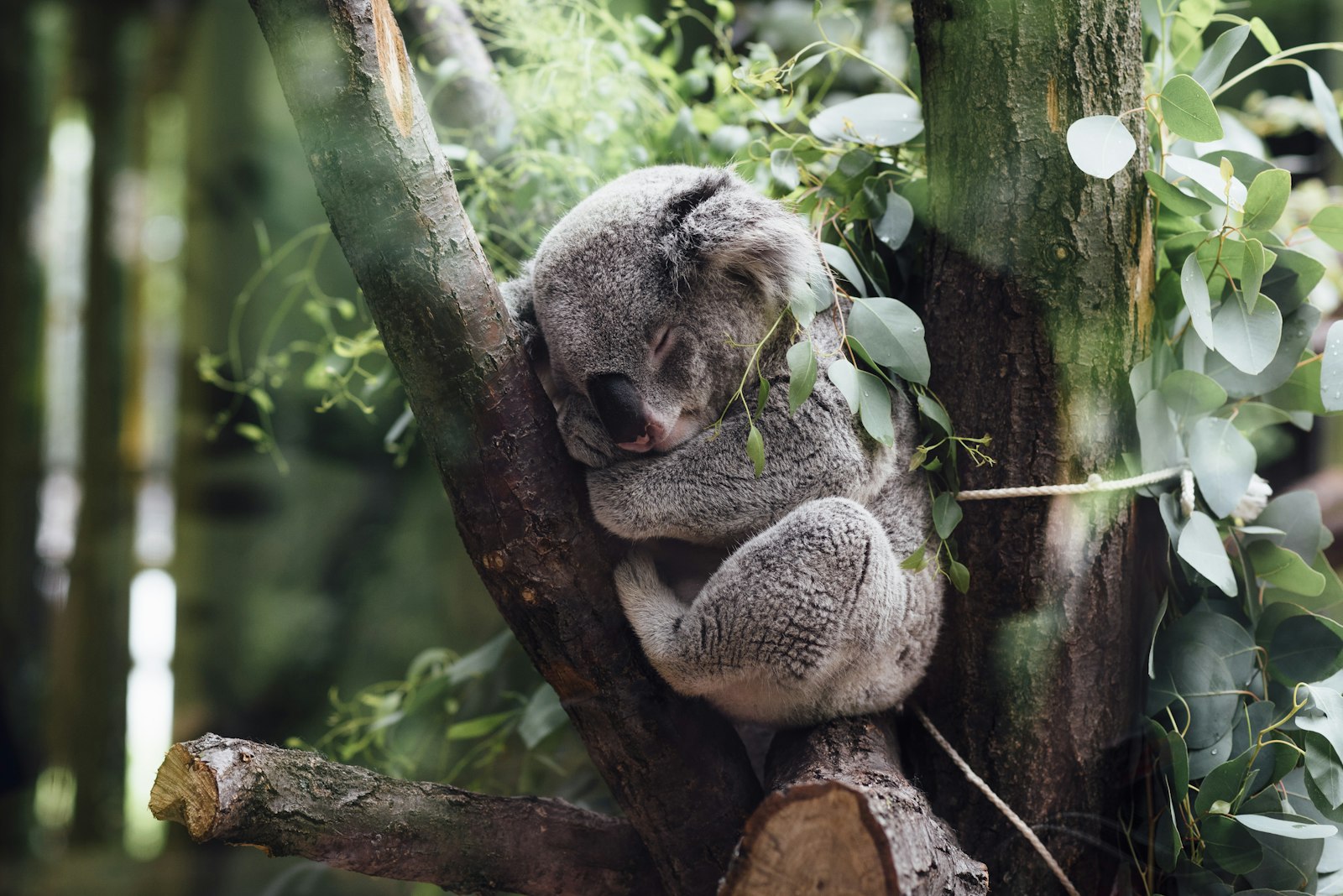
Phascolarctos cinereus
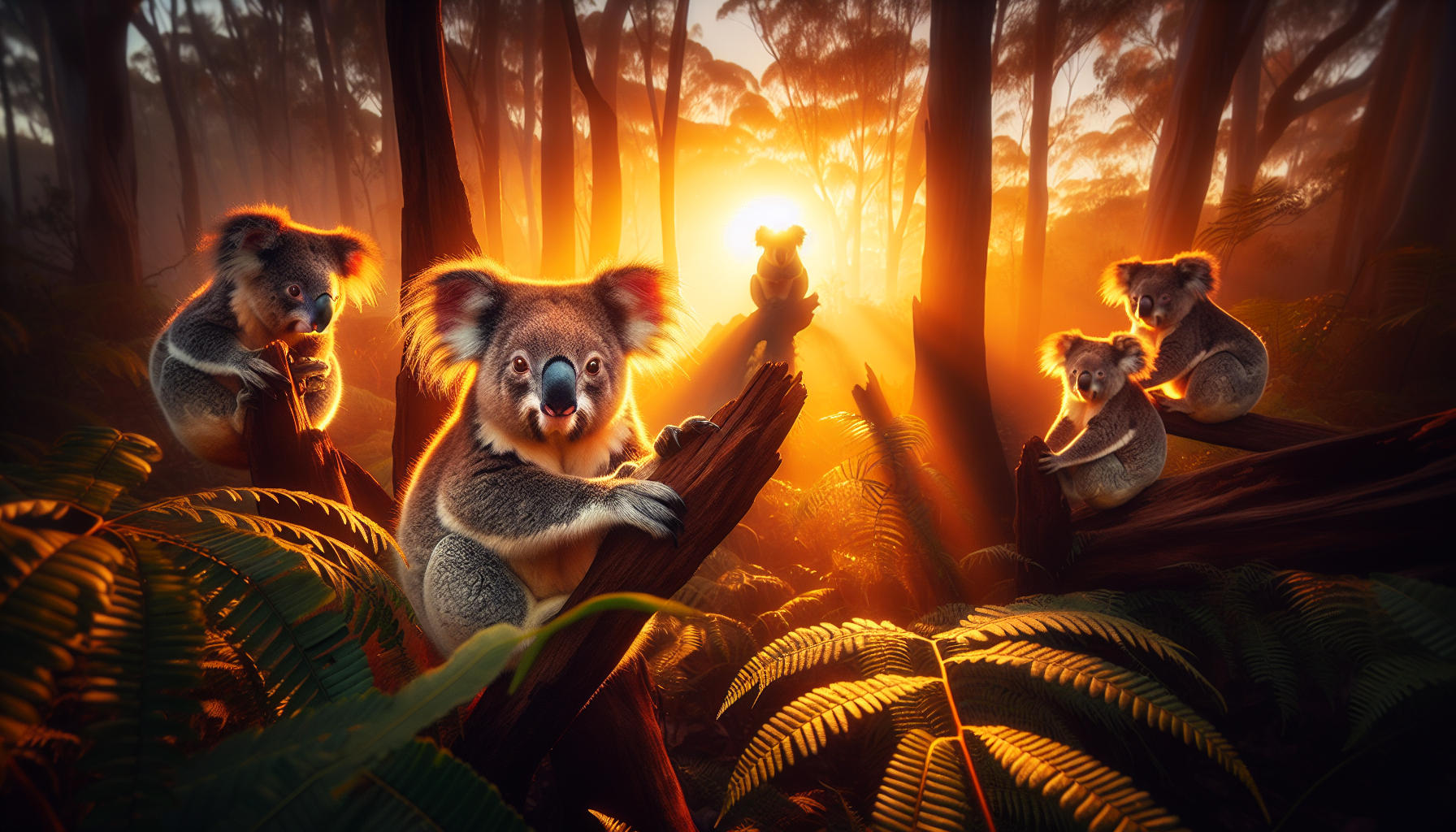
The koala is an Australian tree-dwelling marsupial found in a patchy band of forest and woodland from northern Queensland to south-eastern South Australia. It selects leaves, stems, and flowers from particular eucalypts and spends long periods resting between feeding and movement. The species is globally assessed as Vulnerable, while the combined Queensland, New South Wales, and Australian Capital Territory populations are listed as Endangered under Australian national environmental law. Habitat loss and fragmentation, climate-driven heat and fire, disease, vehicle strikes, and dogs affect regions differently, so one national headline does not describe every local population.
Migration: Not a seasonal migrant. Movement and home-range size vary greatly with habitat quality, sex, age, disturbance, drought, and local tree distribution.
Best time of day: Koalas may rest for long periods and can be active at different times. Plan for safe light and weather, not a promised activity window.
Typical viewing distance: Follow the current park or guide rule and increase space if behaviour changes; remain on the public trail and never touch, feed, offer water, surround, or move a wild koala
Camera settings: Begin around 1/500s for a resting animal or faster for climbing, use continuous autofocus, raise ISO before asking for a closer approach, and carry a manageable telephoto zoom or binoculars
A short public Koala Trail near the Paynesville passenger ferry offers a practical self-guided search. The population is also actively managed because high local density can damage habitat, so visibility is not a simple conservation-success measure.
A multi-day wildlife destination with a free-living koala population introduced in the twentieth century. Pair quiet habitat observation with Seal Bay and Flinders Chase, and check current park, road, weather, and fire alerts.
Koalas may be seen on Queensland Parks walking routes including the Forts Walk. This is part of the nationally Endangered northern population, and a sighting is never guaranteed.
Compare practical destination guides with seasonal timing, travel logistics, other wildlife, tours, and places to stay.
Country guides connect the species with other wildlife, featured places, planning context, and responsible-viewing advice.
Species may rely on several ecosystems across their range. Explore how conditions and conservation pressures differ.
These third-party programmes offer relevant ways to adopt symbolically, foster, donate, or learn. We do not process contributions or receive commission.
A symbolic koala adoption programme whose proceeds support the foundation's work for wild koalas and habitat rather than purchasing or taking custody of an animal.
Review programme →Due DiligenceUnderstand symbolic adoption, verify the organisation, and review current terms and use of funds.
Open the programme directory →Current Viator listings matched to this species. Confirm where the activity operates, its wildlife policy, recent reviews, availability, and cancellation terms before booking.


Only species-relevant partner routes are shown. Confirm the exact location, wildlife policy, availability, current price, and cancellation terms before booking.
These links open third-party searches. Verify the exact operator, route, guide team, wildlife policy, field time, and no-sighting terms.
Search stays only after the gateway and field route are confirmed.
Compare current routes, baggage rules, buffers, and total booking terms.
Check medical, cancellation, activity, altitude, equipment, and evacuation terms for the exact itinerary.
Match equipment to guide advice, distance, weather, baggage limits, and safe handling.
Scan trunks, forks, and outer branches slowly from the public trail. A light telephoto zoom or binoculars can help with animals high in trees, but no focal length justifies leaving the path, surrounding a tree, calling, touching, or asking someone to move a koala.
Never touch, feed, offer water to, move, pose with, or crowd a wild koala. Stay on the public route, keep dogs controlled where permitted, drive slowly in wildlife areas, and back away if the animal changes behaviour. Do not handle an injured koala: use the current state wildlife-rescue or emergency contact. Captive contact rules vary by jurisdiction and venue; legal contact is not the welfare benchmark for a wild-viewing trip.
Use these in-depth guides to compare destinations, timing, costs, photography, and responsible wildlife-viewing choices.
Compare Raymond Island, Kangaroo Island, Magnetic Island, and the Otways for wild koalas, with access, tours, welfare, fire safety, and conservation context.
Read guide →
This guide currently identifies Raymond Island (Australia), Kangaroo Island (Australia), Magnetic Island (Australia). A species range is not automatically a visitor area, so confirm public access, closures, permits, and wildlife rules with the relevant authority before travelling. No wild sighting is guaranteed.
Our species-level planning note is: No universal season; compare local access, heat, fire danger, weather, and animal welfare for your dates. The listed location windows are Raymond Island: Check the live Parks Victoria page, ferry timetable, weather, and fire information; Kangaroo Island: Choose dates for the whole island trip; verify live park and fire conditions; Magnetic Island: Use current Queensland Parks access, heat, weather, and fire advice. Treat these as starting points and verify current weather, access, and local wildlife guidance for the exact destination.
Build a current total from transport, permits or entry fees, guiding or hides, accommodation, insurance, equipment, and enough field sessions for an uncertain sighting. Prices and currencies vary too much by region and date for one daily figure to be reliable; use official booking pages and written operator terms.
Never touch, feed, offer water to, move, pose with, or crowd a wild koala. Stay on the public route, keep dogs controlled where permitted, drive slowly in wildlife areas, and back away if the animal changes behaviour. Do not handle an injured koala: use the current state wildlife-rescue or emergency contact. Captive contact rules vary by jurisdiction and venue; legal contact is not the welfare benchmark for a wild-viewing trip. Local rules and ranger instructions take priority over general advice, and a guide should never manufacture proximity by feeding, calling, chasing, or blocking an animal.
Scan trunks, forks, and outer branches slowly from the public trail. A light telephoto zoom or binoculars can help with animals high in trees, but no focal length justifies leaving the path, surrounding a tree, calling, touching, or asking someone to move a koala. The image is secondary to legal access, safe distance, natural behaviour, and the privacy of sensitive locations.