Wildlife Photography Guide
Expert tips and gear recommendations to help you capture stunning wildlife photos.
Essential Camera Settings for Wildlife
Shutter Speed
Minimum 1/500s for stationary animals. 1/2000s+ for birds in flight or running animals.
Aperture
f/4 to f/8 for sharp subjects with blurred backgrounds. f/2.8 in low-light forest environments.
ISO
As low as possible for quality. Modern cameras handle ISO 1600-3200 well. Don't fear high ISO — a sharp noisy photo beats a blurry clean one.
Recommended Cameras
Our top picks for wildlife photography. Links support this site at no extra cost to you.
Excellent all-round mirrorless for wildlife. 33MP, 10fps burst, superb autofocus.
View on Amazon →APS-C crop gives 1.6x extra reach. 15fps burst. Great value for wildlife.
View on Amazon →Pro-level mirrorless. 20fps, incredible AF tracking. The wildlife dream machine.
View on Amazon →Waterproof action camera for underwater wildlife, boat trips, and POV shots.
View on Amazon →Recommended Lenses
The lens matters more than the camera body for wildlife. Invest here first.
The go-to affordable super-telephoto. Sharp, fast AF, great reach.
View on Amazon →Versatile wildlife zoom with excellent image quality and fast AF.
View on Amazon →Budget-friendly super-telephoto. Good sharpness, lightweight.
View on Amazon →For underwater, landscapes, and environmental animal portraits.
View on Amazon →Binoculars & Optics
Good optics transform wildlife viewing. Essential for spotting distant animals.
The gold standard in binoculars. Crystal clear optics, rugged build.
View on Amazon →Best mid-range binoculars. Excellent optics at a reasonable price.
View on Amazon →Best budget binoculars. Lifetime warranty. Great starter pair.
View on Amazon →Essential for snow leopard treks and distant wildlife observation.
View on Amazon →Additional Gear Tips
Safari / Land-Based Wildlife
- Beanbag: More stable than a tripod in vehicles — rest it on the window frame
- Spare batteries: Cold mornings drain batteries fast. Carry 2-3 spares.
- Memory cards: Minimum 128GB. Burst mode fills cards fast.
Marine / Underwater Wildlife
- Wide-angle lens: 10-20mm for whale sharks, mantas, and reef scenes
- Underwater housing: Camera-specific or use a quality universal housing
- GoPro / action cam: Great backup for quick-deploying underwater shots
- Red filter: Corrects blue colour shift in tropical water
Top Photography Tips
Shoot at Eye Level
Get down to the animal's eye level for the most intimate, engaging photos. This often means shooting from a low vehicle window or lying flat.
Focus on the Eyes
If the eyes are sharp, the photo works. Use single-point autofocus locked on the nearest eye. Animal eye-detect AF is a game-changer.
Patience Over Chasing
Find a waterhole, nest, or known corridor and wait. Animals come to you. Rushing through the bush rarely yields the best photos.
Golden Hours
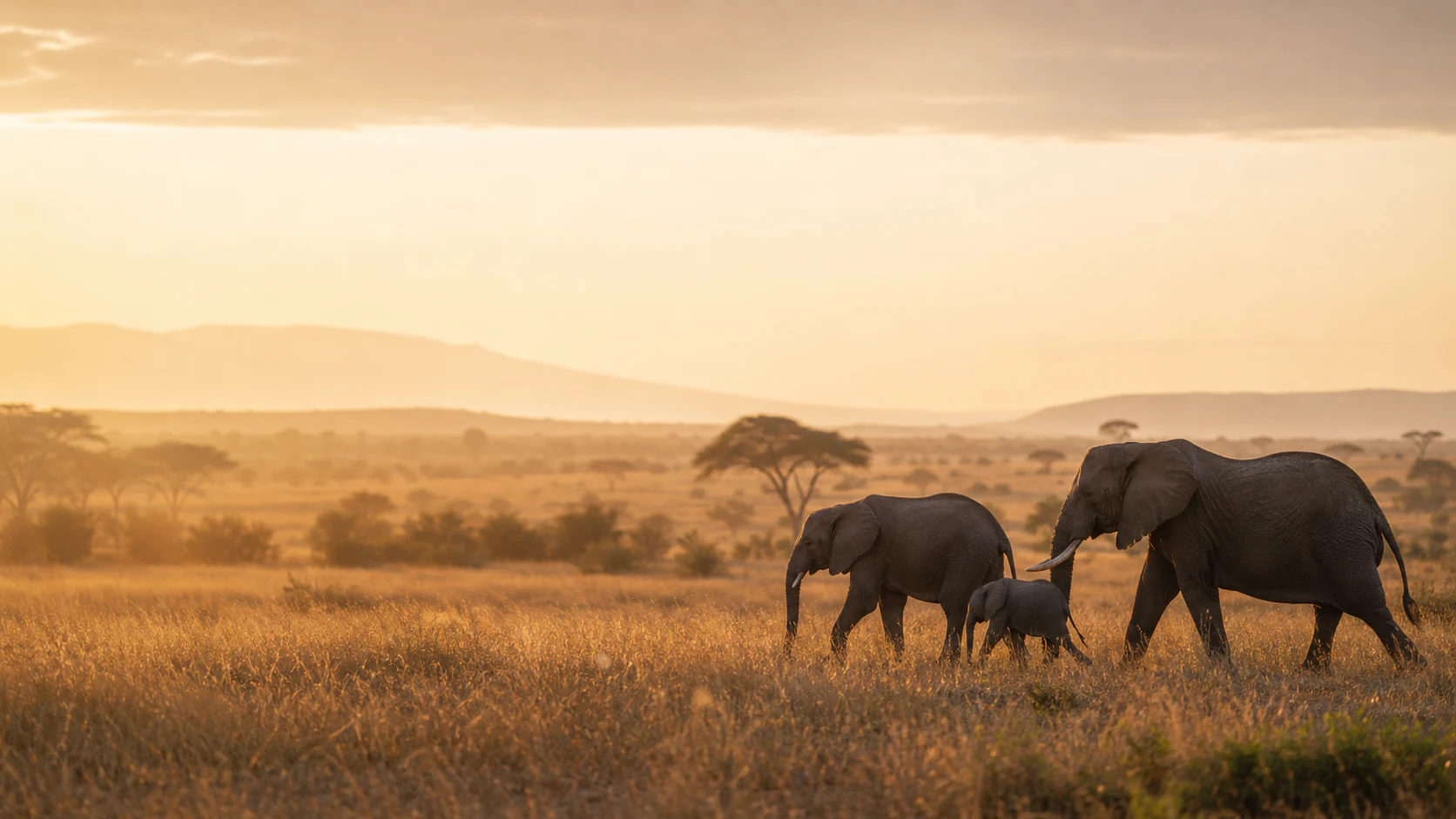
The first and last hours of daylight transform wildlife photos. Warm light, long shadows, and active animals — don't sleep in.