The Ultimate Safari Packing List (2026 Edition)
Packing for a safari is a unique challenge. You need to be prepared for scorching afternoons and chilly mornings, dust storms and sudden rain, long days in a vehicle and walks through the bush — all while staying within airline baggage limits. Pack too much and you'll be lugging unnecessary weight across Africa. Pack too little and you'll be uncomfortable, unprepared, or regretful.
This comprehensive packing list covers everything you need for a safari in Africa or anywhere else, organized by category. We've tested these recommendations across dozens of trips and thousands of game drives.
Clothing
The Golden Rules of Safari Clothing
- Neutral colors only: Khaki, tan, olive, brown, grey, and muted greens. Bright colors can disturb wildlife (and attract tsetse flies, which are drawn to blue and black).
- Layers are everything: Early morning game drives start at 5:30–6:00 AM when it can be near freezing, but by midday temperatures may hit 35°C (95°F). You need to peel layers easily.
- Avoid camouflage: In some African countries (Kenya, Zimbabwe, Tanzania), wearing camouflage is illegal for civilians — it's reserved for military use.
- Quick-dry fabrics: Synthetic or merino wool fabrics that wick moisture, dry quickly, and resist odor are far superior to cotton on safari.
The Essentials
- 3–4 lightweight long-sleeve shirts: SPF-rated fabric is ideal. Long sleeves protect from sun and insects. You can roll them up when it's hot.
- 2–3 pairs of convertible pants/trousers: Zip-off legs that convert from trousers to shorts are incredibly practical. Go for lightweight, breathable fabric.
- 1 pair of shorts: For lodge downtime and warm afternoons.
- 1 warm fleece jacket or softshell: Essential for early morning and evening game drives. Medium-weight is usually sufficient — you're layering, not standing still in winter.
- 1 lightweight rain jacket: Packable and waterproof. Even in the dry season, sudden showers happen. Also doubles as a windbreaker.
- 3–4 sets of underwear: Quick-dry synthetic or merino.
- 3–4 pairs of socks: Merino wool is ideal — it's temperature-regulating, moisture-wicking, and naturally antimicrobial.
- 1 swimsuit: Many lodges have pools, and there may be opportunities for water activities.
- 1 casual evening outfit: Some upscale lodges have a smart-casual dress code for dinner. A clean pair of trousers and a collared shirt are sufficient.
Sun Protection
- Wide-brimmed hat: A must. Choose one that won't blow off in the vehicle — a chin strap or tight fit helps. Tilley-style hats are a safari classic.
- Buff or neck gaiter: Versatile — use as sun protection, dust mask, headband, or warmth layer.
- Sunglasses: Polarized lenses reduce glare significantly, which improves wildlife spotting and reduces eye fatigue. Bring a strap so they don't bounce off in the vehicle.
Footwear
- Sturdy closed-toe walking shoes or lightweight hiking boots: Essential for bush walks, uneven terrain around camps, and general safari use. Break them in before your trip. Ankle support is recommended.
- Sandals or camp shoes: For relaxing at the lodge. Flip-flops work, but a sturdier sandal is safer around camp (thorns, insects).
- Gaiters (optional): For walking safaris in snake-prone areas, lightweight gaiters add a layer of protection.
Camera Gear
Wildlife photography is one of the most rewarding parts of any safari. Here's what to bring:
Essential Camera Equipment
- Camera body: Any modern mirrorless or DSLR camera will work. Fast autofocus and good high-ISO performance (clean images at ISO 3200+) matter more than megapixels.
- Telephoto lens (most important): A 100–400mm or 200–600mm zoom covers the vast majority of safari situations. For budget-conscious photographers, a 70–300mm does well at close range. Prime super-telephoto lenses (500mm, 600mm) are overkill for most safari-goers.
- Wide-angle or standard zoom: A 24–70mm or 24–105mm captures landscapes, vehicles, camp scenes, and close-up animal encounters.
- Extra batteries: Bring at least 2–3 fully charged batteries. Cold mornings and constant shooting drain batteries fast.
- Memory cards: Bring more than you think you need. A 10-day safari can easily produce 5,000–10,000 images. Carry at least 128GB total, spread across multiple cards.
Useful Accessories
- Beanbag: An empty beanbag (fill with rice or beans at your destination) provides stable support for your lens resting on the vehicle door or rail. Far more practical than a tripod in a safari vehicle.
- Lens cleaning kit: Dust is the enemy. Bring a blower, microfiber cloths, and a lens pen.
- Camera rain cover: Protects against sudden rain and pervasive dust. A simple plastic rain sleeve works fine.
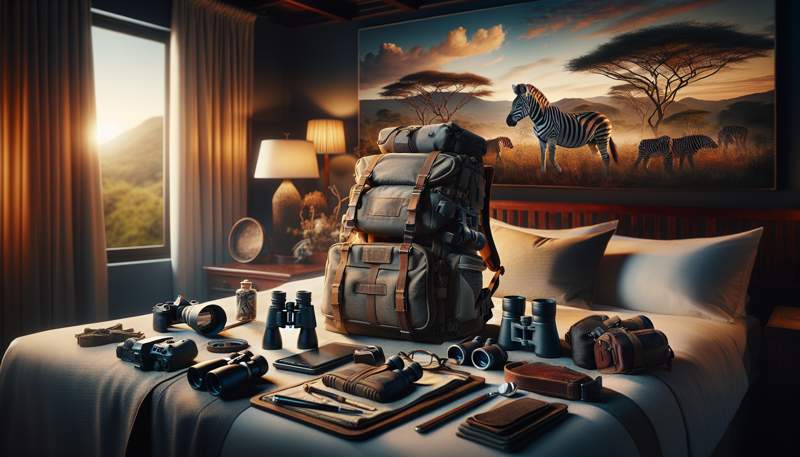
- Binoculars: Even with a telephoto lens, binoculars are essential for spotting distant wildlife. 8x42 or 10x42 are the most versatile magnifications. Don't cheap out here — good glass makes a massive difference. Browse top-rated binoculars on Amazon.
Smartphone users: Modern smartphones take excellent safari photos, especially for closer subjects. Consider a clip-on telephoto lens adapter for extra reach. You'll still want binoculars for spotting.
Health Essentials
Medications
- Malaria prophylaxis: Consult your travel doctor well before departure. Common options include Malarone (atovaquone/proguanil), doxycycline, and mefloquine. Most sub-Saharan African safari destinations are malarial zones.
- Personal prescription medications: Bring more than enough for your trip length, plus extras in case of delays. Keep them in original packaging with a copy of your prescription.
- Basic first-aid kit: Antihistamines (for bites/allergies), anti-diarrheal medication (Imodium), rehydration salts, pain relievers (ibuprofen/paracetamol), antiseptic wipes, adhesive bandages, and blister plasters.
Sun and Insect Protection
- Sunscreen: SPF 50+, broad-spectrum. The African sun is intense, even on cloudy days. Bring a face-specific formula if you're prone to breakouts. Apply liberally and reapply.
- Insect repellent: DEET-based repellent (30–50% concentration) is most effective against mosquitoes. Apply to exposed skin at dawn and dusk. Picaridin-based alternatives are less harsh on skin and synthetic fabrics.
- Permethrin-treated clothing: Pre-treating your safari clothes with permethrin (an insect repellent for fabric) provides excellent additional protection against mosquitoes and ticks. Some safari clothing comes pre-treated.
- Lip balm with SPF: Often forgotten, always needed.
- After-bite cream: Hydrocortisone cream for insect bite relief.
Documents
- Passport: Valid for at least 6 months beyond your travel dates. Check blank pages — some countries require 2–4 blank pages for stamps.
- Visa: Research requirements well in advance. Many African countries offer e-visas or visas on arrival, but some require advance application.
- Vaccination certificate (Yellow Card): Required for yellow fever vaccination in many African countries. Some require it for entry; others only if arriving from an endemic country.
- Travel insurance documents: Comprehensive travel insurance from World Nomads covering medical evacuation is essential for safari destinations. Print a copy of your policy and keep the emergency number accessible.
- Copies of all documents: Photograph or scan your passport, visa, insurance, and itinerary. Store digital copies in cloud storage and carry a printed backup.
- Booking confirmations: Printed copies of flights, accommodation, safari bookings, and transfer arrangements.
Tech and Electronics
- Power bank (20,000 mAh+): Charging opportunities can be limited, especially in tented camps running on solar or generators. A high-capacity power bank keeps your phone, camera, and other devices charged.
- Universal power adapter: Most African countries use Type G (UK 3-pin) or Type C/M (South Africa) outlets. A universal adapter covers all bases.
- Head torch/flashlight: Essential for navigating camp after dark (most safari camps have no streetlights). Red-light mode preserves night vision and is less disturbing to wildlife.
- Phone with offline maps: Download Google Maps or Maps.me offline maps for your region. Cell coverage is surprisingly good in many safari areas, but not reliable.
- Portable hard drive or laptop: For backing up thousands of photos. Don't rely on memory cards alone — they can fail.
- Charging cables: Bring duplicates of every cable you need. Murphy's Law applies on safari.
Miscellaneous Essentials
- Daypack: A small, packable backpack for day trips, walks, and carrying water, camera, and layers.
- Reusable water bottle: Stay hydrated. A 1-liter insulated bottle keeps water cool in the heat.
- Dry bags or zip-lock bags: For protecting electronics and documents from dust, rain, and river crossings.
- Earplugs: Tented camps amplify every sound — hyenas, hippos, and baboons are active at night. Earplugs help light sleepers.
- Small binoculars or monocular: If you're not bringing full-size binoculars, even a compact pair dramatically improves wildlife spotting.
What NOT to Bring
Knowing what to leave behind is just as important as knowing what to pack:
- Bright or white clothing: White gets filthy instantly. Bright colors can alarm wildlife and attract insects.
- Camouflage clothing: Illegal to wear in several African countries.
- Excessive luggage: Many bush flights have strict luggage limits (15–20 kg in soft-sided bags only). Pack light and leave room for souvenirs.
- Hard-shell suitcases: Small bush planes and safari vehicles have limited storage. Soft duffel bags are strongly preferred and often required.
- Expensive jewelry: Unnecessary and a theft risk. Leave it at home.
- Perfume or cologne: Strong scents can attract insects (especially bees and tsetse flies) and may disturb wildlife with a keen sense of smell.
- Drones: Banned in virtually all national parks and game reserves. Don't even bring one — you may have it confiscated at customs.
- Plastic bags: Banned entirely in Kenya, Rwanda, and Tanzania. You'll be asked to surrender them at the airport.
Final tip: Lay out everything you plan to pack, then remove a third of it. Safari veterans consistently say the same thing: you packed too much on your first trip. Lodges offer laundry service, and you'll wear the same few outfits on rotation. Pack light, travel happy.
Ready to gear up? Shop safari essentials on Amazon for everything from quick-dry clothing to camera gear. Then browse safari packages on BookAllSafaris to book the trip of a lifetime. For a luxury experience, Safari.com curates Africa's finest lodges.