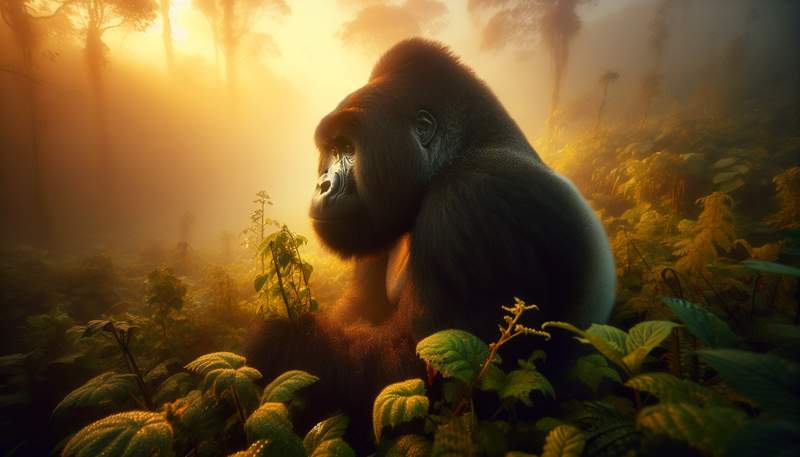
Mountain gorilla trekking is a tightly managed wildlife experience, not an ordinary hike with a guaranteed timetable. The animals move through steep forest, access is controlled through permits, and the rules exist to protect both gorillas and visitors. A good trip therefore starts with the official permit system and works outward into transport, fitness, health, accommodation, and conservation choices.
This guide compares the main planning routes in Uganda and Rwanda, explains where the gorillas live, and shows what to verify before paying anyone. Begin with our mountain gorilla species guide if you want the habitat and conservation background, or use the gorilla trekking experience guide to compare the encounter itself with other guided wildlife trips.
Where can you see mountain gorillas?
Mountain gorillas occur in two forest regions in Central Africa: Uganda's Bwindi landscape and the Virunga Massif shared by Uganda, Rwanda, and the Democratic Republic of the Congo. Visitor access is organised through protected areas rather than through a single cross-border system.
- Uganda: Bwindi Impenetrable National Park and Mgahinga Gorilla National Park. Uganda Wildlife Authority documentation explains that Bwindi has several designated tracking sectors and that permits are tied to a date and entry point.
- Rwanda: Volcanoes National Park. The Rwanda Development Board operates the official online permit process and publishes the current eligibility and booking requirements.
- Democratic Republic of the Congo: the Virunga range extends into the country, but visitor access and security conditions can change. Do not treat an old price list or third-party itinerary as proof that a trek is currently operating. Check the relevant park authority and your government's current travel advice for the exact dates under consideration.
For a closer look at the Uganda landscape, trailheads, seasons, and nearby trip structure, see our Bwindi destination guide. Country-level discovery is available through the Uganda wildlife guide.
Uganda or Rwanda: which trip fits you?
Neither country is universally “better.” The useful comparison is between the complete journeys you can realistically make. Look at permit availability, road time, the park sector, terrain, accommodation geography, guide arrangements, border requirements, and the other wildlife or cultural stops you want to include.
Choose Uganda when the Bwindi itinerary fits
Uganda offers tracking through Bwindi and Mgahinga. In Bwindi, the sector matters because it affects the correct approach road and sensible place to stay. The Uganda Wildlife Authority tracking guidelines describe the official management framework, including permit dates and entry points. Read the current version before booking, because operating rules and fees can change.
Ask a prospective operator to name the sector on the permit, the planned transfer times, who holds the booking, and what happens if a flight or road delay causes you to miss the reporting time. A vague promise of “Bwindi gorillas” is not enough to design the rest of the trip.
Choose Rwanda when Volcanoes National Park fits
Rwanda's official route is the Rwanda Development Board booking system. Its current gorilla tracking page publishes permit availability, the live fee, identification requirements, and eligibility rules. Use that page as the source of truth instead of a cached tour-company article.
Rwanda may suit an itinerary centred on Kigali and Volcanoes National Park, but “easier” should never be assumed. The animals' location, weather, mud, altitude, and individual mobility all affect the day. Ask about the briefing point, drive time from your accommodation, walking support, and how the team handles a guest who needs a slower pace.
Treat DRC planning as a separate decision
Do not choose a country by comparing permit prices alone. In eastern DRC, current access and security must be established independently for the intended travel dates. If official park operations or government advice do not support the trip, an old web page, social post, or tour listing is not a substitute. Uganda and Rwanda also require current checks; the point is to make the decision from live official information rather than evergreen-sounding copy.
How to book a gorilla permit safely
- Choose the country and realistic travel dates. Include arrival buffers and ground-transfer time before committing to a trek day.
- Check the official authority first. Confirm live availability, fee, age or identification rules, and the authorised booking route.
- If using an operator, verify the permit details in writing. Ask whose name appears on it, which date and sector it covers, when it will be issued, and which refund or amendment terms apply.
- Build accommodation around the permit. In a multi-sector destination such as Bwindi, a lodge that looks nearby on a broad map may be impractical for your assigned starting point.
- Keep copies of confirmations and identification requirements. The name supplied during booking should match the travel document you intend to carry.
Fees and conditions are especially vulnerable to becoming stale. Our gorilla trekking cost guide explains the full budget structure—permit, transfers, accommodation, guide, porter, equipment, insurance, and contingency—without pretending that one historical quote applies to every traveller.
How difficult is the trek?
The honest answer is that the day is variable. Mountain forest can be steep, wet, uneven, and slippery. The tracking team follows the gorillas' current location, so no responsible planner can promise a precise walking time or difficulty level in advance. Weather and recent movement can turn two departures from the same area into very different walks.
Train for sustained uphill and downhill walking rather than speed. Practise in the boots you plan to wear and carry a small daypack. Tell the organiser about mobility limitations before the permit is booked, then ask what assistance may be available at the chosen entry point. Porters can help with equipment and difficult ground where the local system permits, but confirm arrangements and payment locally instead of relying on an old online amount.
Anyone with a heart, respiratory, balance, or other condition that could affect a strenuous remote hike should seek individual medical advice. A blog cannot determine whether the trek is suitable for you.
When should you go?
Gorilla tracking can operate across different seasons, but a simple “best month” answer hides the tradeoffs. Relatively drier periods may make trails less muddy and can attract stronger demand. Wetter periods can bring more difficult footing and rain, while forest weather remains possible at any time. Permit availability, route condition, cloud, and accommodation can matter as much as an average rainfall chart.
Use the Bwindi month-by-month planner as a starting framework, then check the latest park and operator information for the precise sector. If your schedule is inflexible, prioritise a workable permit and transfer plan over a claim that one week offers perfect conditions.
What to pack
- broken-in walking boots with grip and ankle support;
- long trousers, long sleeves, and layers that can handle vegetation and changing temperature;
- a waterproof outer layer and protection for documents and electronics;
- a small, comfortable daypack, water, and food as instructed by the organiser;
- any personal medication, carried according to professional advice;
- binoculars or a camera that lets you observe without moving closer; and
- spare batteries or a power bank, because charging may be limited.
Do not buy a long equipment list before checking what the lodge, operator, porter, or park team provides. Our Bwindi packing checklist separates essentials from optional photography and comfort items.
Health and responsible viewing rules
Close genetic similarity makes disease precautions a core part of gorilla tourism. Follow every ranger instruction about illness, face coverings, food, distance, group movement, and encounter duration. If you develop symptoms, report them honestly to the organiser; a permit is not permission to put a gorilla group at risk.
Entry requirements, vaccination guidance, outbreaks, and medicine recommendations can change and depend on the traveller. Review an official destination page such as the CDC Rwanda traveller guidance, check your own government's advice for every country on the route, and consult a qualified travel-health professional in time to act on personalised recommendations. Do not use this article as medical advice.
During the encounter, the ranger's briefing overrides photography ambitions. Never move closer for a cleaner frame, use food or sound to provoke a response, block an animal's route, or conceal illness. If a gorilla moves toward the group, stay calm and follow the guide instead of improvising.
Does a trek support conservation?
A permit places your visit inside a managed protected-area system, but that does not make every related purchase automatically beneficial. Ask how park fees are handled, whether local guides and porters are employed on clear terms, how accommodation affects nearby communities, and what conservation claim can be verified in a public report.
If you want to contribute without travelling—or add support beyond the trip—compare independently verified projects in our gorilla conservation support guide. Sponsorship and adoption products should explain that they fund an organisation's wider work; they do not buy or confer ownership of an individual wild animal.
A practical decision checklist
- Is the permit available through the current official system?
- Do the permit date, traveller name, country, and Uganda sector match the itinerary?
- Are road transfers and arrival buffers realistic?
- Can the operator explain terrain support, porter arrangements, and illness rules?
- Have you checked current entry, security, and health advice for every border crossed?
- Are cancellation, amendment, and refund terms written down?
- Does the operator avoid guarantees about trek duration, proximity, or animal behaviour?
The strongest plan is not the one with the most dramatic promise. It is the one built around a valid permit, current official advice, realistic physical preparation, and rules that give the gorillas room to remain wild.