Where to See
Where to See Iberian Lynx in the Wild
Compare public Iberian lynx viewing regions in Spain and Portugal, seasons, fieldcraft, guide and hide questions, access rules, and conservation etiquette.
Read guide →Lynx pardinus
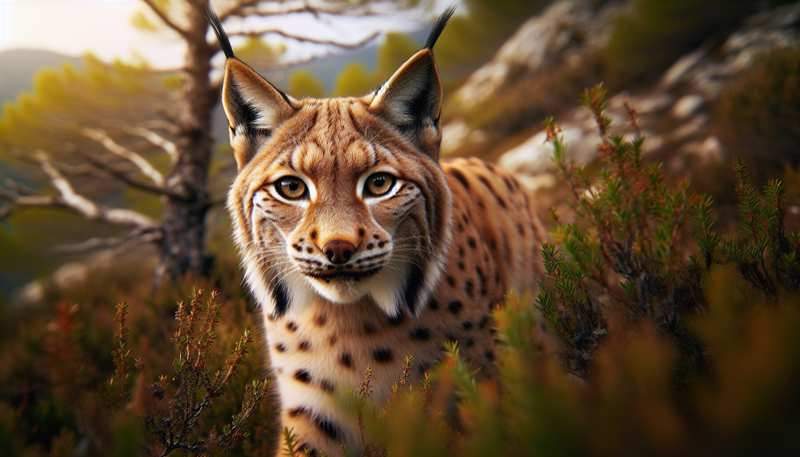
The Iberian lynx is a rabbit-specialist wild cat endemic to Spain and Portugal. Sustained habitat work, threat reduction, captive breeding, and reintroduction have supported a major recovery from fewer than one hundred wild individuals early this century. The IUCN now assesses the species as Vulnerable globally, while continued protection remains essential.
A public Mediterranean-forest landscape supporting an important lynx population, with official visitor information and locally guided viewing.
A protected mosaic of scrub, woodland, dunes, and wetland with designated visitor centres, trails, and guided routes; a wild sighting is never assured.
A reintroduction landscape with a breeding population and public protected-area routes around Mértola; monitoring and release locations are not visitor targets.
Country guides connect the species with other wildlife, featured places, planning context, and responsible-viewing advice.
Species may rely on several ecosystems across their range. Explore how conditions and conservation pressures differ.
These third-party programmes offer relevant ways to adopt symbolically, foster, donate, or learn. We do not process contributions or receive commission.
An official programme page explaining LPN's long-term work to conserve and manage suitable Mediterranean habitat for the Iberian lynx in Portugal, with links to the organisation's support options.
Review programme →Due DiligenceUnderstand symbolic adoption, verify the organisation, and review current terms and use of funds.
Open the programme directory →Current Viator listings matched to this species. Confirm where the activity operates, its wildlife policy, recent reviews, availability, and cancellation terms before booking.


Use binoculars or a long lens from a public viewpoint, marked route, or responsibly managed hide. Never approach, call, bait, follow, or publish sensitive breeding locations.
Observe only from legal public access, marked routes, viewpoints, or responsibly managed hides. Drive slowly in lynx country, follow closures and staff instructions, and never disclose dens, dependent young, release sites, or live tracking data.
Use these in-depth guides to compare destinations, timing, costs, photography, and responsible wildlife-viewing choices.
Compare public Iberian lynx viewing regions in Spain and Portugal, seasons, fieldcraft, guide and hide questions, access rules, and conservation etiquette.
Read guide →This guide currently identifies Sierra de Andújar Natural Park (Spain), Doñana Protected Area (Spain), Guadiana Valley (Portugal). A species range is not automatically a visitor area, so confirm public access, closures, permits, and wildlife rules with the relevant authority before travelling. No wild sighting is guaranteed.
Our species-level planning note is: Cooler months are commonly used for patient viewing; check current access and local guidance. The listed location windows are Sierra de Andújar Natural Park: Check current park access; Doñana Protected Area: Check current park access; Guadiana Valley: Check current park access. Treat these as starting points and verify current weather, access, and local wildlife guidance for the exact destination.
Build a current total from transport, permits or entry fees, guiding or hides, accommodation, insurance, equipment, and enough field sessions for an uncertain sighting. Prices and currencies vary too much by region and date for one daily figure to be reliable; use official booking pages and written operator terms.
Observe only from legal public access, marked routes, viewpoints, or responsibly managed hides. Drive slowly in lynx country, follow closures and staff instructions, and never disclose dens, dependent young, release sites, or live tracking data. Local rules and ranger instructions take priority over general advice, and a guide should never manufacture proximity by feeding, calling, chasing, or blocking an animal.
Use binoculars or a long lens from a public viewpoint, marked route, or responsibly managed hide. Never approach, call, bait, follow, or publish sensitive breeding locations. The image is secondary to legal access, safe distance, natural behaviour, and the privacy of sensitive locations.