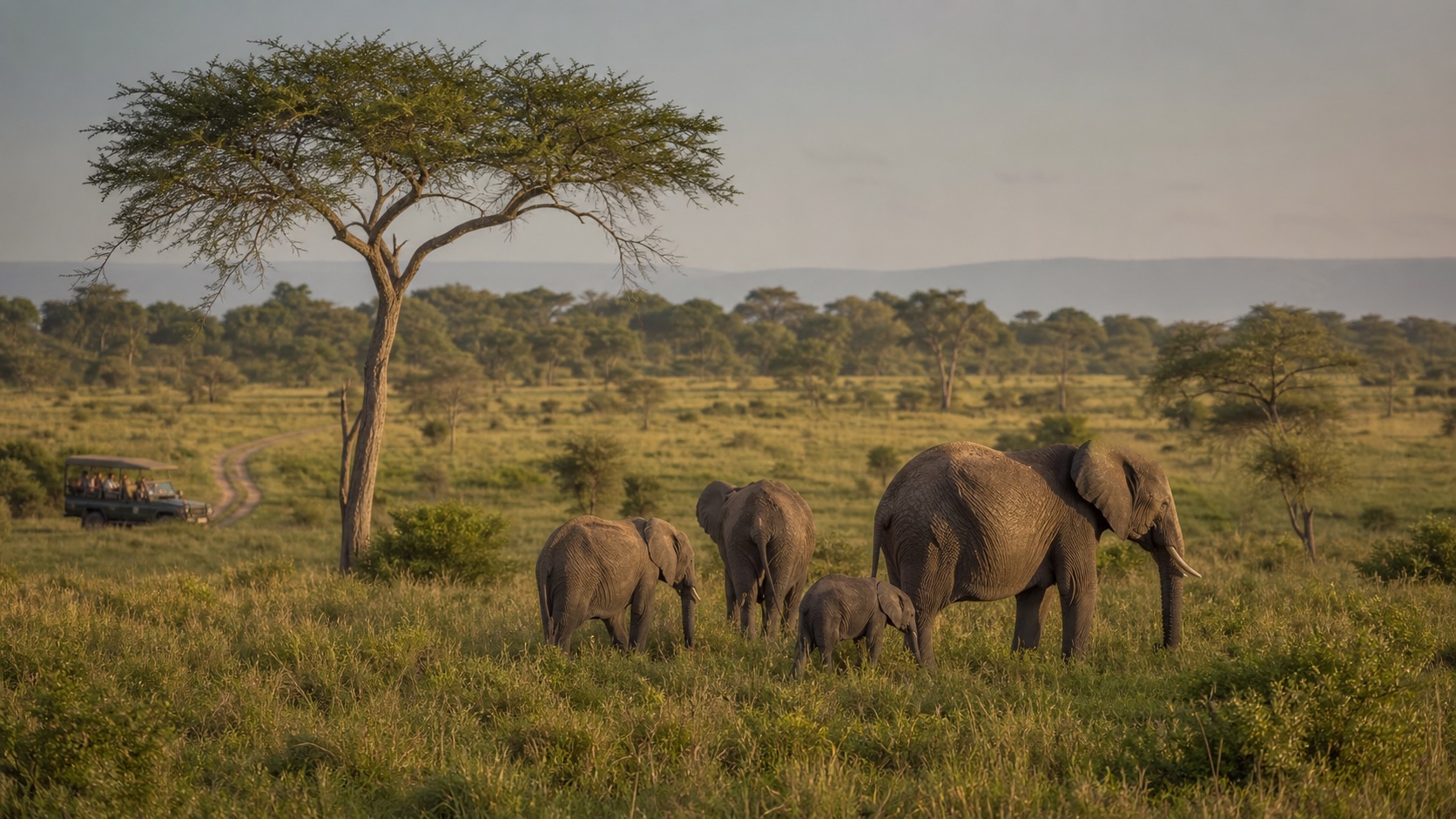
Ethical wildlife tourism is not a label you can confirm from a green badge, an emotional rescue story, or a high price. It is a set of choices: whether an encounter changes an animal's behaviour, whether local rules are followed, whether captive animals can avoid visitors, whether conservation claims can be checked, and whether communities have a meaningful role in the tourism around them.
This guide provides a practical way to screen wild tours, marine trips, sanctuaries, rescue centres, and zoos before you book. It cannot certify an individual operator. Conditions and ownership can change, so use the questions below alongside current information from the relevant park authority, wildlife regulator, recognised accreditation body, and conservation organisation.
Start with the animal, not the photograph
The most useful first question is: what must happen to the animal for this experience to be delivered? Watching an undisturbed animal at distance is fundamentally different from guaranteeing a cuddle, ride, feeding session, selfie, performance, or close pass. A promise of physical contact usually requires restraint, training, food conditioning, breeding for visitor supply, or repeated exposure to crowds.
Ethical does not always mean “no people nearby.” Rangers may manage habituated primate visits, researchers may handle animals under permits, and qualified carers may need contact during treatment. The distinction is purpose, control, welfare assessment, and whether the activity is staged for ordinary visitor entertainment.
Use our wildlife experience finder to understand how different trip types work, then research the exact rules for the species and protected area. If you are still choosing a destination, the wildlife trip builder can connect target animals with realistic places and seasons without treating a sighting as guaranteed.
Responsible wildlife viewing in the wild
Distance is species- and place-specific. Do not copy one number from a different park or use the absence of a sign as permission to move closer. The US National Park Service advises visitors to give wildlife room, use binoculars or zoom lenses, and back away when an animal changes its behaviour. Its wildlife-watching guidance also makes clear that feeding, touching, teasing, frightening, or intentionally disturbing animals is not acceptable.
Watch for displacement, alarm calls, defensive posture, repeated vigilance, interrupted feeding, separation of adults and young, or an animal changing direction because of people or vehicles. Those are reasons to increase distance or leave, not opportunities for a more dramatic image. A guide should be willing to abandon a sighting when the animal's response or local rule requires it.
- Stay on authorised roads, trails, hides, and viewing areas.
- Never use food, recorded calls, whistles, clicks, lights, drones, or sudden movement to manufacture a response unless an authorised protocol explicitly permits it.
- Do not surround an animal, block an escape route, split a family group, or compete with other vehicles for the closest position.
- Keep food and waste secured and follow biosecurity rules between habitats.
- Share sensitive location data only when a park or conservation programme says it is safe to do so.
A responsible operator should brief guests before the encounter, enforce the rules when a customer objects, and describe sightings as possible rather than guaranteed. Discover lower-friction local options through wildlife near me, but apply the same checks to a nearby boat trip or hide as you would to an international safari.
Marine tours need their own checks
Whales, dolphins, turtles, seals, sharks, and other marine animals face pressure from vessel speed, noise, repeated approaches, swimmers, and blocked travel paths. Rules vary by country, species, and season. The US National Oceanic and Atmospheric Administration's marine-life viewing guidance tells viewers not to chase, encircle, leapfrog, touch, or otherwise force interaction, and to leave when behaviour indicates disturbance.
Before booking, ask how many boats the operator will approach at once, what approach angle and speed it uses, how it responds when animals change direction, whether swimming is legal for that species and site, and who has authority to end the encounter. “The animal chose to approach” is not a complete policy if the vessel first chased or boxed it in.
How to evaluate sanctuaries and rescue centres
The words sanctuary, rescue, and rehabilitation are not proof of welfare. A credible facility should be able to explain where each animal came from, why it cannot currently live in the wild, which authority licenses the work, what veterinary and behavioural care exists, and what happens to animals that cannot be released.
Look beyond the public tour:
- Visitor contact: Can animals retreat from view? Are touching, bathing, riding, walking with predators, or baby-animal selfies sold as routine activities?
- Breeding: If breeding occurs, is it part of a documented conservation programme, or does it continually produce young animals for contact sessions?
- Release claims: Is there a published protocol, suitable habitat, government permission, post-release monitoring, and evidence of actual outcomes?
- Lifetime care: What happens when an animal becomes older, less photogenic, or unsuitable for display?
- Governance: Are legal status, leadership, annual reports, finances, and partner organisations visible and independently checkable?
A genuine rescue may decide that release is unsafe, and a credible rehabilitation centre may restrict public access entirely. Neither outcome is automatically a failure. The problem is presenting visitor entertainment as treatment or claiming that every ticket directly saves wild populations without evidence.
How to assess zoos and aquariums
Captive wildlife decisions require more detail than a blanket “all good” or “all bad.” Start with current accreditation in the facility's own region, but do not stop there. Check enclosure complexity, choice and retreat space, social grouping, enrichment, veterinary provision, staff expertise, breeding purpose, transfers, public-contact policy, conservation work, and transparency when welfare problems occur.
Our zoo and wildlife park directory is a discovery tool, not a universal endorsement. Follow the official facility link, confirm opening and accreditation status, read recent regulator or accreditor information, and decide whether the specific institution meets your standard. Marketing claims such as “world-class,” “natural,” or “conservation zoo” are not evidence on their own.
Questions to ask a wildlife tour operator
- Which authority permits this activity? Ask for the licence category or park concession, then verify it independently.
- What are the encounter rules? Get the distance, group size, duration, route, photography, feeding, touching, and illness policies before paying.
- What happens if wildlife does not appear? A responsible answer explains uncertainty and refund terms without promising that guides will chase or bait animals.
- How are guides trained and employed? Ask about wildlife knowledge, first aid, safeguarding, local employment, pay structure, and authority to stop unsafe guest behaviour.
- Where does the conservation contribution go? Request the recipient's legal name, amount or calculation, recent report, and evidence of transfer.
- How are communities involved? Local ownership, decision-making, access rights, procurement, and employment matter more than a vague statement that tourism “helps locals.”
- How are complaints and incidents recorded? Good systems do not depend on every trip being portrayed as perfect.
Save the operator's answers, cancellation terms, and wildlife policy. If a marketplace listing conflicts with the operator or park authority, resolve the discrepancy before booking.
Red flags that justify walking away
- guaranteed touching, holding, riding, feeding, or selfies with wild or dangerous animals;
- young animals continually available for visitor contact with no credible explanation of their mothers or adult future;
- performances based on unnatural tricks, punishment, fear, or forced posing;
- guides who bait, chase, crowd, call, or block animals to satisfy a shot list;
- claims that an activity is ethical solely because animals are not visibly chained;
- conservation percentages with no named recipient, accounts, or public outcome reporting;
- “release” claims without permits, habitat assessment, or monitoring;
- pressure to ignore park rules because the guide says everyone does it; and
- reviews celebrating rule-breaking as an exclusive encounter.
One red flag does not always reveal the whole organisation, but it is a reason to pause and investigate. Multiple evasive answers are themselves useful evidence.
Does tourism automatically fund conservation?
No. Tourism can finance protected-area management, create livelihoods connected to habitat, and build public support, but it can also concentrate disturbance, exclude residents, leak revenue out of a region, or reward spectacle. The IUCN World Commission on Protected Areas' tourism and visitor-management guidance treats visitor use as something that must be planned and managed, not as an automatic conservation benefit.
Look for evidence at three levels:
- Animal and habitat: monitoring, disturbance limits, ranger capacity, waste controls, and measurable conservation objectives.
- Community: meaningful participation, fair employment, local purchasing, benefit sharing, and a route for residents to raise concerns.
- Organisation: named partners, current financial reporting, specific projects, independent governance, and honest reporting of setbacks.
If you want to support work beyond a visit, start with our conservation hub and verified support directory. An animal adoption or sponsorship normally funds a programme rather than purchasing care for one personally owned animal; credible organisations explain that distinction.
Reduce the wider footprint of the trip
Animal welfare at the viewing point is only part of the impact. Consider the number and length of flights, ground transport, water use, waste systems, food sourcing, accommodation footprint, and whether a short visit creates excessive pressure on a sensitive site. Staying longer in one region can sometimes reduce repeated transfers and keep more spending local, but the best option depends on the actual journey.
Avoid treating carbon-offset language as proof that a trip has no climate impact. Ask what emissions are measured, what reduction happened before offsetting, which standard and project are used, and whether claims are independently verified. A precise-looking “carbon neutral” badge without that information is marketing, not a planning answer.
A two-minute ethical booking test
- Can the animal choose distance, retreat, or not participate?
- Would the experience still work without touching, feeding, chasing, or provoking behaviour?
- Are current rules visible before purchase and enforced during the trip?
- Can licences, accreditation, conservation recipients, and impact claims be checked elsewhere?
- Are sightings described honestly as uncertain?
- Do local people have more than low-paid, seasonal roles?
- Is there a clear answer about where captive animals come from and where they go?
- Would you be comfortable if every visitor behaved the way the operator encourages?
If the evidence is incomplete, wait, ask more questions, or choose a different experience. Missing one wildlife encounter is better than paying for a system that depends on stress, deception, or avoidable disturbance.