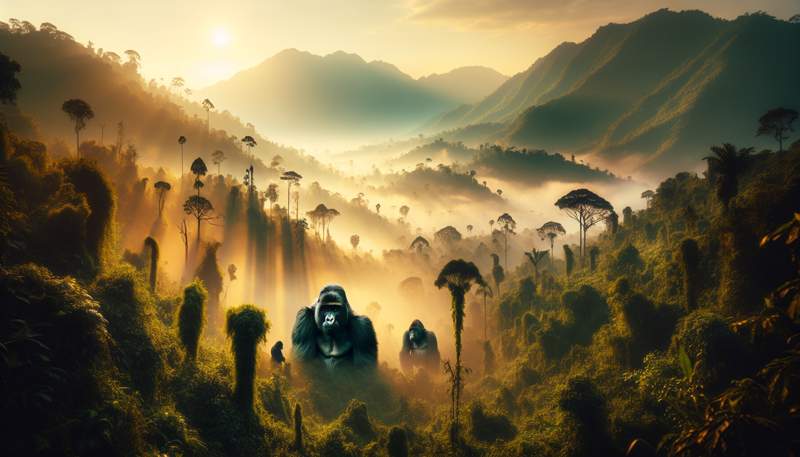
Is Bwindi Impenetrable Forest Safe?
Bwindi is safe for gorilla trekking when you follow UWA (Uganda Wildlife Authority) guidelines. Uganda has a stable tourism sector, and gorilla trekking is closely managed with armed ranger escorts. The main risks are the physical demands of the trek itself — steep, slippery trails at altitude — and tropical health considerations. The region near the DRC border has occasional security concerns.
Safety Assessment
Detailed breakdown of risks for visitors to Bwindi Impenetrable Forest
Wildlife Safety
🟡 Medium RiskMountain gorillas are habituated to human presence but are still wild animals. Maintain a minimum 7-metre distance at all times. If a silverback charges (rare), crouch down and avert your gaze. Never use flash photography. You must be healthy — gorillas can catch human diseases, and anyone with cold/flu symptoms will be turned away.
Health Risks
🟡 Medium RiskMalaria is present in the lower-altitude areas around Bwindi. The high altitude (up to 2,600m) can cause mild altitude sickness. Physical fitness is required for the trek, which can last 1–8 hours on steep, muddy terrain. Dehydration and exhaustion are the most common issues. Carry hand sanitiser — required before approaching gorillas.
Crime & Security
🟡 Medium RiskThe gorilla trekking areas are well-patrolled by UWA rangers. Bwindi is near the DRC (Congo) border, and there have been isolated security incidents in the past, though these are extremely rare. UWA provides armed ranger escorts for all treks. Kampala has typical big-city petty crime risks.
Transport Safety
🟡 Medium RiskThe drive from Kampala to Bwindi takes 8–10 hours on increasingly rural roads. Domestic charter flights to Kihihi airstrip are a safer, faster alternative. Roads near Bwindi are steep and can be treacherous in the rain. Hire an experienced local driver if self-driving.
Weather Hazards
🟡 Medium RiskRain is possible year-round at Bwindi — the "impenetrable" name comes partly from the wet conditions. Trails become extremely muddy and slippery after rain. Temperatures drop with altitude; hypothermia is possible if you're caught unprepared in a cold rain at 2,500m. Dry seasons (June–September, December–February) offer the best conditions.
Water Safety
🟡 Medium RiskTap water is not safe to drink — use bottled or treated water only. River water should never be consumed without purification. Bilharzia (schistosomiasis) is present in some Ugandan waterways — avoid wading in freshwater.
📞 Emergency Numbers
Save these numbers before your trip
| Service | Number |
|---|---|
| Uganda Emergency | 999 / 112 |
| Police | 999 |
| UWA Emergency | +256 414 355 000 |
| International Hospital Kampala | +256 312 200 400 |
💉 Recommended Vaccinations
Consult your travel doctor at least 6 weeks before departure
🛡️ Travel Insurance
Travel insurance with helicopter evacuation coverage is critical — Bwindi is extremely remote, and trails are not accessible by vehicle. The nearest decent hospital is in Kampala (8–10 hours by road). World Nomads and SafetyWing both cover gorilla trekking activities.
Get a Quote from World Nomads →Is Bwindi Impenetrable Forest Safe? FAQ
Bwindi is safe for tourists. Gorilla trekking is conducted with armed ranger guides, and lodges have good security measures.
Yellow fever vaccination is required for Uganda. Hepatitis A, typhoid, and meningitis vaccinations are also recommended. Always consult your doctor or a travel health clinic at least 6 weeks before departure.
Malaria risk exists around Bwindi, though it is lower at higher altitudes. Antimalarial prophylaxis is strongly recommended. Use insect repellent at dawn and dusk.
Solo travellers are welcome and safe. Gorilla trekking is done in groups of up to 8, so you will always have companions on the trail.