Photographing big cats on safari is the holy grail for wildlife photographers. Lions, leopards, and cheetahs are charismatic, powerful, and endlessly photogenic, but capturing truly exceptional images requires more than just a long lens and luck. This guide shares expert techniques for camera settings, vehicle positioning, behaviour prediction, and creative approaches that separate portfolio-worthy shots from tourist snapshots.
Camera Settings for Big Cat Photography
The Basics
Before diving into advanced techniques, nail these fundamental settings:
- Shooting mode: Aperture priority (Av/A) for portraits and resting cats; Shutter priority (Tv/S) for action and movement
- Autofocus mode: Continuous AF (AI Servo for Canon, AF-C for Nikon/Sony) for any moving subject
- AF point selection: Use eye-detection AF if your camera supports it. If not, use a single point or small group focused on the cat's nearest eye
- Drive mode: High-speed continuous for action; single shot for portraits
- Metering: Evaluative/matrix for most situations; spot metering for backlit subjects
Settings by Scenario
Cat Portrait (Resting, Alert, or Yawning)
Aperture: f/4-5.6 to isolate the subject from the background. ISO: as low as possible while maintaining a shutter speed of at least 1/250s. These conditions are common during the middle of the day when cats are resting. Use the wide aperture to create creamy background blur (bokeh) that separates the cat from distracting vegetation.
Cat Walking or Stalking
Shutter speed: minimum 1/500s. Keep the AF tracking locked on the cat's head. Anticipate direction changes by watching the cat's gaze. Walking cats often pause to scan the landscape, giving you a split-second window for a sharp, alert portrait.
Action: Hunting, Fighting, or Running
Shutter speed: 1/1000s minimum, ideally 1/2000s or faster. Push your ISO as high as needed to achieve this. Modern cameras produce clean images at ISO 3200-6400, so do not be afraid to use high ISO settings. A sharp image with noise is always better than a blurry image with perfect exposure.
Understanding Big Cat Behaviour
The photographers who consistently produce the best big cat images are those who understand animal behaviour. Prediction is everything.
Lions
Lions are the easiest big cat to photograph because they are social, relatively predictable, and often found in open areas. Key behaviour patterns to watch for:
- Morning wake-up: Lions often stretch, yawn, and interact with pride members as they wake. This is prime portrait time
- Scent-marking: Males spray and scrape territory markers, often in dramatic poses
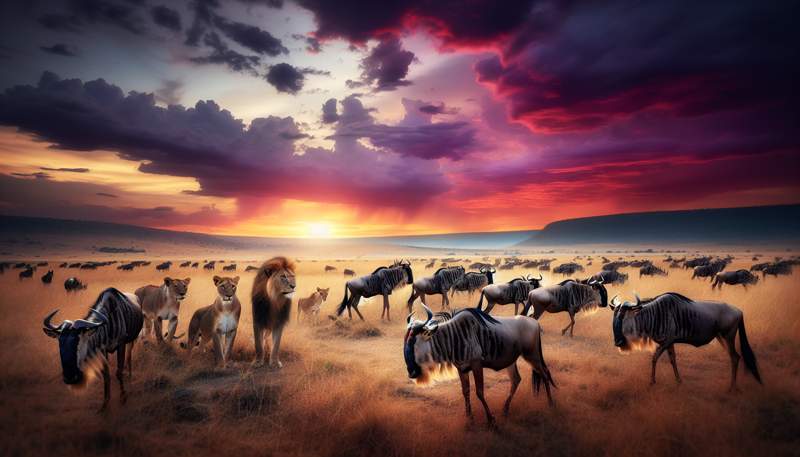
- Hunting coordination: Watch for lionesses fanning out around a herd. When the lead female drops into a crouch, action is imminent
- Cub play: Cubs are endlessly photogenic and typically most active in the morning and late afternoon
Leopards
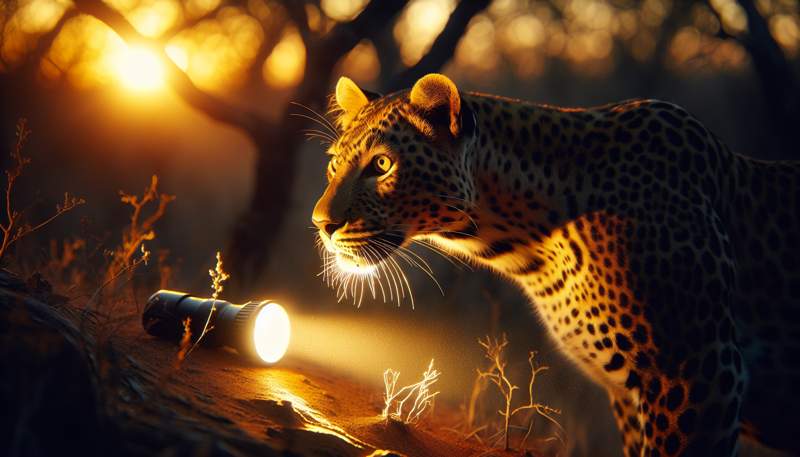
Leopards are solitary and often found in trees or thick bush, making them technically challenging. Key tips:
- Tree kills: If a leopard has a kill in a tree, it will return to feed. Position yourself for the best angle and wait
- Dappled light: Leopards in trees often have challenging lighting with patches of sun and shade. Use spot metering on the cat's face
- Eye contact: Leopard eye contact creates some of the most powerful wildlife images. Be patient and ready when the cat looks toward you
Cheetahs
Cheetahs are the action specialists. They hunt during the day (unlike lions and leopards), giving you the light needed for high-speed photography.
- Pre-hunt scanning: Cheetahs climb termite mounds and fallen trees to scan for prey. This elevated pose makes for excellent portraits with a clean background
- The stalk: When a cheetah drops into a low crouch and begins moving toward prey, prepare for action. The chase can happen within seconds
- Post-hunt: After a successful hunt, cheetahs rest with their prey, offering powerful storytelling images
Vehicle Positioning and Angle
The angle and height from which you shoot matters enormously:
- Eye level: The most powerful big cat images are shot at eye level. In many safari vehicles, this means shooting from the lowest possible seat or resting your lens on the door frame
- Sun behind you: Front-lighting (sun behind the photographer) produces the best colour and detail in fur. Side-lighting creates drama with rim light. Backlighting can produce stunning silhouettes at sunrise and sunset
- Clean backgrounds: Ask your guide to position the vehicle so the background behind the cat is clean, not cluttered with bushes or other vehicles. A few metres of repositioning can transform an image
- Space in front: When a cat is looking or moving in a direction, leave more space in front of it in the frame. This creates a sense of direction and intention
Essential Gear
Lenses
- 100-400mm or 200-600mm: The workhorse safari lens. Covers most situations from close encounters to distant subjects
- 70-200mm f/2.8: Essential for low-light situations and close encounters. The fast aperture is invaluable during golden hour
- Wide-angle (24-70mm): For environmental portraits showing cats in their landscape context
Support
- Bean bag: The most practical camera support for vehicle-based shooting. Place it on the window frame or door for stable shots
- Gimbal head: For heavy telephoto lenses, a gimbal provides smooth tracking of moving subjects
For quality safari photography equipment, browse essential gear on Amazon, including bean bags, camera straps, and protective covers for dusty conditions.
Creative Techniques
Slow Shutter Panning
For a running cheetah or walking lion, try a slow shutter speed (1/30-1/60s) and pan smoothly with the animal. This creates motion blur in the background while keeping the cat's head relatively sharp. It takes practice, but the results are dramatic and artistic.
Silhouettes
Position yourself so the cat is between you and the sunrise or sunset. Expose for the bright sky, and the cat becomes a dramatic black silhouette. This works particularly well with lions on ridgelines or kopjes.
Environmental Portraits
Do not always zoom in tight. Pull back to show the cat in its environment. A lion small in the frame against the vast Serengeti plains, or a leopard high in a massive sausage tree, tells a story that tight portraits cannot.
Best Destinations for Big Cat Photography
- Masai Mara, Kenya: Best overall for big cat photography. Off-road driving in private conservancies, habituated cats, and exceptional light
- Sabi Sands, South Africa: Best for leopard photography. Unbeatable close encounters
- Serengeti, Tanzania: Best for cheetah photography and dramatic migration kills
- Ranthambore, India: Best for tiger photography in a unique cultural setting
For photography-focused safari tours, check GetYourGuide for expert-led photographic safaris, or contact Safari.com for bespoke photography itineraries tailored to big cat encounters.