Deep in the heart of Africa's dense rainforests lives one of the world's most elusive and mysterious animals – the okapi. Often called the "forest giraffe" or "African unicorn," this striped, chocolate-brown creature has captivated researchers and wildlife enthusiasts for over a century. But where exactly do okapi live, and what makes their Congo rainforest habitat so special? If you're planning a wildlife adventure or simply curious about these remarkable animals, understanding their unique home in the Democratic Republic of Congo will give you incredible insights into one of nature's most secretive ecosystems.
The Okapi's Exclusive Home: Democratic Republic of Congo's Ituri Forest
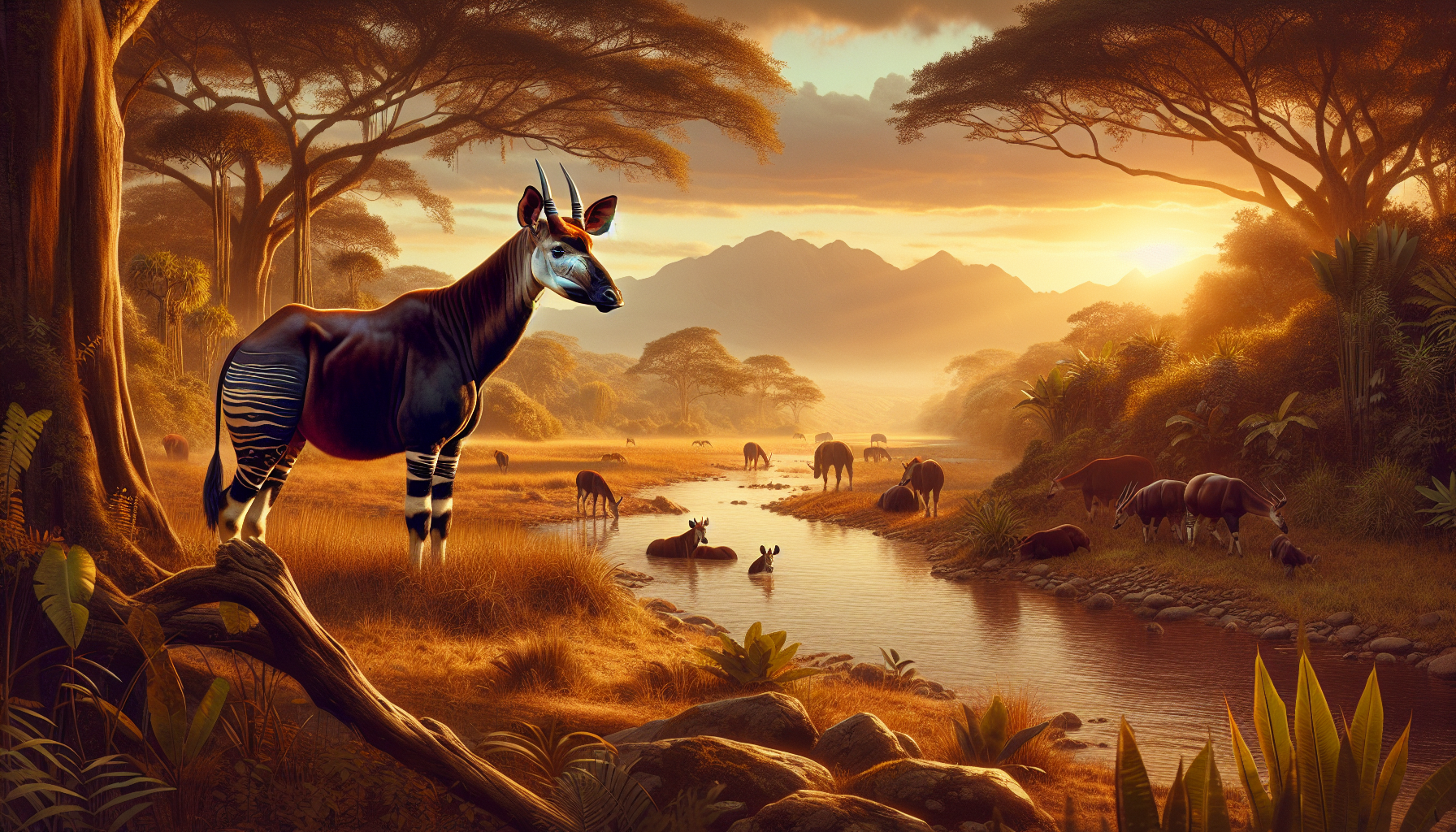
The okapi (Okapia johnstoni) has the distinction of being found in only one place on Earth – the dense rainforests of the Democratic Republic of Congo (DRC), specifically within the Ituri Forest region. This makes them one of the most geographically restricted large mammals in Africa, with their entire wild population confined to an area roughly the size of Germany.
The Ituri Forest covers approximately 63,000 square kilometers and represents one of the last remaining pristine tropical rainforest ecosystems in Central Africa. This ancient forest has remained relatively unchanged for millions of years, providing the perfect evolutionary refuge for unique species like the okapi. The forest's isolation and challenging terrain have protected both the okapi and the indigenous Mbuti and Efe peoples who have coexisted with these animals for thousands of years.
Unlike their distant relatives the giraffe, okapis have evolved specifically for life in dense forest canopies where their reddish-brown coat and white-striped legs provide perfect camouflage among the dappled sunlight and shadows of the forest floor.
Understanding the Congo Rainforest Ecosystem
The Congo Basin rainforest, where okapis make their home, is the second-largest tropical rainforest in the world after the Amazon. This massive ecosystem spans across six countries, but the okapi's habitat is concentrated in the northeastern regions of the DRC. The forest experiences a tropical climate with high humidity levels ranging from 80-90% year-round and temperatures consistently between 20-25°C (68-77°F).
The Ituri Forest specifically features a complex multi-layered canopy structure that creates numerous microhabitats. The emergent layer towers up to 60 meters high, while the dense canopy layer blocks most sunlight from reaching the forest floor. This creates the dim, humid environment that okapis prefer, with visibility often limited to just 10-15 meters in any direction.
Annual rainfall in the region averages 1,500-2,000mm, supporting incredible biodiversity. The forest floor is covered with a thick layer of decomposing leaves and organic matter, creating rich soil that supports over 10,000 plant species. This abundant vegetation provides okapis with their primary food sources – leaves, buds, shoots, and fruits from over 100 different plant species.
Key Features of Okapi Habitat:
- Dense canopy cover: 80-95% canopy closure providing protection from aerial predators
- Multiple water sources: Streams, rivers, and seasonal pools scattered throughout their range
- Varied elevation: Habitat ranges from 500-1,000 meters above sea level
- Rich understory: Abundant browse plants at heights accessible to okapis (up to 2.5 meters)
- Natural clearings: Small forest openings called "bais" where okapis come to feed on mineral-rich plants
Specific Locations Where Okapis Are Found
Within the Democratic Republic of Congo, okapis are primarily found in several protected areas and forest reserves. The Okapi Wildlife Reserve, also known as the Okapi Faunal Reserve, covers 13,726 square kilometers and was established specifically to protect this endangered species. Located in the Ituri Forest near the town of Epulu, this UNESCO World Heritage Site is home to approximately 5,000 of the estimated 10,000-15,000 wild okapis remaining.
Other significant okapi populations can be found in:
- Maiko National Park: Located in eastern DRC, this remote park harbors a substantial okapi population
- Rubi-Tele Hunting Reserve: A large protected area in the northern part of okapi range
- Virunga National Park: The eastern portions of this famous park overlap with okapi habitat
- Various forest concessions: Scattered populations exist in logging concessions throughout the Ituri region
For travelers interested in seeing okapis in the wild, the Okapi Wildlife Reserve near Epulu offers the best opportunities. The reserve operates a research station and breeding center where visitors can observe semi-habituated okapis. However, reaching these locations requires careful planning and often involves specialized wildlife experiences through GetYourGuide or other adventure tour operators.
The Challenges of Okapi Habitat
The Congo rainforest presents numerous challenges that have shaped okapi evolution and behavior. The dense vegetation and limited visibility mean okapis have developed exceptional hearing and rely heavily on scent marking to communicate. Their large, flexible ears can rotate independently to detect sounds from multiple directions simultaneously.
The forest's complex terrain includes numerous rivers, swamps, and steep ravines that okapis must navigate daily. Their relatively short legs compared to giraffes are perfectly adapted for moving through dense undergrowth and navigating fallen logs and low-hanging branches. The white stripes on their legs and rump serve as "follow-me" signals, helping mothers and calves stay together in the dim forest light.
Environmental Pressures:
- Limited food distribution: Preferred browse species are often scattered, requiring large home ranges
- Seasonal variation: Fruit availability fluctuates dramatically between wet and dry seasons
- Predation pressure: Leopards pose the primary threat to adult okapis
- Human encroachment: Increasing pressure from logging, mining, and agricultural expansion
Unfortunately, the same isolation that has protected okapis for millennia now makes them vulnerable to extinction. Political instability in the DRC has made conservation efforts challenging, and illegal mining and logging activities continue to fragment their habitat. Climate change is also beginning to affect rainfall patterns in the Congo Basin, potentially altering the forest ecosystem that okapis depend upon.
Conservation Efforts and Habitat Protection
Protecting okapi habitat requires a multi-faceted approach involving international conservation organizations, the DRC government, and local communities. The Wildlife Conservation Society (WCS) has been working in the region since the 1980s, establishing the Okapi Conservation Project and training local Congolese staff in wildlife management and research techniques.
Current conservation efforts focus on:
- Anti-poaching patrols: Regular monitoring of okapi populations and removal of snares
- Community engagement: Working with indigenous Mbuti people and local communities to develop sustainable livelihoods
- Habitat restoration: Replanting degraded areas and creating corridors between forest fragments
- Research and monitoring: Using camera traps and GPS collars to study okapi behavior and population trends
- Education programs: Raising awareness about okapi conservation in local schools and communities
For travelers interested in supporting these efforts, several opportunities exist to contribute to okapi conservation while experiencing this unique habitat. Many tour operators now offer conservation-focused trips that include visits to research stations and opportunities to participate in citizen science projects. You can learn more about supporting conservation efforts and discover other endangered animals you can still see in the wild.
Planning Your Visit to Okapi Territory
Visiting okapi habitat is not for casual travelers – it requires serious preparation, physical fitness, and flexibility. The journey typically begins with flights to Kinshasa, DRC's capital, followed by smaller aircraft to regional airports near the forest reserves. From there, travel continues by four-wheel-drive vehicles and often includes significant hiking through challenging terrain.
Essential preparations include:
- Health precautions: Yellow fever vaccination is mandatory, and malaria prophylaxis is essential
- Travel insurance: Comprehensive coverage through providers like World Nomads travel insurance is crucial
- Specialized gear: High-quality rain gear, sturdy hiking boots, and insect protection – check safari gear prices on Amazon
- Permits and documentation: Tourist visas, research permits, and multiple passport photos
The best time to visit is during the dry season (December to February and June to August), when forest paths are more accessible and wildlife is more active. Expect to pay $200-400 per day for local guides and porters, plus accommodation costs of $50-150 per night in basic forest lodges or research stations.
For those seeking a more comprehensive African wildlife experience, consider combining your okapi expedition with visits to see mountain gorillas in nearby Rwanda or Uganda. This allows you to experience both forest and savanna ecosystems while maximizing your travel investment. Use Expedia to compare flights between regional destinations and find the most efficient routing for multi-country itineraries.
The okapi's exclusive home in the Congo rainforest represents one of our planet's most important and threatened ecosystems. By understanding where okapis live and the unique challenges they face, we can better appreciate the urgent need for conservation action. Whether you're planning an adventure to see these incredible animals in person or simply want to support their protection from afar, the mysterious forests of the Democratic Republic of Congo continue to hold secrets worth preserving for future generations.