Southern Cassowary
Casuarius casuarius
About the Southern Cassowary
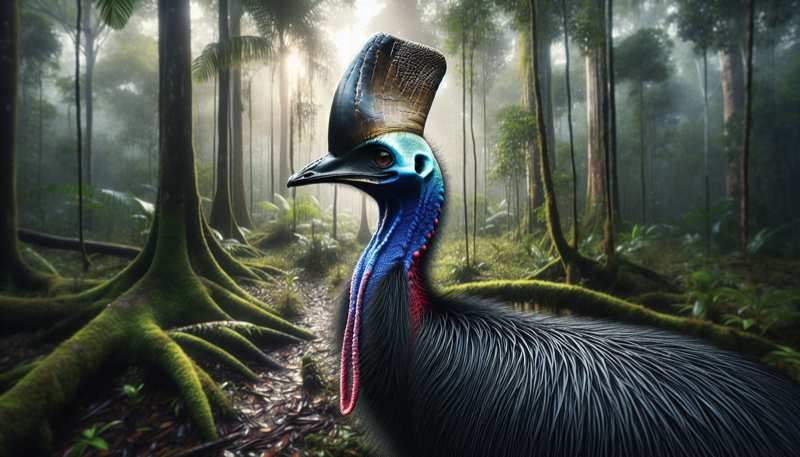
The southern cassowary is the third-tallest and second-heaviest living bird, standing up to 1.8 metres tall and weighing up to 85 kg. Found in the tropical rainforests of northern Australia and New Guinea, they are considered the most dangerous bird in the world due to their powerful legs and 12 cm dagger-like inner claw. They play a vital role as seed dispersers for over 200 rainforest plant species.
Fun Facts
- Cassowaries can run at 50 km/h through dense forest and jump 1.5 metres high from a standing start.
- Their casque (the helmet-like crest on their head) may amplify their deep, booming calls through the forest or help them push through undergrowth.
- Male cassowaries are sole parents — they incubate eggs and raise chicks alone for up to 9 months while the female moves on.
Where to See Southern Cassowary in the Wild
Daintree Rainforest
AustraliaThe world's oldest tropical rainforest is prime cassowary habitat. Sightings are possible along roads and trails.
Mission Beach
AustraliaOne of the most reliable cassowary-sighting locations in Australia.
Etty Bay
AustraliaA small beach where cassowaries regularly emerge from the forest to forage.
Where to See Southern Cassowary at Zoos
Currumbin Wildlife Sanctuary
Gold Coast, Australia
San Diego Zoo
San Diego, USA
Book Southern Cassowary Tours & Experiences
Real tours with verified reviews, instant confirmation, and free cancellation on most bookings.
Ultimate Daintree Rainforest Wildlife Experience Cruise
1 hour
Sydney Blue Mountains Day Tour with Wildlife Park and Waterfalls
9h 30m
Cairns: All Inclusive Waterfalls and Rainforest Tour
11 hours
1 day Puffing Billy Steam Train and Wildlife Tour from Melbourne
8h 30m
Wildlife Habitat Port Douglas
1 hour
Kuranda Rainforestation Nature Park Ticket (BNP)
4 hoursEverything You Need to See Southern Cassowarys
Tours, hotels, flights, insurance, and gear — all from trusted partners. Booking through these links supports this site at no extra cost to you.
Guided Tours & Experiences
Expert-guided tours dramatically increase your chances of a sighting.
Travel Insurance
Essential cover for wildlife trips — medical, cancellation, and gear.
Photography Tips for Southern Cassowary
Cassowaries in Mission Beach sometimes approach close. Use a 70-200mm lens. Their iridescent blue and purple head colours are most vivid in good light. Never use flash.
Safety Guide
Cassowaries are dangerous when provoked or cornered. Never feed them — this habituates them to humans and increases attack risk. If you encounter one, back away slowly and put a tree between you and the bird. Never turn your back or run.
You Might Also Like
What Travellers Say
Real experiences from wildlife adventurers around the world
“The wildebeest crossing we witnessed was the most incredible thing I've ever seen. Nature at its rawest and most powerful.”
“Sitting 3 metres from a silverback gorilla… I cried. No exaggeration. A life-changing moment I'll never forget.”
“Kruger self-drive was the best budget safari decision we ever made. Saw the Big Five in three days flat.”
“Swimming alongside a whale shark is pure magic. Ningaloo is paradise — untouched and utterly stunning.”
“The jaguar appeared on the riverbank at sunset. Our guide burst into tears — it was that special.”
“Watching a polar bear mum with her cubs on the frozen tundra — Churchill delivered beyond our wildest dreams.”
“The baby orangutan swung right over our heads. Borneo's rainforest is like stepping into another world entirely.”
“Giant tortoises, blue-footed boobies, marine iguanas — every single island was a new adventure. Galápagos is unreal.”
“Hearing the tiger's roar echo through the canyon at dawn gave me actual goosebumps. Ranthambore is raw, real India.”
“Standing face-to-face with a Komodo dragon — 3 metres of prehistoric predator. My heart was pounding!”
“Kangaroo Island blew us away. Koalas in every tree, sea lions on the beach, and not a single crowd.”
“Best wildlife photography trip of my life. The light on the Serengeti at golden hour is absolutely unmatched.”
“Took our kids on their first safari — the look on their faces when they saw elephants up close was priceless.”
“Solo-travelled through Borneo and felt safe every step. The wildlife encounters more than made up for any nerves.”
“Our honeymoon safari in the Mara was pure romance — sundowners overlooking the savanna, lions at dawn.”
“The night safari in Borneo was surreal — flying squirrels, slow lorises, and a clouded leopard sighting!”
“Galápagos changed how I see conservation. Seeing species found nowhere else on Earth puts everything in perspective.”
“The Pantanal sunset river cruise was the highlight of our South America trip. Caimans everywhere!”
“Churchill in October is freezing but absolutely worth it. Polar bears playing in the snow is pure joy.”
“Ranthambore felt like stepping into a Kipling novel. We spotted three tigers in two days — incredible odds!”
Southern Cassowary FAQ
There are several destinations worldwide where you can observe Southern Cassowary in their natural habitat. Visit our dedicated Southern Cassowary page on WhereAnimalsLive.com for a complete guide to the best locations, including national parks, reserves, and recommended tour operators with current pricing.
The ideal time to see Southern Cassowary depends on the specific destination, as seasons and animal behaviour vary by region. Generally, the dry season concentrates wildlife around water sources and improves visibility. Check our detailed Southern Cassowary destination guides for month-by-month recommendations.
Trip costs vary widely depending on the destination and comfort level. Budget options with basic accommodation and group tours can start from $50–$150 per day, while mid-range and luxury experiences run $200–$1,000+ per day. Our Southern Cassowary page on WhereAnimalsLive.com includes specific pricing for each recommended destination.
Guided wildlife excursions in established national parks and reserves are very safe when you follow your guide's instructions. Professional guides are trained in animal behaviour and maintain safe distances at all times. Always book through licensed, reputable operators who prioritise both visitor safety and animal welfare.
A telephoto zoom lens (100–400 mm or 200–600 mm) is ideal for wildlife photography, allowing sharp images from a safe distance. Pair it with a camera body that handles high ISO well for low-light conditions at dawn and dusk. A beanbag or monopod provides stable support in the field. Check our photography tips section for species-specific recommendations.