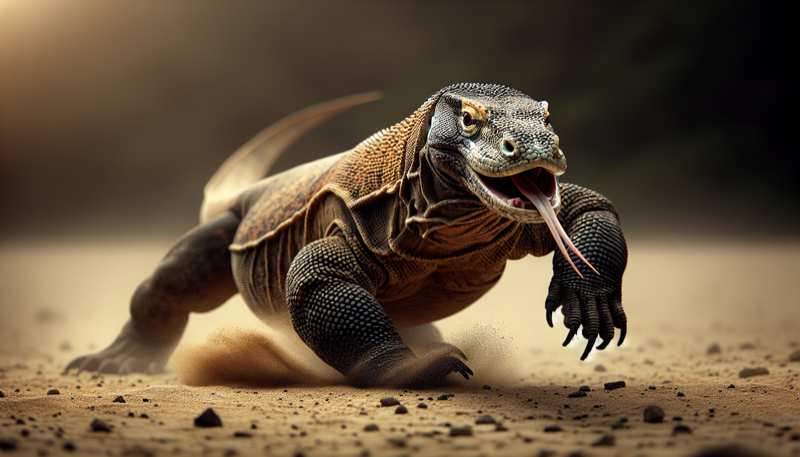
Komodo Dragon
Varanus komodoensis
About the Komodo Dragon
The Komodo dragon is the world's largest living lizard, reaching up to 3 metres in length and 70 kg. Found only on a handful of Indonesian islands, these apex predators have venomous bites and can take down prey as large as water buffalo. They are the last surviving members of a lineage of giant lizards that once roamed across Asia and Australia.
Biology & Stats
Migration: Non-migratory. Home ranges on the islands.
Best time of day: Morning when basking and active hunting. Less active in midday heat.
Typical viewing distance: 5-15 metres (always with rangers)
Camera settings: 1/500s, f/5.6-f/8, ISO 200-800, 70-200mm (approached on foot with rangers)
Fun Facts
- Komodo dragons have venom glands that prevent blood clotting in their prey.
- They can eat up to 80% of their body weight in a single meal.
- Female Komodo dragons can reproduce without a male through parthenogenesis.
Where to See Komodo Dragon in the Wild
Komodo National Park
IndonesiaThe only place in the world to see Komodo dragons in the wild. Accessible from Labuan Bajo.
Rinca Island
IndonesiaPart of Komodo National Park with easier dragon encounters than Komodo Island itself.
Featured Destinations to See Komodo Dragon
Compare practical destination guides with seasonal timing, travel logistics, other wildlife, tours, and places to stay.

Explore Komodo Dragon by Country
Country guides connect the species with other wildlife, featured places, planning context, and responsible-viewing advice.
Habitats Used by Komodo Dragon
Species may rely on several ecosystems across their range. Explore how conditions and conservation pressures differ.
Where to See Komodo Dragon at Zoos
Smithsonian National Zoo
Washington, D.C., USA
Support Independent Conservation Work
These third-party programmes offer relevant ways to adopt symbolically, foster, donate, or learn. We do not process contributions or receive commission.
Komodo Survival Program Donation
A donation route for an Indonesian organisation focused on Komodo dragon population monitoring, habitat and threat research, community collaboration, and conservation on Flores and neighbouring range islands.
Review programme →Due DiligenceCheck Before You Contribute
Understand symbolic adoption, verify the organisation, and review current terms and use of funds.
Open the programme directory →Browse Komodo Dragon Tours & Experiences
Current Viator listings matched to this species. Confirm where the activity operates, its wildlife policy, recent reviews, availability, and cancellation terms before booking.

Exclusive Early Bird Komodo Tour: Beat the Crowds by Speed Boat
11 hours
Full Day Komodo Tour With Hey Bali Info Visit 6 Spot
10 hours
Early Morning Group Speedboat Tour to Komodo National Park
10h 30m
A Day to Komodo Island
11 hours
Small Group Komodo Fast Boat Tour with Padar Island & Pink Beach
10 hours
Full Day Trip to Explore 6 Destinations in Labuan Bajo and Komodo
9 hoursPlan a Komodo Dragon Wildlife Trip
Only species-relevant partner routes are shown. Confirm the exact location, wildlife policy, availability, current price, and cancellation terms before booking.
Guided Tours & Experiences
These links open third-party searches. Verify the exact operator, route, guide team, wildlife policy, field time, and no-sighting terms.
Hotels & Accommodation
Search stays only after the gateway and field route are confirmed.
Flights
Compare current routes, baggage rules, buffers, and total booking terms.
Travel Insurance
Check medical, cancellation, activity, altitude, equipment, and evacuation terms for the exact itinerary.
Camera & Gear
Match equipment to guide advice, distance, weather, baggage limits, and safe handling.
Photography Tips for Komodo Dragon
A 70-200mm lens is sufficient as dragons are approached on foot with rangers. Shoot low for dramatic angles. Watch for tongue-flicking moments.
Safety Guide
Always trek with a certified ranger — Komodo dragons are dangerous. Never run (this triggers a chase response). Walk in groups. Menstruating visitors should inform rangers as dragons are attracted to blood scent.
You Might Also Like
Watch in the Wild
Komodo Dragons: Ancient Predators
