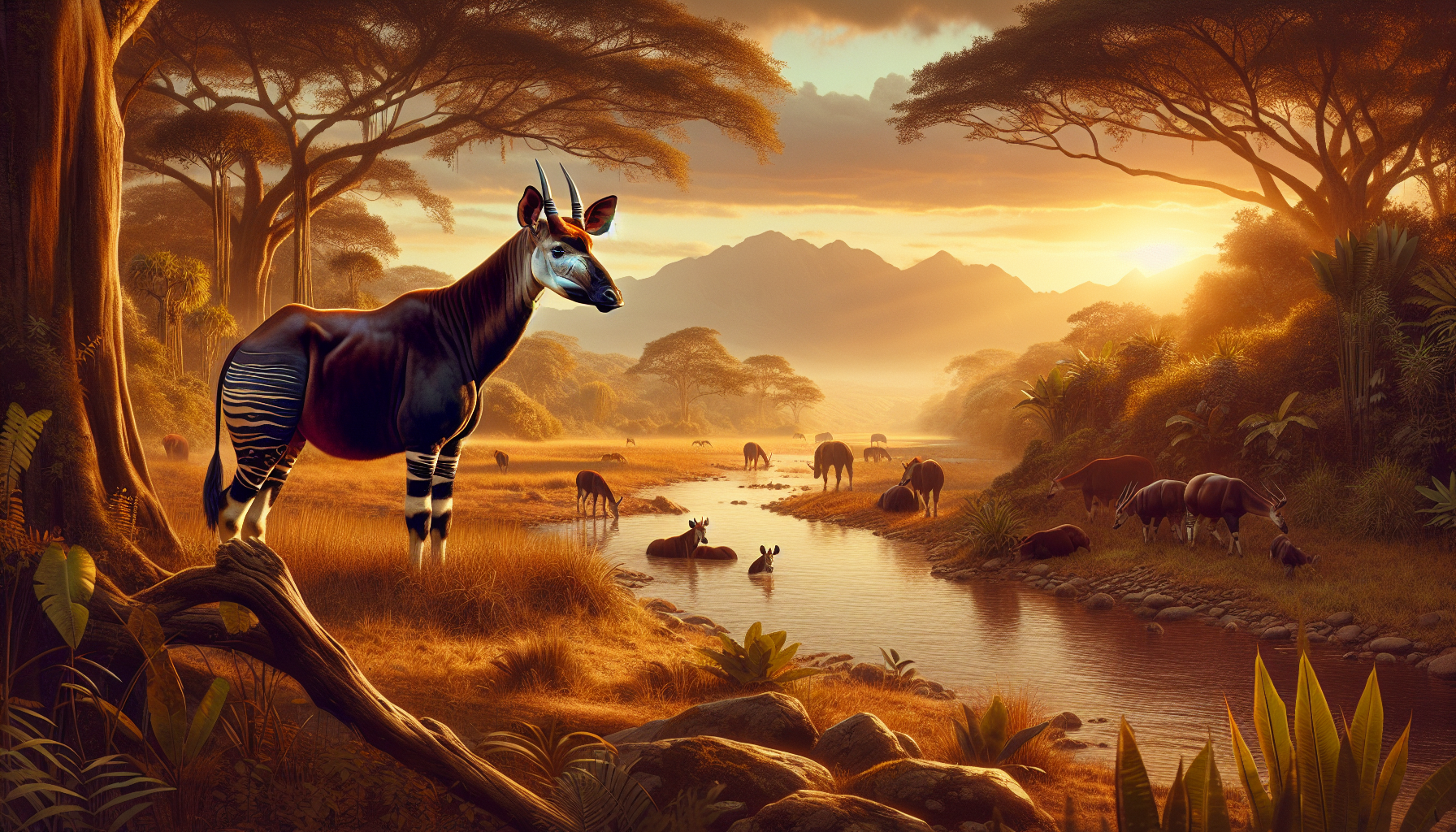
Deep in the heart of the Democratic Republic of Congo's ancient Ituri Forest lives one of Africa's most mysterious and elusive creatures—the okapi. Often called the "forest giraffe" or "unicorn of the forest," this remarkable animal remained hidden from the scientific world until 1901, making it one of the last large mammals to be discovered by Western science. With its chocolate-brown coat, zebra-striped legs, and surprising kinship to the towering giraffe, the okapi represents one of nature's most fascinating evolutionary stories and offers wildlife enthusiasts an extraordinary encounter unlike any other African safari experience.
What Is an Okapi? Understanding Africa's Forest Giraffe
The okapi (Okapia johnstoni) stands as one of Africa's most enigmatic creatures, perfectly adapted to life in the dense rainforests of the Democratic Republic of Congo. Despite being the giraffe's closest living relative, okapis look remarkably different from their tall savanna cousins. Standing about 5 feet tall at the shoulder and weighing between 440-770 pounds, these forest dwellers have evolved a compact build perfect for navigating through thick jungle vegetation.
What makes okapis truly striking is their unique coloration and markings. Their bodies are covered in a rich, reddish-brown coat that provides excellent camouflage in the dappled forest light. The most distinctive feature is their white horizontal stripes on their legs and rear, reminiscent of zebra markings. Males possess short, skin-covered horns called ossicones, similar to giraffes, while females are hornless.
Okapis possess several remarkable adaptations for forest life. Their long, dark blue tongues—measuring up to 18 inches—help them strip leaves from branches and even clean their own ears and eyes. Their large, flexible ears constantly swivel to detect sounds in the dense forest, while their keen sense of smell helps them navigate their territory and locate food sources.
Where to Find Okapis in the Wild: The Ituri Forest of Democratic Republic of Congo
Okapis are found exclusively in the Democratic Republic of Congo, primarily within the Ituri Forest region in the northeastern part of the country. This ancient rainforest, part of the larger Congo Basin, represents one of the world's most biodiverse ecosystems and the okapi's only natural habitat. The species has never been found anywhere else in the world, making the DRC the sole destination for okapi encounters.
The primary location for okapi viewing is the Okapi Wildlife Reserve, a UNESCO World Heritage Site covering approximately 13,700 square kilometers. Established in 1996, this reserve protects about one-fifth of the Ituri Forest and serves as the most important sanctuary for wild okapi populations. The reserve also houses significant populations of forest elephants, leopards, and several primate species, including chimpanzees.
Within the reserve, the best viewing areas include:
- Epulu Station: The primary research and conservation center offering guided walks and the highest chances of okapi encounters
- Okapi Captive Breeding Program areas: Semi-natural enclosures where visitors can observe okapis up close
- Forest trails around research stations: Wild okapi sightings possible with experienced local guides
For those planning a visit, Find wildlife experiences on GetYourGuide can help you locate specialized tours to this remote region, though most okapi expeditions require custom arrangements through conservation organizations or specialized adventure travel companies.
Planning Your Visit: Costs and Logistics
Visiting the Okapi Wildlife Reserve requires significant planning and investment. Expect to budget $3,000-$8,000 per person for a comprehensive okapi expedition, including international flights, domestic transportation, permits, guides, and accommodation. This cost reflects the remote location, limited infrastructure, and specialized nature of okapi tourism.
Essential expenses include:
- International flights to Kinshasa (often $1,500-$3,000 from major cities)
- Domestic flights to Bunia or overland transport ($500-$1,200)
- Reserve permits and conservation fees ($200-$500)
- Local guides and transportation ($100-$300 per day)
- Basic accommodation and meals ($50-$150 per day)
Best Times to Visit: Seasonal Considerations for Okapi Encounters
The Democratic Republic of Congo's equatorial climate means year-round rainfall, but certain seasons offer better conditions for okapi viewing and forest travel. Understanding these seasonal patterns is crucial for planning a successful expedition.
Dry Season (December to February, June to August): These periods offer the best conditions for okapi viewing. Reduced rainfall makes forest trails more accessible, and okapis are more active during cooler, drier weather. Wildlife tends to concentrate around permanent water sources, increasing sighting opportunities.
Wet Season (March to May, September to November): Heavy rains can make forest travel challenging, with muddy trails and increased difficulty accessing remote areas. However, this season brings lush vegetation and active wildlife, and okapis may be more visible as they feed on fresh growth.
The optimal months for okapi expeditions are December through February, when rainfall is lowest and forest trails are most accessible. July and August also offer good conditions, though some areas may experience increased visitor activity during European summer holidays.
Before traveling, ensure you have comprehensive coverage by checking Get travel insurance from World Nomads, as the remote location and challenging conditions make adequate insurance essential.
Okapi Behavior and Ecology: Life in the Forest
Understanding okapi behavior enhances your chances of successful encounters and deepens appreciation for these remarkable animals. Okapis are primarily crepuscular, most active during dawn and dusk hours when forest temperatures are cooler and light conditions provide optimal camouflage.
As browsers, okapis feed on over 100 different plant species, including leaves, shoots, fruits, and fungi. Their selective feeding habits play a crucial role in forest ecology, helping maintain plant diversity through seed dispersal. Adult okapis require 40-60 pounds of vegetation daily, spending most daylight hours foraging through their territory.
Social behavior in okapis is generally solitary, with adults maintaining territories of 2-3 square kilometers. Males mark their territories using scent glands and may engage in ritualized contests during breeding season. Females give birth to single calves after a 14-15 month gestation period—one of the longest among ungulates.
Communication occurs through various means including scent marking, soft vocalizations, and body language. Their large ears can detect subtle sounds across the forest, allowing them to communicate over distances and avoid predators like leopards and large pythons.
Conservation Status and Challenges
The okapi faces significant conservation challenges and is currently listed as Endangered on the IUCN Red List. Population estimates suggest only 10,000-25,000 okapis remain in the wild, representing a dramatic decline from historical numbers. This decline makes okapi encounters increasingly precious and highlights the importance of sustainable wildlife tourism.
Primary threats to okapi populations include:
- Habitat destruction: Logging, mining, and agricultural expansion continue to fragment the Ituri Forest
- Poaching: Okapis are hunted for meat and traditional medicine, with their distinctive coat patterns making them valuable targets
- Political instability: Ongoing conflicts in eastern DRC disrupt conservation efforts and increase pressure on natural resources
- Human encroachment: Growing human populations increase competition for forest resources
Conservation efforts focus on habitat protection, anti-poaching measures, and community engagement. The Okapi Conservation Project, working closely with local communities, has established ranger training programs and alternative livelihood projects. Captive breeding programs in zoos worldwide maintain genetic diversity and support field conservation through funding and research.
Wildlife tourism, when properly managed, provides crucial funding for conservation efforts and creates economic incentives for local communities to protect okapi habitat. Visitors contribute directly to conservation through permit fees, guide payments, and support for local businesses.
For more information about conservation efforts and how you can help, visit our conservation page to learn about various wildlife protection initiatives across Africa.
Photography and Wildlife Viewing Tips
Photographing okapis presents unique challenges due to the dense forest environment and the animals' elusive nature. Success requires preparation, patience, and respect for these sensitive creatures and their habitat.
Essential photography equipment includes:
- Telephoto lens (300-600mm) for maintaining distance while capturing detailed shots
- Fast autofocus system for quick focusing in low light conditions
- High ISO capability for forest photography in limited light
- Weather protection for equipment in humid, wet conditions
- Extra batteries (cold and humidity drain power quickly)
For comprehensive guidance on wildlife photography techniques, check our detailed wildlife photography guide which covers equipment selection, field techniques, and ethical photography practices.
Viewing tips for successful okapi encounters:
- Move slowly and quietly through forest trails
- Focus on areas with fresh feeding sign (stripped branches, tracks)
- Be patient—okapis may remain motionless for extended periods
- Work with experienced local guides who know okapi behavior and territory
- Respect minimum distances (30-50 feet) to avoid stressing animals
Essential gear for forest conditions should include waterproof clothing, sturdy hiking boots, insect repellent, and a reliable headlamp. For a complete list of recommended items, consult our safari packing list adapted for dense forest environments.
Quality safari gear makes a significant difference in forest conditions. Check prices on Amazon for waterproof camera protection, field guides, and other essential equipment for your okapi expedition.
Planning Your Okapi Adventure: Practical Travel Information
Successfully visiting okapi habitat requires careful planning and realistic expectations. The remote location, limited infrastructure, and political considerations make this one of Africa's most challenging wildlife experiences, but also one of the most rewarding for dedicated wildlife enthusiasts.
Getting there: Most okapi expeditions begin with international flights to Kinshasa, DRC's capital. Compare flights on Expedia to find the best routing, which typically involves connections through European or African hub cities. From Kinshasa, domestic flights to Bunia provide access to the Ituri Forest region, though overland travel may be necessary for final approaches to the Okapi Wildlife Reserve.
Accommodation options are extremely limited in the okapi region. Most visitors stay in basic research station accommodations, community guesthouses, or camping facilities. Find lodges on Expedia for accommodations in Kinshasa or larger regional centers, but expect basic facilities closer to okapi habitat.
Health and safety considerations are paramount for okapi expeditions. Yellow fever vaccination is mandatory, and malaria prophylaxis is essential. Consult travel medicine specialists well in advance, as some vaccinations require multiple doses over several weeks.
Travel requirements include:
- Valid passport with minimum 6-month validity
- DRC tourist visa (obtained in advance or on arrival)
- Yellow fever vaccination certificate
- Comprehensive travel insurance covering medical evacuation
- Permits for wildlife reserve access
Given the specialized nature of okapi tourism, consider working with experienced operators who can handle logistics, permits, and safety considerations. Browse safari packages on BookAllSafaris for specialized DRC wildlife tours, though most okapi expeditions require custom arrangements.
The okapi represents one of Africa's greatest wildlife treasures and offers an unparalleled adventure for serious wildlife enthusiasts. While challenging to reach and observe, these forest giraffes provide insights into evolution, adaptation, and the incredible biodiversity of Central Africa's rainforests. Your visit contributes directly to conservation efforts protecting this endangered species and its unique ecosystem, making every okapi encounter a meaningful contribution to wildlife preservation.
For those inspired to explore more of Africa's endangered species, our endangered animals guide highlights other rare wildlife encounters across the continent, from mountain gorillas in nearby Bwindi to other unique species that depend on conservation tourism for their survival.