Gorilla vs Orangutan: Great Apes Face to Face
They're our closest relatives alongside chimpanzees, yet mountain gorillas and orangutans live worlds apart — one in the misty volcanic highlands of Central Africa, the other in the rainforest canopy of Southeast Asia. Both are critically endangered, and trekking to see either is a transformative experience.
Quick Stats
Head-to-Head Comparison
Size & Strength
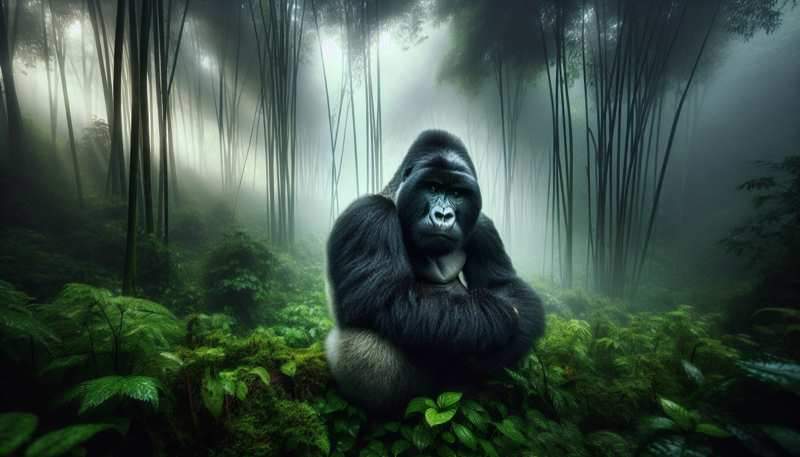
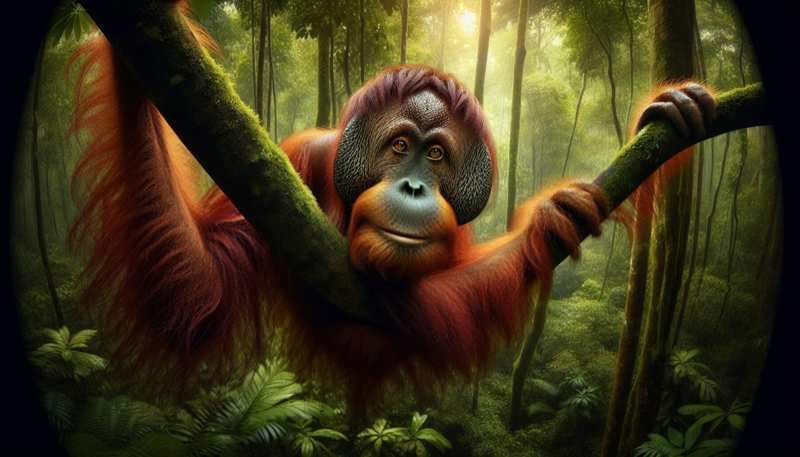
Male silverback gorillas are the largest living primates, weighing up to 220 kg with an estimated strength 10 times that of a human. Male orangutans are smaller (75-100 kg) but have exceptionally long, powerful arms spanning over 2 metres — essential for their arboreal lifestyle.
Speed & Agility
Gorillas are ground-dwelling and can charge at 35 km/h in short bursts. Orangutans are the world's largest arboreal animals, moving through the canopy with deliberate, energy-efficient brachiation. In the trees, orangutans are supremely agile; on the ground, gorillas have the advantage.
Hunting Ability
Neither species hunts in the traditional sense. Gorillas eat stems, shoots, and leaves; orangutans consume fruit, bark, and insects. Gorillas occasionally eat insects, but both are fundamentally herbivorous/frugivorous. The gorilla's dominant silverback does fiercely protect the group from threats.
Intelligence
Orangutans are considered the most intelligent non-human primates by many researchers. They craft and use tools in the wild, build elaborate sleeping nests each night, and have demonstrated self-awareness, forward planning, and cultural transmission of knowledge. Gorillas also use tools and display complex social intelligence, but orangutans edge ahead in problem-solving.
Where to See Them
Mountain gorillas are found only in Uganda (Bwindi, Mgahinga), Rwanda (Volcanoes NP), and DR Congo (Virunga). Permit prices and visitor categories change, so check the relevant wildlife authority before budgeting. Orangutans are best seen in Borneo (Sepilok, Danum Valley, Tanjung Puting) and Sumatra (Gunung Leuser). Both require guided treks into dense forests.
Conservation Status
Mountain gorillas are Endangered with ~1,060 remaining — one of conservation's rare success stories, as their numbers have actually increased. Orangutans are Critically Endangered (both Bornean and Sumatran species) due to massive palm oil-driven deforestation. The Tapanuli orangutan, discovered in 2017, has fewer than 800 individuals.
Fun Fact
Orangutans share 97% of their DNA with humans — and they know it. In Borneo, wild orangutans have been observed watching local fishermen and then copying their technique to catch fish with makeshift spears. They're the only great apes known to have independently developed fishing behaviour.
Our Verdict
For gorilla trekking, Rwanda's Volcanoes National Park offers the most polished experience, while Uganda's Bwindi is more affordable with equally magical encounters. For orangutans, Malaysian Borneo's Sepilok Rehabilitation Centre is the easiest access, while Tanjung Puting in Indonesian Borneo offers multi-day river cruises through pristine habitat. Both are bucket-list experiences — plan for one, dream about the other.