Eagle vs Falcon: Raptors of the Sky
Eagles and falcons dominate the skies as apex aerial predators, but they've taken very different evolutionary paths. Eagles are power flyers — large, strong, and built to soar. Falcons are speed specialists — compact, agile, and built for the dive. Here's how these magnificent birds of prey compare.
Quick Stats
Head-to-Head Comparison
Size & Strength
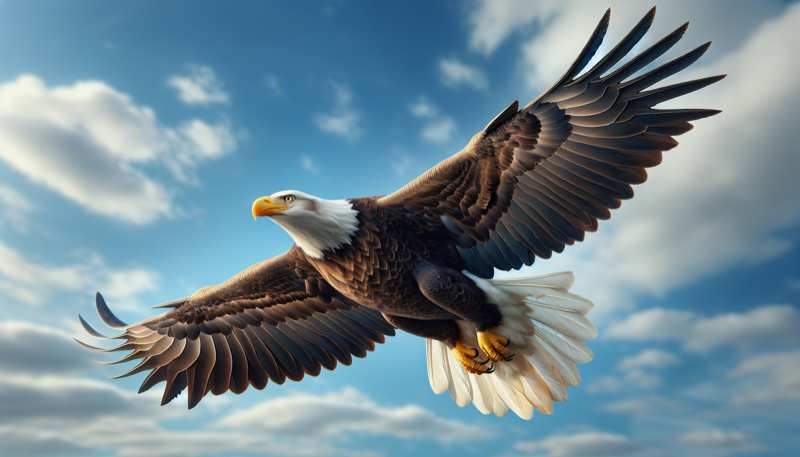
Eagles dwarf falcons in size. The bald eagle has a 2-metre wingspan and weighs 3-6.3 kg, while the peregrine falcon has a 1-metre wingspan at just 0.6-1.5 kg. Golden eagles can carry prey weighing 4-5 kg. Eagles use their massive talons to crush and carry; falcons use precision strikes.
Speed & Agility
The peregrine falcon is the fastest animal on Earth, stooping (diving) at over 380 km/h. In level flight, falcons are also faster at 90-110 km/h versus an eagle's 50-80 km/h. However, eagles are far more agile in slow, manoeuvring flight and can hover and turn in tight spaces that would stall a falcon.
Hunting Ability
Eagles hunt mammals, fish, and other birds using powerful talons and soaring vision that can spot prey from 3 km away. Peregrine falcons specialise in aerial attacks, striking birds mid-flight at staggering speeds. The falcon's stoop is one of nature's most precise hunting techniques, with a success rate of about 20% per dive.
Intelligence
Both raptors are intelligent hunters. Eagles display patience and strategic thinking, sometimes working in pairs to flush prey. Falcons show remarkable spatial awareness and trajectory calculation during high-speed dives. Both species have been trained for falconry for thousands of years, suggesting high trainability.
Where to See Them
Bald eagles are abundant in Alaska and the Pacific Northwest, especially November-February during salmon runs. Golden eagles soar across Scotland, Mongolia, and western North America. Peregrine falcons are found on every continent except Antarctica — cliff faces, cathedral towers, and skyscraper ledges worldwide.
Conservation Status
Both bald eagles and peregrine falcons are conservation success stories. Bald eagles recovered from near-extinction after DDT was banned, climbing from 417 nesting pairs (1963) to 300,000+ today. Peregrine falcons made a similar comeback through captive breeding and reintroduction programmes.
Fun Fact
Peregrine falcons have a third eyelid (nictitating membrane) that acts like built-in goggles during their 380+ km/h dives, keeping their eyes moist and protected. They also have baffles in their nostrils that redirect airflow at high speeds — the same design principle used in jet engines.
Our Verdict
For bald eagles, Alaska's Chilkat Bald Eagle Preserve (November) hosts the world's largest gathering — over 3,000 eagles along the Chilkat River. For peregrines, coastal cliffs in the UK, New York City skyscrapers, and many national parks offer sightings. Raptor festivals worldwide, like Veracruz in Mexico, showcase mass migrations of multiple species.