Madagascar
Best time: April - November (dry season, best wildlife viewing)
About Madagascar
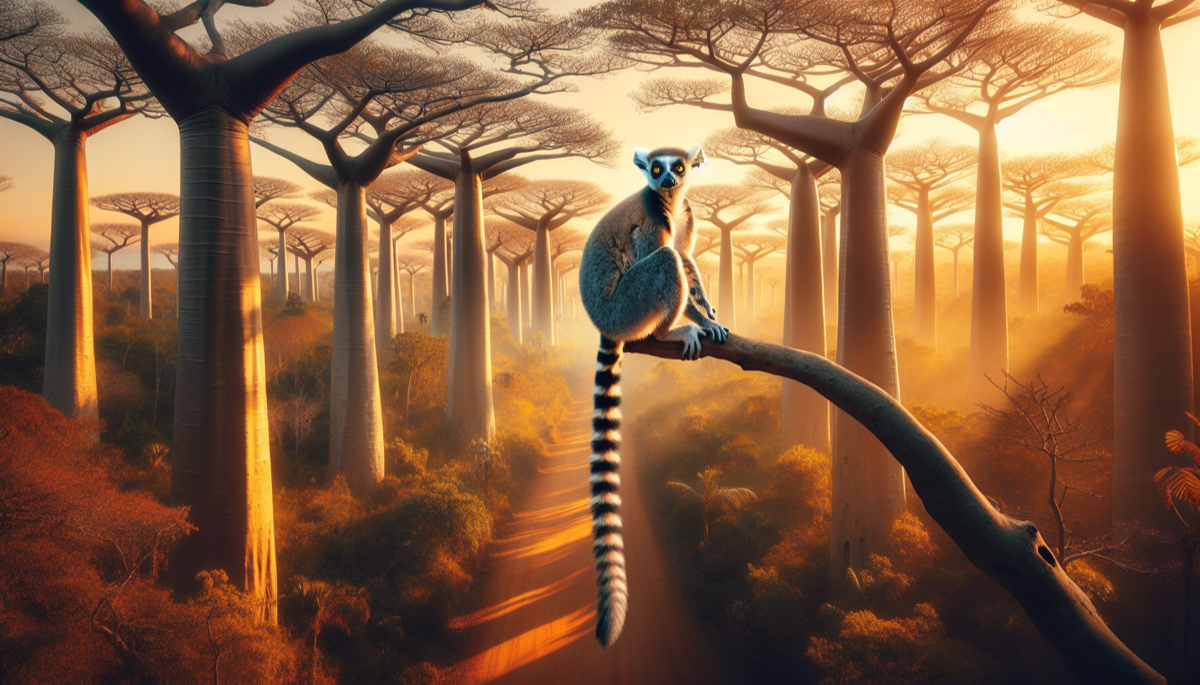
Madagascar is the world's fourth-largest island and one of the planet's most extraordinary biodiversity hotspots. Separated from mainland Africa over 80 million years ago, the island evolved in isolation, producing a unique array of species found nowhere else on Earth. Over 90% of Madagascar's wildlife is endemic, including all 100-plus species of lemur, the island's most iconic inhabitants. Ring-tailed lemurs with their distinctive black-and-white striped tails are the most recognisable, but the island is also home to the dancing sifaka, the tiny mouse lemur (the world's smallest primate), and the eerie aye-aye. Beyond lemurs, Madagascar harbours chameleons in astonishing variety (nearly half the world's species), colourful mantella frogs, bizarre baobab trees, and an estimated 12,000 plant species. The island's diverse habitats range from lush eastern rainforests to the spiny desert of the south and the dramatic limestone tsingy formations of the west. Key destinations include Andasibe-Mantadia for indri lemurs, Isalo National Park for ring-tailed lemurs, and the Avenue of the Baobabs near Morondava.
Highlights
- Lemur trekking across diverse forest habitats
- Avenue of the Baobabs at sunset near Morondava
- Tsingy de Bemaraha limestone formations
- Over half the world's chameleon species
Getting There
Fly into Antananarivo (TNR) from Paris, Nairobi, or Johannesburg. Domestic flights connect to regional wildlife hubs.
Nearest airport: Ivato International, Antananarivo (TNR)
Travel Essentials
Vaccinations
- Yellow Fever (if arriving from endemic country)
- Hepatitis A & B
- Typhoid
- Rabies
- Plague vaccine (not widely available, just be aware)
Budget Guide
Weather & Climate
Dry season: Apr-Oct: Cooler, dry. Best for lemur watching and hiking. Whale season Jul-Sep.
Wet season: Nov-Mar: Hot, humid, cyclone risk on east coast. Some roads impassable.
Temperature: 10°C-33°C (50°F-91°F). Varies hugely by altitude and coast.
Sample 5-Day Itinerary
- Day 1: Arrive Antananarivo. City orientation. Lemurs' Park for first lemur sightings.
- Day 2: Drive or fly to Andasibe-Mantadia NP. Night walk for mouse lemurs and chameleons.
- Day 3: Morning trek for Indri (largest lemur). Afternoon in Mantadia for diademed sifaka.
- Day 4: Drive south to Ranomafana NP. Golden bamboo lemur trek. Hot springs visit.
- Day 5: Morning Ranomafana walk. Return to Tana for departure or continue south.
Safety & Tips
Hire reputable local guides. Roads are extremely poor, allow extra time. Don't travel after dark. Drink bottled water only.
Tipping: Guide: $10-15/day. Driver: $5-10/day. Restaurant: 10%. Tips in MGA or small USD bills.
Local transport: Hire a private driver-guide (essential, roads are poor). Domestic flights via Tsaradia. No reliable public transport for tourists.
Animals You Can See Here

Explore Wildlife Beyond Madagascar
Country guides connect this destination with other habitats, species, planning considerations, and responsible-viewing advice.
Ecosystems at This Destination
Habitat guides explain the viewing conditions and conservation pressures shared with similar ecosystems elsewhere.
Responsible Wildlife Experiences in Madagascar
These editorial guides explain the activity format, physical conditions, animal-welfare questions, and operator checks to make before booking.
Book Madagascar Tours & Experiences
Current Viator listings matched to this destination. Confirm the itinerary, operator, recent reviews, availability, and cancellation terms before booking.

Madagascar Wildlife Tour 14D/13N
336 hours
Madagascar Wildlife Tour for 02 days
48 hours
Morondava Day Tour to Kirindy Park and Baobab Avenue
11 hours
Madagascar Day Tour Lemurs Park and Croc Farm from Antananarivo
6 hours
6 Day Madagascar Discovering Rainforest in Lemurs and Baobabs
144 hours
Lokobe Tour: Pirogue, Lemur Forest and Malagasy Lunch
4 hoursRequest Madagascar Safari Planning Options
Share your preferences for possible referral to an independent Africa safari-planning partner. There is no fee to submit this request; any trip proposal is separate and optional.
Ready to Visit Madagascar?
Build your complete trip with our free trip builder. We'll help you find flights, hotels, and tours.
Build Your Trip →See Madagascar
Madagascar: Island of Lemurs

Madagascar FAQ
The planning window currently listed for Madagascar is April - November (dry season, best wildlife viewing). Use it as a starting point, not a sighting promise: weather, animal movement, access, and local rules can change. Check current conditions with the relevant park or protected-area authority before booking.
Build a current total for transport, entry fees or permits, guiding, accommodation, meals, insurance, equipment, and taxes. Prices and currencies change too often for a generic daily figure to be dependable. Compare dated quotes with the same inclusions and confirm official fees and cancellation terms before paying.
Our current route note is: Fly into Antananarivo (TNR) from Paris, Nairobi, or Johannesburg. Domestic flights connect to regional wildlife hubs. Verify operating schedules, border or entry requirements, road and seasonal access, baggage limits, and transfers with the relevant authorities and providers for your travel dates.
This guide connects Madagascar, Madagascar, with Ring-tailed Lemur. The list is a planning aid rather than a complete inventory or guarantee. Ask a current local authority or responsible operator which species and public areas are realistic for your dates.
Use legal public access and follow the current instructions of park staff, guides, and local communities. Keep a safe distance, never feed, call, chase, or block wildlife, and do not ask for sensitive nesting, den, or release locations. Choose operators that explain group size, viewing rules, community benefit, and what happens when animals move away.