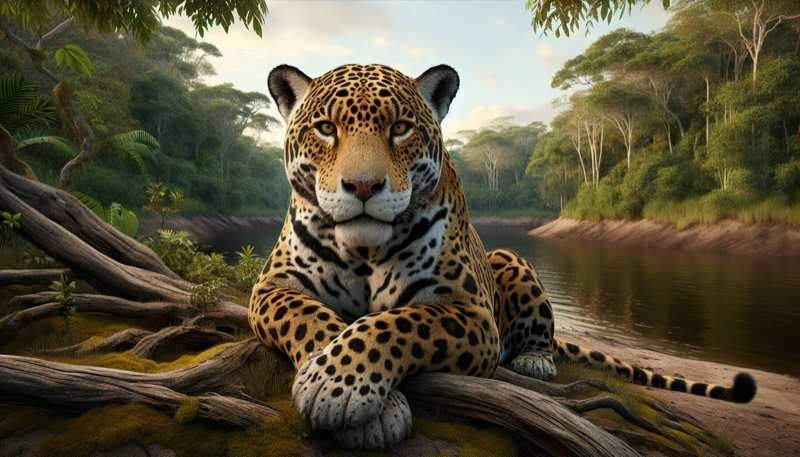
If seeing a wild jaguar is the main reason for your trip, begin with Brazil’s northern Pantanal. Its river network, open banks, experienced pilots, specialist guides, and established boat programmes make it the most practical visitor route to compare. That does not make a sighting certain. The southern Pantanal is a strong alternative for a broader wetland stay, while the Amazon, Corcovado in Costa Rica, and Cockscomb in Belize are better understood as important jaguar landscapes where a visual encounter is unusual.
This guide separates biological range from bookable access. It compares what the trip is actually like, how many field sessions to plan, which official rules matter, how to recognise irresponsible boat behaviour, and when a habitat-first trip is a better choice than a jaguar-focused one. Read the reviewed jaguar species guide for biology and conservation, then use the Pantanal jaguar safari planning guide for gateways, health, transport, stays, and operator questions.
Where can you realistically see a jaguar in the wild?
| Region | Trip model | Jaguar expectation | Best reason to choose it |
|---|---|---|---|
| Northern Pantanal, Brazil | Repeated boat sessions from a lodge or boat base, commonly reached through Cuiabá and the Transpantaneira | The strongest purpose-built visitor route, never a guarantee | Jaguar-focused field time plus open wetland wildlife |
| Southern Pantanal, Brazil | Lodge or ranch stay using vehicles, boats, trails, or horses, commonly reached through Campo Grande | Possible, but methods and local conditions vary widely | A varied Pantanal experience with a jaguar as one objective |
| Amazon basin | Rainforest lodge, river journey, community stay, or protected-area visit | Generally low for a casual visitor despite major jaguar habitat | Forest ecology, birds, primates, rivers, and landscape conservation |
| Corcovado, Costa Rica | Reserved, regulated national-park hiking with local guiding | Exceptional rather than expected | Osa Peninsula biodiversity and a legal public rainforest route |
| Cockscomb, Belize | Sanctuary trails and rainforest interpretation | Tracks or signs are more realistic than a visual sighting | Jaguar conservation history and protected forest |
That comparison is deliberately conservative. A jaguar occurring in a park does not mean the park offers a jaguar-viewing product. The IUCN/SSC Cat Specialist Group’s reviewed jaguar species account describes a vast range, varied habitats, difficult density estimation, and major regional differences in conservation status. Those are reasons to protect landscapes, not reasons to market every point on a range map as a sighting destination.
Why the Pantanal is different
The Pantanal is a seasonal wetland mosaic rather than one park or one tour circuit. Water, open banks, gallery forest, channels, roads, ranches, protected areas, and tourism bases create very different viewing conditions. In parts of the north, a boat can cover river edges where an animal may be visible without entering dense vegetation. Experienced local teams also build knowledge over many seasons. Together, those conditions support a specialist visitor economy that does not exist in the same form across most of the jaguar’s forest range.
Do not confuse the entire Pantanal with UNESCO’s named World Heritage property. The Pantanal Conservation Area listing covers a cluster of four protected areas totalling 187,818 hectares and states that the property represents 1.3% of Brazil’s Pantanal region. A lodge elsewhere in the wetland should not borrow “inside the UNESCO site” language unless it can identify the property boundary and prove the claim.
Likewise, a high local density estimate or a long operator sighting list does not predict your dates. Jaguars range over large areas, weather and water conditions change, boats redistribute after reports, and animals decide whether to remain visible. Ask operators for observation effort and method, not just a percentage. A useful answer explains the number and length of field sessions, historical record by comparable dates, group size, reporting method, and how no-sighting departures are counted.
Northern Pantanal: the main jaguar-focused route
Many northern itineraries begin at Cuiabá, travel south on the Transpantaneira, and use Porto Jofre or another river base for repeated boat sessions. Some combine a roadside lodge with a river stay; others use one base throughout. The essential booking question is not whether the brochure says “Pantanal.” It is where the boat launches, which rivers or channels it can legally use, how long the transfer takes, and how much paid time is actually spent observing wildlife.
A longer trip is valuable because it spreads risk across changing light, weather, water, boat traffic, and animal movement. It also creates time for giant otters, capybaras, caimans, monkeys, deer, raptors, parrots, storks, and wetland interpretation. Several field sessions are more defensible than one frantic day built around radio reports. Rest and heat management matter too: a schedule that exhausts passengers can be less safe and less observant.
Northern Pantanal jaguar observation is regulated in Mato Grosso. The official CONSEMA Resolution 85/11 in the state gazette requires observers to remain silent and prohibits equipment from altering behaviour. From a boat, it establishes at least 10 metres from a jaguar on land and at least 30 metres from one in the water. When more than one boat is watching the same animal, each can remain for no more than 20 minutes, and no more than three boats of the specified size may observe simultaneously. It also restricts landing near a sighting and bans feeding, baiting, sensory attraction, throwing objects, pursuit, interference, and blocking a crossing.
Those numbers are legal floors, not targets. An animal showing vigilance, changing direction, abandoning rest, shielding cubs, interrupting a hunt, or trying to leave needs more space. A protected-area management plan may be stricter, and the guide should know which rule applies at the exact location. The responsible pilot holds position or withdraws; the responsible guest does not bargain for a closer portrait.
Southern Pantanal: choose the wetland, not a promise
Southern Pantanal trips commonly use Campo Grande as a gateway and may connect to Miranda, Aquidauana, Corumbá, Ladário, or a remote lodge or ranch. Activities can include wildlife drives, boats, walking, horseback travel, and natural-history interpretation. Some properties participate in jaguar research or coexistence work, while others offer general wildlife tourism. The details are property-specific.
Mato Grosso do Sul’s official Pantanal visitor page gets the expectation right: it describes a jaguar as something a traveller may see and says this complex area needs careful planning. It also tells travellers to request a written service contract, verify tourism businesses in the Ministry of Tourism register, and use registered agencies and credentialled guides for organised trips.
Use the official Cadastur lookup as one check, not a complete quality badge. Registration does not prove wildlife ethics, guide skill, boat conduct, labour conditions, or conservation impact. Ask whether the person named in the proposal will lead your trip, how recent jaguar-oriented training is documented, and which rules apply in that state, protected area, river, or private property.
Choose the south when you want a varied wetland itinerary and are comfortable treating a jaguar as a possibility. If a seller promises that its southern property is interchangeable with the northern river route, ask for a precise explanation of habitat, method, field hours, historical data, and no-sighting handling. “Pantanal” alone is not evidence.
Can you see jaguars in the Amazon?
Amazonia holds the largest jaguar subpopulation in the reviewed species assessment, but abundance at continental scale is not the same as visibility to a visitor. Dense vegetation, immense area, low road access, river geometry, nocturnal or cryptic behaviour, and limited purpose-built observation make an encounter difficult. A rainforest lodge can sit inside excellent jaguar habitat and still go months or years without providing an ordinary guest with a clear view.
Book an Amazon trip for rainforest ecology, river systems, community knowledge, birds, primates, insects, plants, and conservation. If jaguars are mentioned, ask whether the evidence is camera-trap presence, tracks, staff sightings, occasional guest sightings, or a repeatable guided method. Those are not equivalent. Never support baiting, playback, live prey, dog pursuit, off-trail pressure, or disclosure of den and kill locations.
Regional security and access also matter. Government travel warnings may apply to specific river corridors rather than an entire country. The UK’s current Brazil travel advice, for example, identifies particular areas where it advises against all but essential travel and explains that travel against advice can affect insurance. Travellers should use the guidance issued for their own nationality and compare it with the exact river route, not a vague “Amazon” label.
Corcovado, Costa Rica: protected habitat, rare encounter
Corcovado National Park is a credible public route into Osa Peninsula rainforest, but it is not a Pantanal-style jaguar safari. The useful expectation is tracks, prey, forest structure, and a remote biodiversity experience, with a visual jaguar encounter as an exceptional event.
Costa Rica’s National System of Conservation Areas publishes the current Corcovado visitor information. It identifies official visitor sectors, requires advance reservation, controls entry through official posts, and sets guide requirements for specified routes. It also prohibits leaving public trails, feeding or harassing animals, night walks, swimming in park beaches, and other unsafe or damaging behaviour. Procedures, sectors, availability, and closures can change, so use the live SINAC process rather than a copied email address or old price in a blog post.
Choose Corcovado if your primary goal is a guided tropical-forest expedition with a broad species list. Reject any seller claiming a jaguar is routine, advertising off-trail stalking, or treating a camera-trap image as evidence that guests normally see the animal.
Cockscomb, Belize: jaguar conservation history
Cockscomb Basin is central to the history of jaguar conservation. Panthera’s Jaguar Program account describes how research and work with Belize’s government and partners helped establish the sanctuary in 1986. Belize’s published National Parks System regulations record the Cockscomb Basin Wildlife Sanctuary declaration.
That conservation importance should not be converted into a sighting promise. Dense broadleaf forest is difficult to scan, and a sanctuary designed to protect habitat is not a viewing enclosure. Visit for trails, waterfalls, forest, birds, tracks, interpretation, and the chance to understand why a large connected landscape matters. Verify the current manager, opening status, transport, trail conditions, fees, and local guide options immediately before travel.
When should you go to the Pantanal?
Many jaguar-focused northern boat products concentrate in the drier part of the year, when river travel and exposed banks can support observation. Avoid turning that broad pattern into a universal July-to-November guarantee. Annual floods, drought, fire, smoke, heat, rain, road conditions, water depth, lodge opening dates, and animal behaviour can shift the usable window.
Ask each operator five date-specific questions:
- Which exact boat base, river system, and field area will operate on my dates?
- How many morning, afternoon, or full-day sessions are included, and how are weather cancellations handled?
- What were the water, access, heat, smoke, and fire conditions during the comparable period in recent years?
- Which wildlife goals remain realistic if no jaguar is seen?
- What is refundable or movable if the lodge, road, river, or flight becomes inaccessible?
Avoid a single headline “success rate.” A credible operator can define its denominator, separate individual guests from departures or days, identify the date range, and disclose whether the figure includes brief or distant views. Even then, historical performance is context, not a warranty.
How to choose a responsible jaguar tour
Start with the route, then evaluate the company. A marketplace listing is a search result, not a recommendation. Obtain the legal business name, registration, named lodge, named boat base, named guide or guide standard, and a dated itinerary before paying.
Questions about the wildlife method
- What written code governs boats, vehicles, walking, photography, radio reports, and multiple groups at one animal?
- How does the team apply Mato Grosso’s distance, boat-number, time, landing, attraction, and non-pursuit rules?
- What happens when a jaguar enters the water, approaches the boat, hunts, feeds, mates, rests, or appears with cubs?
- Are bait, calls, scent, lights, drones, object throwing, off-trail pursuit, and bank obstruction explicitly prohibited?
- Can the guide end a sighting even if guests object?
Questions about the paid product
- How many passengers share each boat or vehicle, and is the guide also the pilot?
- Are transfer days presented separately from field days?
- Which meals, drinks, landing fees, park charges, fuel supplements, gratuities, and airport transfers are excluded?
- What happens after a weather cancellation, illness, missed domestic flight, smoke event, fire, or impassable road?
- Does the insurance requirement cover remote medical treatment, evacuation, boat activities, and the full itinerary?
Questions about local benefit
- Which local guides, pilots, drivers, cooks, hosts, landholders, or community organisations are paid?
- Are staff employed for a season or hired informally only when guests arrive?
- Does the operator contribute to monitoring, habitat protection, coexistence, education, or emergency capacity, and can it name the programme?
- Are conservation claims independently documented, or does the brochure merely say tourism “saves jaguars”?
Panthera Brasil says its work includes research, human–cat conflict mitigation, community education and support, and monitoring and developing best practice for jaguar tourism in both northern and southern Pantanal landscapes. Its Brazil programme page is a useful example of named activities. It does not certify every operator that mentions Panthera, so verify the relationship directly.
Boat crowding and the difference between law and ethics
Published research on Pantanal jaguar tourism has examined how information sharing and boat movement affect crowding. A 2024 Scientific Reports study discusses the Mato Grosso legal minimum and a stricter local association distance, along with the way boats travel and share information around Porto Jofre. The practical lesson is not to choose one number that excuses proximity. It is to ask how a company prevents a radio report from becoming a chase or a queue around one animal.
Good conduct remains visible even when the cat is calm. Engines and voices are controlled, escape routes stay open, boats do not form a wall, pilots anticipate other vessels, and guests receive a briefing before the first sighting. If one boat breaks the rule, your pilot should not copy it to protect a photograph.
Health, entry, and remote-trip safety
Brazilian entry requirements depend on nationality and can change. Use Brazil’s official visa service for the passport and date you will travel. Do not rely on a cached fee, generic visa-free duration, or operator screenshot.
Take the exact itinerary to a qualified travel-health professional. The US Centers for Disease Control and Prevention’s Brazil traveller page currently recommends yellow-fever vaccination for eligible travellers going to Mato Grosso and Mato Grosso do Sul, while malaria guidance distinguishes transmission in Mato Grosso from rare or sporadic rural and forest foci in Mato Grosso do Sul. That is why “no malaria in the Pantanal” is not responsible planning. Personal medical history, age, exact municipalities, season, side trips, and access to care affect advice.
Ask the operator about lifejackets, shade, drinking water, toilet arrangements, passenger movement, first aid, guide communications, the nearest appropriate clinic, evacuation time, and what happens if a passenger cannot continue. Confirm road and boat transfer duration without assuming that a remote lodge has reliable mobile service. Build a buffer before the international flight home.
Jaguar photography without making the encounter worse
A manageable camera is better than the longest lens you cannot use safely. From a small boat, a telephoto zoom can help respond to changing distance, while image stabilisation, continuous autofocus, a sufficiently fast shutter, and a sensible ISO reduce the urge to move closer. Bring weather protection, a cloth for spray, spare batteries, and a secure strap that does not trail overboard.
Practise changing exposure and focus modes before the trip. Keep the bag closed when the boat is moving, remain seated when instructed, and avoid switching seats during a sighting. Never ask another guest to sacrifice a safe position or the pilot to rotate repeatedly for your background. A distant frame that preserves behaviour is a better wildlife photograph than a close image created by disturbance.
Do not publish a precise real-time location, den, cub resting place, kill, or sensitive crossing point. Remove embedded coordinates where needed and follow guide or research-team instructions. Conservation value does not require turning every encounter into a map pin.
Does jaguar tourism support conservation?
It can support local livelihoods, research, habitat value, education, and coexistence, but the effect is not automatic. Tourism can also produce crowding, noise, rule-breaking, waste, carbon emissions, unequal benefits, habituation, and pressure to guarantee an animal. Ask who benefits and what behaviour changes when demand rises.
The IUCN cat account identifies habitat loss and fragmentation, prey decline, retaliation over livestock, and illegal killing and trade as major threats. A responsible trip should therefore value connected habitat and human–jaguar coexistence, not only photographs. A lodge employing local specialists and supporting conflict-reduction work may have a clearer case than a reseller that moves guests through the landscape without disclosing partners.
If you want to contribute beyond travel, review the Panthera wild-cat conservation support route and compare it with the full conservation programme directory. A general donation may support a wider portfolio rather than being ring-fenced for jaguars. Our endangered-animal sponsorship guide explains how to verify the legal organisation, payment terms, restrictions, recognition, gifts, privacy, and cancellation. Support does not buy access to a cat or permission to break a viewing rule.
A practical booking sequence
- Define the trip. Choose a jaguar-focused northern Pantanal route, a broader southern Pantanal stay, or a habitat-first rainforest journey.
- Verify the map. Record the airport, transfer road, lodge, boat base, rivers, protected areas, and operating state. Do not accept “Pantanal” or “Amazon” as the entire route.
- Compare field time. Count legal observation sessions, not marketing days. Separate travel, rest, optional activities, and international flight nights.
- Audit the operator. Check registration, guide credentials, wildlife policy, boat safety, group size, cancellation terms, local partners, and conservation claims.
- Check entry and health. Use current official sources and personalised advice for the exact passport, municipalities, season, and activities.
- Protect the downside. Insure the remote itinerary, keep transfer buffers, understand refund boundaries, and make the wider wetland or forest valuable without a jaguar.
- Reconfirm. Shortly before departure, check flights, road and river access, weather, heat, smoke, fire, lodge operation, government advice, and emergency contacts.
Frequently asked questions
Are jaguar sightings guaranteed in the Pantanal?
No. Specialist boats, repeated sessions, open riverbanks, and local expertise can make the northern Pantanal a practical place to look, but they cannot control weather, water, animal movement, visibility, or other boats. Treat any guarantee as a warning sign unless it is clearly a contractual refund promotion—and even then, judge the wildlife method separately.
Is the northern or southern Pantanal better?
Choose the north when jaguar-focused boat time is the central goal and the exact itinerary proves substantial field access. Choose the south when you want a varied lodge or ranch experience and accept a jaguar as one possibility. Individual properties and guides matter more than the regional label.
Can I see a black jaguar?
Melanistic jaguars occur, and their rosettes can remain visible in suitable light, but colour does not create a visitor route. Do not select a tour that promises a black individual or discloses a sensitive location to attract clients.
How close can a Pantanal boat get?
In Mato Grosso, Resolution 85/11 sets at least 10 metres from a jaguar on land and at least 30 metres from one in the water, alongside other restrictions. Those are minimum legal boundaries, not target distances. The correct distance can be greater, and protected-area, association, or operator rules may be stricter.
How many days should I plan?
There is no honest number that guarantees a sighting. Compare itineraries by the number, duration, and location of field sessions. A trip with several sessions and strong alternative wildlife goals is more resilient than one headline “jaguar day.” Add transfer buffers because the wetland is remote.
Is a jaguar trip safe?
The trip combines a powerful predator, small boats, heat, sun, insects, remote transport, variable connectivity, and changing road or water conditions. A registered operator, professional guide and pilot, correct boat equipment, current health advice, suitable insurance, and immediate compliance with instructions reduce risk. No trip can be made risk-free.
The best jaguar trip is not the loudest promise. It is a precisely mapped, legally operated journey with several patient field sessions, a guide empowered to protect the animal, transparent local benefit, a sound emergency plan, and a wider wetland or forest experience that remains worthwhile when the jaguar stays hidden.