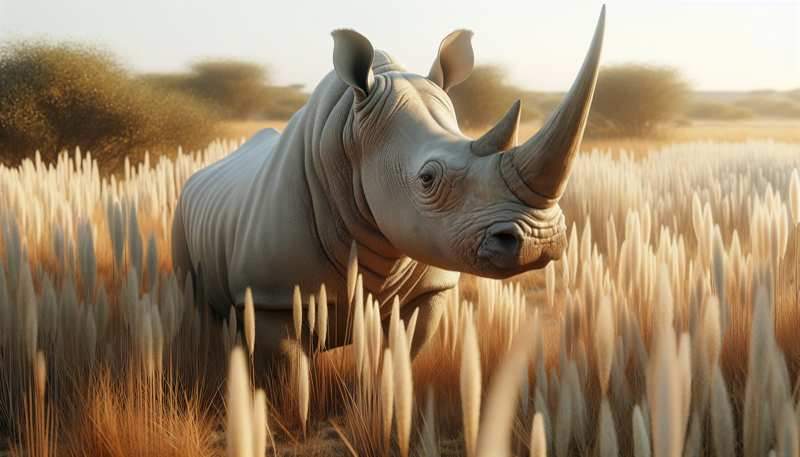
The best rhino trip starts by choosing the species. For greater one-horned rhinoceroses, begin with Kaziranga National Park in India. For a public African self-drive route where black and southern white rhinos occur, compare Kruger National Park. For southern white rhino conservation history alongside black rhinos, consider Hluhluwe-iMfolozi Park. Etosha offers a public Namibian route in black-rhino range, while Ol Pejeta combines black and southern white rhino conservation with a managed visit connected to the last two northern white rhinos.
Those are not five versions of the same encounter. There are five living rhino species, their global categories run from Near Threatened to Critically Endangered, and the two rarest Asian species are not ordinary wild-viewing targets. A useful guide must also withhold information: exact recent locations, coordinates, patrol details, access routines, and identities can create security risks. The safest useful rhino location is a public protected area, not a pin.
Use the reviewed rhinoceros family guide for taxonomy, status, habitat, biology, and responsible photography. The reviewed Save the Rhino support record explains one verified donation route without claiming that a general gift is restricted to a particular rhino or park. The endangered-animal sponsorship guide provides a broader due-diligence checklist.
Which rhino can you see, and where?
| Species | Current global category | 2025 estimate used in this guide | Visitor reality |
|---|---|---|---|
| Black rhinoceros | Critically Endangered | 6,788 | Public viewing is possible in parts of eastern and southern Africa, including Kruger, Hluhluwe-iMfolozi, Etosha, and Ol Pejeta; locations remain security-sensitive. |
| White rhinoceros | Near Threatened | 15,752 | Southern white rhinos occur on public and private African wildlife routes. The northern subspecies is extinct in the wild; two managed females remain. |
| Greater one-horned rhinoceros | Vulnerable | 4,075 | Kaziranga is a major public visitor route in India. Use official vehicle, zone, permit, opening, and flood information. |
| Javan rhinoceros | Critically Endangered | 50 | Not an ordinary wild-viewing target. Do not seek or circulate precise habitat and movement information. |
| Sumatran rhinoceros | Critically Endangered | 34–47 | Not an ordinary wild-viewing target. Conservation, breeding, habitat, and security take precedence over visitor access. |
These estimates come from the IUCN’s August 2025 global rhino update, which brought together reporting from the African and Asian Rhino Specialist Groups and TRAFFIC for CITES. It reported contrasting African trends, with black rhinos increasing from the 2023 estimate and white rhinos decreasing, while also documenting the severe position of the Javan and Sumatran species. Numbers are estimates with dates and methods, not a live counter.
The Save the Rhino species directory provides a clear five-species comparison, including scientific names, broad ranges, weight context, and the same current population order of magnitude. This article does not combine those figures into one comforting “world rhino population”: an increase in one species cannot cancel the risk faced by another.
Quick destination comparison
| Protected area | Rhino context | Visit format | Key decision |
|---|---|---|---|
| Kaziranga, India | Greater one-horned rhinoceros | Officially arranged vehicle visits within current zones and rules | Build around current opening, flood, permit, vehicle, and zone information; an elephant ride is not required to search for wildlife. |
| Kruger, South Africa | Black and southern white rhinoceros | Public self-drive and official guided activities | Choose a legal gate and camp route, respect quotas and hours, and keep rhino posts security-safe. |
| Hluhluwe-iMfolozi, South Africa | Black and southern white rhinoceros; major southern white recovery history | Self-drive plus official guided drives and wilderness activities | Match any on-foot activity to mobility, medical, guide, and current park conditions. |
| Etosha, Namibia | Black rhinoceros, with white rhinos also present after reintroduction | Public roads, official drives, and camp waterholes | Treat a waterhole as patient observation, not a scheduled appearance. |
| Ol Pejeta, Kenya | Black and southern white rhinoceroses; two managed northern white females | Conservancy wildlife visit plus specifically managed northern white interpretation | Keep “wild rhino safari” separate from a managed northern white encounter. |
“Best” depends on which species you mean, whether you want to self-drive, how much field time you have, and whether your route can absorb weather or access changes. Do not rank parks using a copied rhino total. Managers may restrict public numbers or locations for good reason, estimates have different dates, and a dense population does not create a sighting appointment.
Kaziranga: the clearest public greater one-horned rhino route
Kaziranga lies in the Brahmaputra floodplain in Assam. The UNESCO property record describes a dynamic system of river channels, grasslands, wetlands, and woodland and identifies the park’s importance for the greater one-horned rhinoceros. It also records pressures including flooding, erosion, poaching, tourism pressure, and heavy road traffic. Those are trip-planning facts, not background decoration: water and road conditions can change access, while wildlife crossing needs make roadside behaviour part of conservation.
Assam Tourism’s Kaziranga information page is a useful official discovery point for the visitor landscape. Assam Forest’s national-park directory provides the managing-government context. Use current authority and booking information for opening dates, zones, permits, vehicles, guides, road access, flood effects, and closures; do not build an international itinerary around a marketing paragraph saved offline.
Official tourism material may list both vehicle and elephant-based viewing. This platform does not treat riding an elephant as necessary for seeing wildlife. A vehicle-based search can support a clear welfare boundary and still requires scrutiny: ask which zone is confirmed, who provides the vehicle and guide, what happens after closure or flooding, whether roadside wildlife crossings are protected, and whether the operator follows the park’s current rules.
Choose Kaziranga when the greater one-horned rhinoceros is the actual target and Assam fits the wider India route. Do not rename the animal “Indian rhino” and imply that every reserve in India offers the same access. A famous tiger circuit is not automatically a rhino circuit.
Kruger: public African self-drive with a security duty
Kruger is practical because visitors can combine public self-drive roads with official guided activities. SANParks’ day-visitor information explains quotas, advance reservations, reception procedures, and conservation fees. Its visitor tips encourage slow travel rather than trying to cross too much of a very large park.
Plan the route around a confirmed gate or camp, legal opening hours, realistic road distance, rest, fuel, and alternatives. Both black and southern white rhinos occur in the wider park, but this page will not identify a current road, waterhole, territory, or recent sighting. A reception sighting board or guide conversation is temporary, local context; it is not permission to publish a geotagged rhino report to an unlimited audience.
A self-drive vehicle does not make independent approach safe. Stay on authorised roads, obey closures and speed limits, leave enough space for an animal to cross or retreat, and never position the vehicle to trap it between traffic. If a rhino approaches, follow the current park instruction and create space when it is safe to do so. Do not leave the vehicle except where explicitly permitted.
Choose Kruger if public self-drive flexibility matters and you want a broad wildlife trip rather than a single-animal product. Open the platform’s current South Africa wildlife gateway for country-level route context, but verify every park operation on SANParks before payment.
Hluhluwe-iMfolozi: conservation history and current protection
Hluhluwe-iMfolozi is central to the southern white rhinoceros recovery story. Ezemvelo KZN Wildlife’s official park information describes the 96,000-hectare protected landscape, its Operation Rhino legacy, self-drive access, guided drives, and wilderness trails. The historical success is real, but it should not become a claim that current protection is easy or finished.
Ezemvelo’s biodiversity monitoring overview connects rhino protection with anti-poaching work, monitoring, collaring, camera traps, habitat protection, and public awareness. Visitor fees can contribute to the protected-area system, but a ticket is not a licence to demand close access, enter an operational area, photograph staff without consent, or ask how patrols and monitoring are deployed.
On-foot tracking or a wilderness trail is a specialist guided activity, not permission to walk independently. Ask about minimum age, fitness, terrain, group size, guide qualifications, emergency communication, medical disclosure, insurance, luggage, weather cancellation, and the exact wildlife protocol. The guide must be able to end or redirect the activity without commercial pressure when an animal, security situation, fire, flood, or other condition requires it.
Choose Hluhluwe-iMfolozi when southern white rhino conservation history is a priority and the current KwaZulu-Natal route works. Treat the possibility of black rhinos as a bonus rather than a contractual deliverable.
Etosha: watch waterholes without scheduling wildlife
Namibia’s environment ministry provides the official Etosha National Park overview. It describes the public park, roads, camps, waterholes, guided drives, black rhino context, and the reintroduction of white rhinos. Use that live government source for current entry, accommodation, driving, facility, and activity information.
A camp waterhole can be a low-movement way to wait for wildlife, especially when driving fatigue or mobility affects the trip. It is still not a theatre schedule. Weather, water availability, disturbance, competition, management, and an animal’s own decisions determine what appears. Keep noise and light within the rules, give other visitors a sightline, and do not use flash or movement to provoke a response.
On the road, stop only where legal and safe, remain inside the vehicle unless a site explicitly allows otherwise, and never follow another car solely because its occupants claim to know a rhino’s position. Do not turn a dark, distant view into unsafe speeding before a gate time. Choose Etosha for the whole arid-landscape route, not because a social post promises one waterhole at one hour.
Ol Pejeta: separate wild populations from managed northern white rhinos
Ol Pejeta’s official rhino programme page distinguishes black, southern white, and northern white rhinoceroses. The two remaining northern white rhinos are females living under managed protection, and the subspecies is extinct in the wild. Assisted-reproduction science may change, but no visit to the two animals should be described as seeing a surviving wild northern white population.
The distinction does not reduce the educational value of the visit. It makes the story more honest: a traveller may observe free-ranging black or southern white rhinos within the conservancy and separately learn about managed northern white conservation. Ask what the ticket includes, whether a named activity uses a managed enclosure, how viewing time and distance are controlled, whether touching or feeding occurs, and which conservation work the fee supports.
A conservancy is not automatically a private-access loophole. Follow its current roads, hours, guide instructions, photography restrictions, and location-sharing rules. Avoid posting staff schedules, security infrastructure, veterinary movements, holding areas, or current rhino positions.
Why this guide does not send visitors to Javan or Sumatran rhinos
The Javan and Sumatran rhinos are Critically Endangered and persist in extremely small, intensively managed populations. The 2025 IUCN update estimated 50 Javan rhinos and 34–47 Sumatran rhinos. It also reported that 26 Javan rhinos were poached between 2019 and 2023. In that context, turning a broad habitat description into a traveller’s precise target would be irresponsible.
A conservation organisation may publish carefully chosen camera-trap footage, broad landscape information, a breeding update, or a controlled educational visit. None of those creates a right to enter habitat, request a current location, contact field staff privately, fly a drone, follow researchers, or purchase an unofficial “secret rhino trek.” Refuse any operator selling access that depends on concealed entry, local bribery, real-time tracking data, or proximity to a breeding or release site.
You can still build a Southeast Asian conservation trip around legitimate public parks, local communities, habitat interpretation, and verified organisations without making the rarest animal perform. Not seeing a Javan or Sumatran rhino is not a failure; protecting the conditions for recovery is the point.
Rhino location security: what not to publish
Responsible location sharing is more demanding than removing GPS metadata from one photograph. A caption can reveal a named waterhole; a sequence of posts can expose time and direction; a recognisable ranger, vehicle, gate, fence, hill, building, or tracking screen can narrow a location. Delayed posting helps but does not make every detail safe.
- Do not publish exact coordinates, a live map pin, current road marker, waterhole, nesting or calving area, holding site, veterinary location, or repeated movement pattern.
- Do not identify patrol schedules, ranger names without consent, staffing levels, radio channels, camera positions, access codes, fence weaknesses, security equipment, or response routes.
- Do not share a photograph of a sighting board, tracking dashboard, permit, radio screen, research form, or vehicle log if it exposes sensitive data.
- Do not ask guides to call contacts, reveal an animal’s name and territory, leave a public route, or race another vehicle for a closer view.
- Use the protected-area name or broad destination after the visit when the authority permits it. Let the manager decide whether a more precise fact is safe.
This policy is not secrecy theatre. It is a practical limit on publishing information that has little planning value for a future traveller but potential value to criminals or crowds. The article therefore compares public destinations, not rhino hotspots inside them.
How to watch rhinos safely and responsibly
- Use an authorised format. Stay inside the vehicle or assigned public hide unless an official ranger-led activity explicitly requires otherwise.
- Follow the current instruction. A ranger on the ground has situational knowledge that a generic online “what to do if charged” paragraph cannot provide.
- Keep the animal’s route open. Do not form a vehicle wall, surround it, block a crossing, or position between a mother and calf.
- Watch behaviour and space. If the animal changes direction, becomes vigilant, stops feeding, or responds to the group, let the guide increase distance or withdraw.
- Never call, bait, feed, touch, or pursue. Do not ask for off-road driving, a horn-facing pose, or a walking approach for the photograph.
- Keep the encounter security-safe. Disable or strip precise location data and avoid identifying current place through captions or landmarks.
- Accept no sighting. A legal, patient visit that leaves the animal undisturbed is a valid outcome.
Do not use stereotypes such as “black rhinos always charge” or “white rhinos are safe.” Species, individual, calf presence, visibility, wind, terrain, vehicles, habituation, previous disturbance, and escape space all matter. The safe response comes from the authorised guide and site procedure, not the animal’s common name.
How to choose a rhino tour
A marketplace result on this site is a search lead, not an endorsement. Obtain the operating company’s legal name, exact protected area, confirmed permit or concession, actual vehicle and group size, guide credentials, accommodation, transfers, park fees, cancellation terms, and wildlife policy before paying. A listing titled “rhino safari” may be a broad game drive, a private reserve, a managed sanctuary, an on-foot tracking activity, or a captive encounter.
Ask these questions:
- Which rhino species may occur on the legal route, and is any part of the visit a managed enclosure rather than a wild population?
- Who issues the park entry, vehicle, zone, guide, or walking permission, and when is it confirmed?
- Does the company prohibit exact-location sharing, off-road pursuit, baiting, calling, touching, feeding, and pressure on guides to get closer?
- What natural-history programme runs if no rhino is found?
- Can the guide stop the approach without refund pressure when welfare, safety, or security requires it?
- How are local staff paid and trained, and what named park, community, research, or conservation payment is included?
- What changes after flood, fire, road, gate, weather, security, animal-welfare, or park closure?
- For walking, what are the fitness, age, medical, insurance, equipment, emergency, and ranger requirements?
Reject a guarantee, a “secret location,” a promise to radio for a fresh position, an unsanctioned walk, horn handling, staged feeding, an elephant ride sold as essential, or a conservation claim that cannot name its recipient and mechanism. A strong operator sells time, interpretation, lawful access, and good decisions—not control over a wild rhino.
Entry, health, insurance, and route checks
India’s official visa portal is the starting point for passport and visa or eVisa eligibility. Use it for the exact nationality, passport, travel purpose, and entry route; do not rely on a blog’s fixed fee or processing promise. India’s country size also makes “flying to India” an incomplete Kaziranga transport plan. Confirm the current regional gateway, ground transfer, road conditions, park zone, and arrival buffer with the actual providers.
South Africa’s Department of Home Affairs maintains an official Electronic Travel Authorisation portal for eligible visa-required nationalities. It is not a universal instruction for every passport. Kenya and Namibia have their own current entry systems; use the relevant government authority for the passport and date rather than copying a rule across African countries.
Health preparation is itinerary-specific. The CDC’s current South Africa traveller page identifies malaria transmission in Kruger and specified KwaZulu-Natal districts, while the India traveller page covers a different national risk profile. Take the complete route, season, accommodation, activities, personal history, medicines, pregnancy considerations, and time available to a qualified travel-health professional. Do not infer medical advice from the word “safari.”
Check insurance for the real activity: self-driving, unsealed roads, vehicle exclusions, ranger-led walking, age or medical exclusions, altitude if relevant elsewhere in the route, missed connections, park closure, evacuation, and treatment. Read the operator’s cancellation wording separately. Insurance does not turn an excluded activity into a covered one.
Photography without turning a rhino into a location beacon
A telephoto zoom is usually more flexible than building the day around a maximum focal length. Use the vehicle, beanbag, or support the operator permits. Choose a shutter speed that accounts for animal and vehicle movement, set an aperture for the depth of field you actually need, and raise ISO rather than asking the driver to close distance. Turn off flash where required and avoid sound or movement intended to make the animal look at the camera.
Before posting, remove embedded coordinates and inspect the entire frame for road signs, waterhole names, tracking equipment, patrol details, staff identities, research tags, documents, dashboards, or distinctive infrastructure. Crop or withhold the image when needed. Ask the protected area whether a clearly identifiable tagged animal or managed facility has additional publication rules.
A close portrait is not proof of a good encounter. Habitat, tracks, dung, browsing or grazing signs, conservation interpretation, and a distant animal moving without reacting to the vehicle may tell a more truthful story.
How tourism and donations can help—and what they do not prove
Protected-area fees, legal concessions, local guides, accommodation, transport, and community businesses can support jobs and landscapes associated with rhino conservation. Organisations may also fund ranger welfare, intelligence, monitoring, habitat management, veterinary response, translocation, community work, and demand reduction. These mechanisms differ. A company cannot establish impact by adding “eco” to its name or saying part of every booking saves rhinos.
Ask for the named recipient, legal entity, amount or calculation, payment schedule, restricted or unrestricted status, most recent transfer, reporting, and what happens after cancellation. Never ask to inspect operational anti-poaching tactics, current patrol deployment, or animal locations as proof. Financial and governance evidence should verify a contribution without compromising security.
For a separate donation, open the recipient’s current programme and financial information directly. Confirm currency, renewal, tax treatment, privacy, gift delivery, cancellation, and whether a symbolic adoption supports a wider mission rather than an individually owned animal. WhereAnimalsLive receives no conservation referral fee from the reviewed support record.
Do not buy rhino horn or a product represented as containing it. Tourism, medicine, art, inheritance, or a seller’s “antique” story does not make a purchase conservation support. Follow the current wildlife-trade and customs law in every relevant jurisdiction.
A route-first rhino planning sequence
- Choose black, white, or greater one-horned rhinoceros as the realistic target. Treat Javan and Sumatran rhinos as conservation priorities, not secret-viewing products.
- Select one public protected area whose official visitor format matches your driving, mobility, time, budget, and wider route.
- Open the managing authority’s current access, permit, zone, gate, road, closure, and safety information.
- Compare self-drive, official drive, or ranger-led walk as different activities with different risk, insurance, fitness, and booking requirements.
- Verify the actual operator, park payment, route, vehicle, group size, guide, no-sighting policy, and wildlife-security policy.
- Confirm entry, regional transport, health, insurance, weather, flood or fire, accommodation, and cancellation details.
- Build several wildlife and habitat interests into the trip so no guide is pressured to manufacture one encounter.
- After the visit, share the protected-area story without publishing a fresh rhino location or operational security detail.
Which rhino destination should you choose?
- Choose Kaziranga when the greater one-horned rhinoceros is the priority and you can work with current Assam vehicle, zone, flood, road, and permit conditions.
- Choose Kruger for a broad public African wildlife trip with self-drive flexibility and a clear duty to keep black and white rhino locations private.
- Choose Hluhluwe-iMfolozi for southern white rhino conservation history, black and white rhino habitat, and current Ezemvelo self-drive or guided options.
- Choose Etosha for an arid Namibia route where roads, official drives, and patient camp-waterhole observation are the experience—not a scheduled rhino appearance.
- Choose Ol Pejeta when you can keep free-ranging black and southern white rhino viewing separate from the managed northern white conservation story.
A responsible rhino trip does not promise the rarest species, sell a secret pin, dramatise anti-poaching, or make closeness the measure of value. It identifies the species, uses a legal public route, protects operational information, pays transparent providers, and gives the animal room to disappear. For rhinos, the information you choose not to publish can be part of the conservation outcome.