The most practical places to plan a wild snow-leopard trip are Ladakh and Spiti in northern India, where specialist winter guiding has developed around public mountain landscapes and local communities. Mongolia also protects major snow-leopard landscapes and supports long-term research, but conservation range does not automatically mean straightforward visitor access. In every region, the animal is difficult to find, viewing is normally distant, and no ethical operator can guarantee a sighting.
This guide compares the decision, not just the map. It explains habitat, realistic visitor regions, timing, altitude, physical demands, guide standards, community benefit, protected-area behaviour, booking checks, and what to do if the cat never appears. Start with our reviewed snow leopard species guide for biology and range, then use the Ladakh snow leopard planning guide for destination logistics.
Where do snow leopards live?
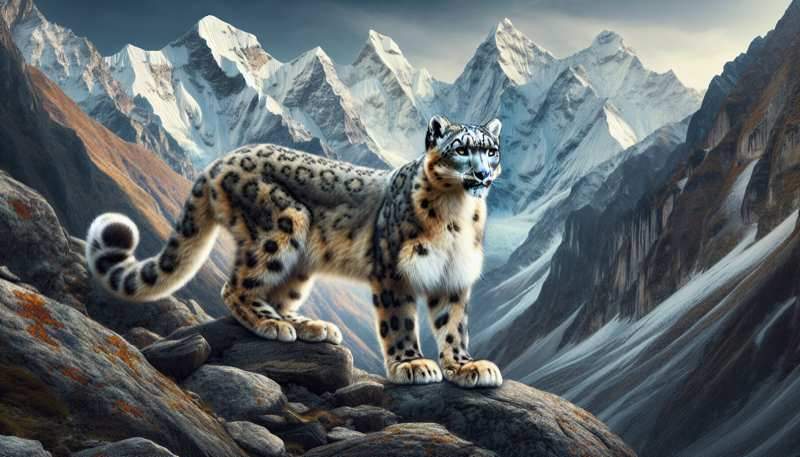
The IUCN/SSC Cat Specialist Group's snow leopard species account places the cat across the high mountains of 12 Central and South Asian countries, including the Altai, Tian Shan, Pamir, Hindu Kush, Karakoram, and Himalaya. It favours alpine and subalpine terrain broken by cliffs, ridges, gullies, and rocky outcrops, although elevation and landscape structure vary across the enormous range.
A distribution map answers where a species occurs; it does not answer where a visitor can legally, safely, or responsibly look. Many areas are remote, politically sensitive, ecologically fragile, privately or communally used, protected, or without a dependable visitor system. The useful shortlist is therefore much smaller than the biological range.
Population figures also need care. The Cat Specialist Group says reliable global estimates are lacking and earlier figures are approximate. India's Wildlife Institute published the country's first systematic national assessment after fieldwork from 2019 to 2023. Its official assessment summary estimated 718 snow leopards in India, including 477 across Ladakh and 51 in Himachal Pradesh. Those are modelled regional estimates, not animals available for tourism, and they do not translate into a sighting percentage.
Snow leopard viewing regions compared
1. Ladakh: the clearest starting point for a first specialist trip
Ladakh is the strongest starting point for many international visitors because Leh provides a recognised gateway and the region has an established network of local drivers, guides, spotters, guesthouses, and homestays. The Ladakh wildlife authority's official protected-area overview lists Hemis High Altitude National Park, Changthang Wildlife Sanctuary, and Karakoram Wildlife Sanctuary in Leh and describes snow-leopard monitoring, conflict mitigation, protected-area management, and community livelihoods.
Do not reduce Ladakh to Hemis or interpret the 477-animal territory-wide estimate as a Hemis count. A specialist itinerary may use villages and valleys within a legally accessible landscape, and the working area can change with weather, wildlife signs, road conditions, accommodation, permissions, and community agreements. Ask for the broad operating landscape before payment, but do not demand den sites, GPS points, live camera-trap locations, or an exact cat itinerary.
The first constraint is altitude. Ladakh Tourism's current travel advisory says all tourists arriving in Leh must complete at least 48 hours of rest before travelling to higher-altitude areas. It also tells visitors not to ignore headache, nausea, or breathlessness and not to travel alone in remote or restricted places without the relevant permission. That minimum rest period belongs inside the paid itinerary, not outside it as optional free time.
Choose Ladakh when you want the most developed visitor pathway in this comparison, can tolerate severe cold and delayed transport, and are willing to spend long periods scanning distant slopes. Do not choose it because a seller uses “best in the world,” publishes a success rate without method, or places a snow leopard photograph beside a generic Ladakh sightseeing tour.
2. Spiti Valley: a community-based alternative with difficult winter access
Spiti sits in Himachal Pradesh. The state's official tourism page for Spiti Valley identifies the landscape around Kibber as snow-leopard habitat and accurately frames a wild encounter as a rare glimpse. That is the right expectation: local knowledge can improve how effectively a group reads tracks, prey movement, ridgelines, and alarm behaviour, but it cannot schedule the cat.
Spiti may suit travellers who are comfortable with simpler accommodation, road-led access, small community stays, winter disruption, and a plan that changes daily. Ask where the trip begins, how the winter road is assessed, who makes the go or no-go decision, what happens after closure, how heating and water work, and how quickly the group can reach medical care. A low advertised trip price is not useful if it omits the gateway transfer, delay nights, local guiding, winter equipment, or evacuation exposure.
Do not treat Ladakh and Spiti as interchangeable add-ons. The gateways, road risks, acclimatisation sequence, local permissions, field teams, and contingency plans differ. A short itinerary that rushes between them may create more vehicle time and altitude pressure while reducing quiet observation.
3. Mongolia: important habitat, but verify the visitor mechanism first
Mongolia contains major snow-leopard habitat in the Altai and South Gobi and hosts long-term conservation research. The Snow Leopard Trust's Mongolia programme page describes its local partner, landscape work, research, community programmes, and the threats from poaching, retaliation, and mining.
That conservation importance should not be converted into a promise that any named research landscape is open to wildlife tourism. Before treating a Mongolia expedition as comparable with Ladakh or Spiti, ask for the current protected-area permission, community consent, local implementing partner, guide credentials, broad operating region, vehicle and camp practice, waste plan, location-data policy, and written no-sighting terms. A tour should never imply that a donation, research relationship, or camera-trap project buys access to sensitive data or collared animals.
Mongolia can make sense for an experienced expedition traveller who values the wider mountain or desert ecosystem, has substantial schedule flexibility, and has found a transparent locally accountable route. It is a poor choice if the whole proposition rests on a stock photograph, a famous reserve name, or an operator that refuses to explain who grants access.
What about Nepal, Bhutan, Pakistan, Kyrgyzstan, China, or other range countries?
Snow leopards occur far beyond the three options above, and conservation tourism may develop responsibly in other range states. Presence alone is not enough to recommend a bookable route. Entry rules, regional travel advice, protected-area access, guide systems, border sensitivity, infrastructure, community consent, and winter safety can all change. Treat other countries as an operator-led research project: verify the exact legal visitor mechanism through current authorities before paying, and never use a conservation map to plan independent tracking.
When is the best time to see snow leopards?
Winter is the main commercial tracking season in Ladakh and Spiti, but “December to March” is too blunt to be a guarantee. Snow, prey, mating behaviour, light, road access, village capacity, and the safe operating window vary. A cat remains camouflaged in a huge landscape even when tracks are fresh.
Ask an operator five timing questions:
- Why does this exact landscape operate on these dates?
- How many itinerary days are genuine observation days after arrival, mandatory rest, and transfers?
- What weather, road, health, or wildlife condition would shorten or relocate field time?
- What happens financially and operationally if the gateway flight, road, or village access fails?
- Does the plan still have value through mountain wildlife, culture, learning, and community time if no cat is seen?
A longer stay creates more opportunities to search, but it still does not make an encounter certain. Compare field sessions, not the headline duration. A ten-night product with several gateway, transfer, and tourism days may contain less scanning time than a shorter, tightly designed specialist itinerary.
How physically demanding is a snow leopard trip?
Difficulty cannot be summarised by one trekking grade. Some days may involve observation near a road or village; others can require walking on snow, ice, loose rock, or steep ground and then remaining still in cold wind. Altitude can turn an easy sea-level distance into a significant effort. Toilets, heating, steps, vehicle access, and the distance between a room and viewing position may matter as much as the advertised daily walk.
Before booking, give the operator an honest account of mobility, balance, heart or lung conditions, previous altitude response, cold tolerance, medication, dietary needs, and the assistance you may require. Ask for the minimum and maximum walking distance, ascent, surface, time standing, vehicle access, carrying expectations, room heating, toilet type, emergency transport, guide ratio, and whether a lower-exertion field option exists. “Suitable for most people” is not an assessment.
Use a qualified travel-health professional for medical decisions. The current CDC India traveller page is one useful official input for India-wide health notices, vaccines, malaria context, and destination-specific updates, but it cannot replace advice based on your health and complete route. Do not choose prescription medication from a tour article or packing list.
How to choose a responsible snow leopard tour
The Global Snow Leopard and Ecosystem Protection Program has published principles for tourism in snow-leopard habitat. The framework treats tourism as something that needs ecological and social planning, local relevance, monitoring, and non-invasive practice—not as an automatic conservation benefit.
Use these questions when comparing operators:
- Legal access: Which authority, protected area, village, landholder, or community permits the route? Which current fees and registrations are included?
- Local leadership: Name the local guide, spotter team, driver, homestay or lodge, and ground operator. Explain how they are contracted and paid.
- Group pressure: What is the maximum group size at one observation position, and what happens when several groups find the same animal?
- Viewing behaviour: Is there a written ban on baiting, calling, chasing, surrounding, blocking movement, drones, flash, and closing distance for photography?
- Location security: How are tracks, dens, kills, cubs, live observations, camera traps, and image metadata handled? Guests should not receive or publish sensitive coordinates.
- Community benefit: Which services are locally owned or delivered, and is any conservation payment a named amount or mechanism rather than a vague “supports conservation” claim?
- Waste and transport: How are heating fuel, water, toilets, litter, vehicle routes, and off-road pressure managed in a fragile cold-desert or mountain environment?
- Safety: Who makes the altitude and weather decision, what communications are carried, where is the realistic treatment point, and how is evacuation funded?
- Uncertainty: Is the no-sighting policy written clearly, with no promise of switching to intrusive tracking or extending pressure on an animal?
Ladakh's administration reinforced the habitat point in June 2026 when it announced penalties for illegal off-roading in protected wildlife areas and urged visitors not to drive into protected habitat. Read the official Ladakh notice as a practical warning: hiring a vehicle does not create permission to leave legal routes for a photograph.
Permits, visas, regional advice, and insurance
For India, begin visa research at the Government of India's Indian Visa Online portal. Eligibility, category, validity, permitted activities, fees, and entry conditions depend on passport and purpose. Use the official domain rather than a look-alike commercial application site, and do not assume an ordinary tourist permission covers professional filming, research, journalism, drones, or restricted routes.
Then check current regional travel advice from your own government. The UK's India travel advice, for example, separates regional risks and notes that travelling against official advice can affect insurance. Read the exact regional section and route; do not treat “India,” “Himalaya,” “Jammu and Kashmir,” and “Ladakh” as interchangeable labels.
Insurance must match the actual maximum altitude and every activity. Ask in writing about trekking or walking definitions, winter conditions, pre-existing conditions, guide requirements, search and rescue, helicopter or road evacuation, medical treatment, repatriation, weather delay, missed connections, and travelling against government advice. A product marketed as adventure insurance can still exclude the elevation or activity in your itinerary.
Photography without increasing pressure
A spotting scope is often more important than a camera. If photography matters, ask who supplies scopes, tripods, beanbags or other supports and whether the group rotates fairly around shared optics. Practise finding a small subject manually before departure. Bring enough reach to accept distance, not as a reason to ask the guide to approach.
Never request bait, playback, a drone, a vehicle repositioned off-road, or a group moved above or around the animal. Do not publish precise place names, coordinates, track logs, camera metadata, den or kill context, or a live location. A beautiful photograph can create future disturbance if its caption becomes an instruction manual.
How can the trip support snow leopard conservation?
Tourism can support local livelihoods and make living wildlife economically relevant, but only when the mechanism is real. Local guiding, homestays, food, transport, crafts, and fair employment can keep spending closer to the landscape. A separate conservation contribution should name the recipient, amount or calculation, restriction, and reporting route. Neither form of spending excuses intrusive field behaviour.
If you want to contribute beyond the trip, compare the Snow Leopard Trust symbolic adoption review with the wider conservation programme directory. Adoption is support, not ownership or access. Our animal sponsorship guide explains how to verify the legal entity, payment frequency, allocation, tax claims, gifts, privacy, and cancellation terms.
A booking sequence that protects the trip and the cat
- Choose Ladakh, Spiti, Mongolia, or another route by access model and physical fit—not by a claimed success rate.
- Verify species and regional context through current official and conservation sources.
- Obtain personalised medical advice and disclose relevant health and mobility needs to the operator.
- Check visa, regional advice, protected-area rules, and insurance for the exact route and maximum altitude.
- Request the named local ground team, legal access mechanism, group size, wildlife code, location-data policy, and emergency plan.
- Compare itemised quotes by genuine observation days, staffing, local services, inclusions, exclusions, and cancellation terms.
- Pay only through the contracted legal entity and keep the itinerary, terms, receipt, and emergency contacts.
- Recheck flights, roads, weather, health notices, permissions, and operator instructions close to departure.
- In the field, let the guide and the animal control distance and accept that the responsible result may be no sighting.
- Afterwards, generalise location data, report poor practice, and describe uncertainty honestly when sharing the trip.
The right snow-leopard trip is not the one with the strongest promise. It is the one that would still be worthwhile without a cat: a legal and physically realistic mountain journey, led by accountable local expertise, with patient observation, transparent community benefit, a credible safety plan, and enough respect to leave the habitat quieter than you found it.