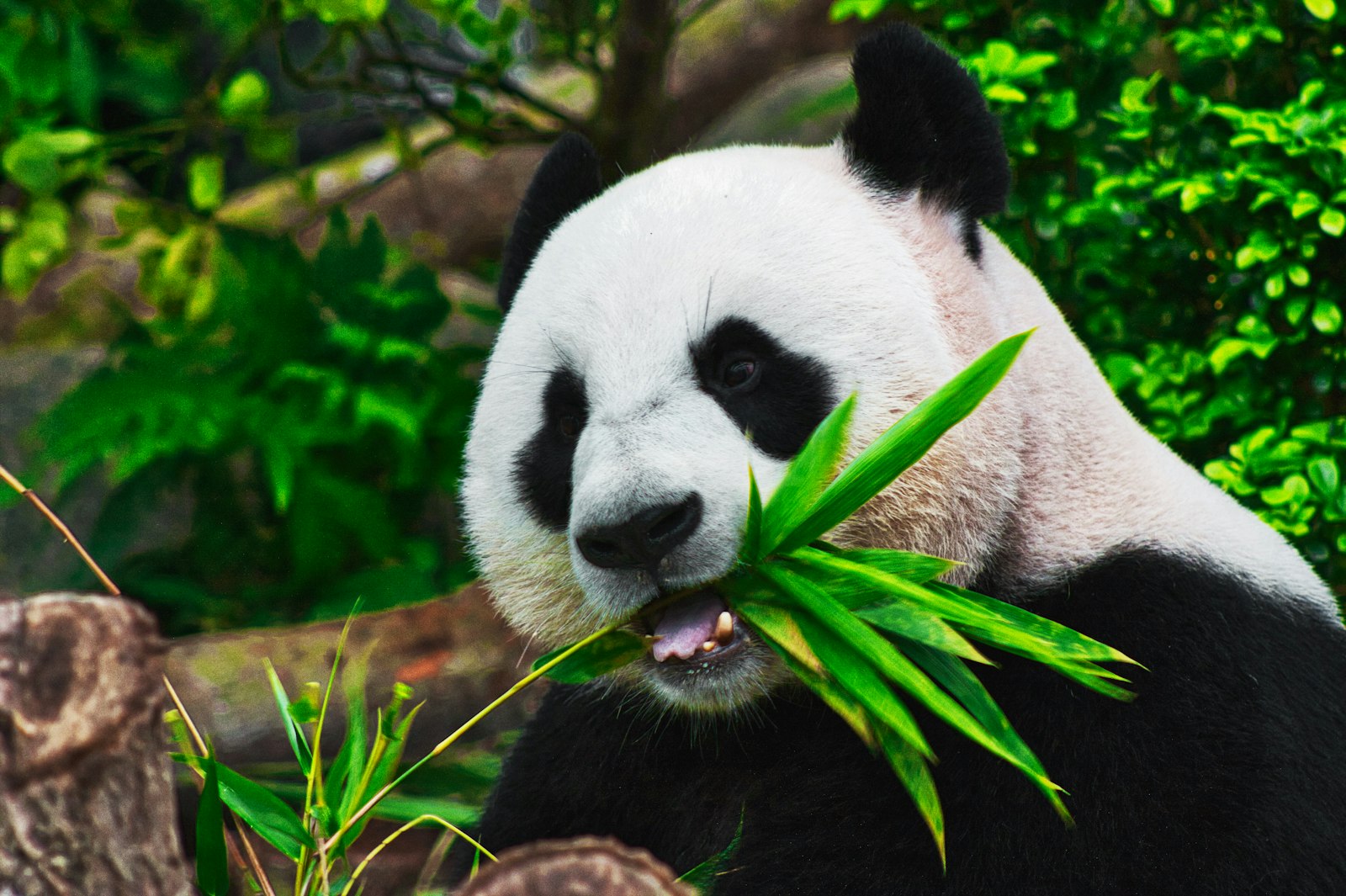
Giant Panda
Ailuropoda melanoleuca
About the Giant Panda
Giant pandas are one of the most beloved animals on Earth and a global symbol of wildlife conservation. These bamboo-eating bears spend up to 14 hours a day eating and consume up to 38 kg of bamboo daily. Once critically endangered, conservation efforts have improved their status, though fewer than 1,900 remain in the wild.
Biology & Stats
Migration: Non-migratory. Seasonal altitudinal movements following bamboo growth.
Best time of day: Early morning and late afternoon. Most active feeding dawn and dusk.
Typical viewing distance: 10-30 metres at breeding centres
Camera settings: 1/250s-1/500s, f/4-f/5.6, ISO 400-1600, 70-200mm
Fun Facts
- Pandas spend up to 14 hours a day eating and consume 12-38 kg of bamboo daily.
- Newborn pandas are about the size of a stick of butter — 1/900th of their mother's weight.
- The panda's "thumb" is actually an extended wrist bone that helps them grip bamboo stalks.
Where to See Giant Panda in the Wild
Chengdu Research Base of Giant Panda Breeding
ChinaThe world's premier panda facility with over 200 pandas. Semi-wild enclosures.
Wolong National Nature Reserve
ChinaWild pandas in their natural bamboo forest habitat.
Foping Nature Reserve
ChinaOne of the highest densities of wild pandas.
Explore Giant Panda by Country
Country guides connect the species with other wildlife, featured places, planning context, and responsible-viewing advice.
Habitats Used by Giant Panda
Species may rely on several ecosystems across their range. Explore how conditions and conservation pressures differ.
Where to See Giant Panda at Zoos
Smithsonian National Zoo
Washington, D.C., USA
Edinburgh Zoo
Edinburgh, UK
Adelaide Zoo
Adelaide, Australia
Support Independent Conservation Work
These third-party programmes offer relevant ways to adopt symbolically, foster, donate, or learn. We do not process contributions or receive commission.
Pandas International Adoption
A panda adoption route that directs supporters to the organisation's current gift catalogue and connects giving with care and conservation needs at giant panda centres.
Review programme →Due DiligenceCheck Before You Contribute
Understand symbolic adoption, verify the organisation, and review current terms and use of funds.
Open the programme directory →Browse Giant Panda Tours & Experiences
Current Viator listings matched to this species. Confirm where the activity operates, its wildlife policy, recent reviews, availability, and cancellation terms before booking.

Private Half-Day Chengdu Panda Breeding Center Tour with Optional Volunteer
3 hours
Chengdu Panda Research Base Tickets And Optional Private Tour
4 hours
Chengdu: Panda Base Leshan Buddha Tour(or Half Day Panda Base )
5 hours
Private Chengdu Panda Base Tour with Hotel Pickup
3 hours
One Day Trip to Chengdu Panda Base and Leshan Buddha Tour
5 hours
Chengdu Private Sightseeing Tour with Panda Breeding Center Visit
7 hoursPlan a Giant Panda Wildlife Trip
Only species-relevant partner routes are shown. Confirm the exact location, wildlife policy, availability, current price, and cancellation terms before booking.
Guided Tours & Experiences
These links open third-party searches. Verify the exact operator, route, guide team, wildlife policy, field time, and no-sighting terms.
Hotels & Accommodation
Search stays only after the gateway and field route are confirmed.
Flights
Compare current routes, baggage rules, buffers, and total booking terms.
Travel Insurance
Check medical, cancellation, activity, altitude, equipment, and evacuation terms for the exact itinerary.
Camera & Gear
Match equipment to guide advice, distance, weather, baggage limits, and safe handling.
Photography Tips for Giant Panda
At breeding centres, pandas are quite close. A 70-200mm lens is sufficient. In the wild, sightings are extremely rare and require dedicated expeditions.
Safety Guide
Pandas are bears and can be aggressive if provoked. Maintain distance at reserves. Never attempt to touch or hand-feed pandas.
You Might Also Like

Watch in the Wild
Giant Pandas at Chengdu Research Base
