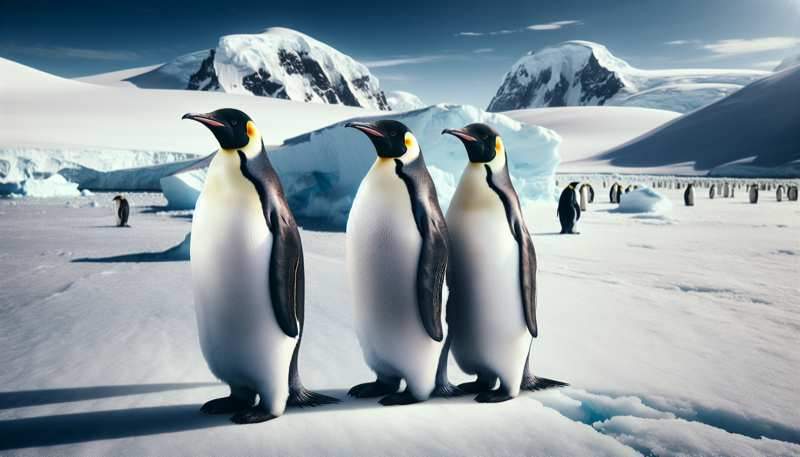
If seeing an emperor penguin breeding colony is the non-negotiable goal, the clearest established visitor route is a specialist expedition to the Snow Hill colony in the Weddell Sea. It is not a normal Antarctic Peninsula cruise, it receives relatively few visits, and access can fail because of sea ice, weather, environmental restrictions, wildlife response, vessel limitations, or safety. A responsible operator must be able to cancel the colony attempt without turning that decision into a failed holiday.
If the real goal is an achievable first Antarctic wildlife journey, choose a Peninsula expedition for gentoo, chinstrap, and Adélie penguins, seals, seabirds, ice, and scenery—without an emperor promise. A Ross Sea voyage may encounter emperors, but a general itinerary should not be sold as reliable colony access. Atka Bay and other research-associated colonies are not ordinary public tourist destinations. South Georgia is a separate subantarctic island and a king-penguin destination, not a substitute emperor colony or part of the Antarctic continent.
Open the reviewed emperor penguin guide for biology, Endangered status, sea-ice dependence, and visitor distances. Use the Antarctica expedition planning guide to compare routes, vessels, gateways, medical screening, insurance, and contingency planning. The polar wildlife expedition guide adds operator questions that work across Antarctica and the Arctic.
Where can you realistically see emperor penguins?
| Route | Emperor penguin reality | Choose it when | Main limitation |
|---|---|---|---|
| Snow Hill emperor colony | The established specialist commercial colony route | A colony visit is the priority and you accept a high-cost, ice-dependent, changeable expedition | No access or sighting can be guaranteed; exact field method and authorisation can change |
| Antarctic Peninsula | Emperor sightings are incidental; this is not the normal route to an emperor breeding colony | You want the most developed general Antarctic visitor region and value several penguin species plus the wider ecosystem | Marketing that uses emperor imagery can create the wrong expectation |
| Ross Sea region | Emperors occur in the region and may be encountered, but general voyages should not promise a colony visit | You want a long, remote expedition with broader natural and human history goals | Distance, sea ice, itinerary length, gateway, and landing uncertainty are substantial |
| Atka Bay or another research-associated colony | Scientifically important, not an ordinary public visitor product | It appears in a research source you are reading—not as a reason to invent a tourist route | Station proximity, protected status, logistics, and research access do not imply public access |
| South Georgia | No wild emperor colony; famous for king penguins | You want immense king-penguin colonies, seals, seabirds, and a longer subantarctic combination | It is a separate island and species experience, with additional time, cost, entry, and biosecurity |
The short answer matters because much online advice collapses “penguins in Antarctica” into “emperor penguins.” That mistake can send a traveller toward the wrong ship, season, gateway, and budget. The Antarctic Treaty Secretariat’s tourism overview says roughly 98% of tourism voyages take place in the Antarctic Peninsula region, mainly during the austral summer. That high-volume route and a specialist Weddell Sea colony attempt are different products.
Why emperor penguin access is exceptional
Emperor penguins breed on coastal fast ice through the austral winter. By the time specialist visitors may travel, the colony, chicks, cracks, ice edge, and vessel approach are part of one changing system. An itinerary cannot treat sea ice as a paved road or a colony as a booked attraction. The expedition team must make decisions with incomplete information while keeping the ship, field party, and wildlife within current authorisation and safe operating limits.
The species is now globally Endangered. In April 2026, the IUCN announced the move from Near Threatened to Endangered, citing the emperor penguin’s dependence on sea ice for breeding and moult and a projected severe decline as warming changes that habitat. This is not merely a future model: early break-up can cause breeding failure before chicks have waterproof plumage.
A 2025 British Antarctic Survey analysis found a 22% decline between 2009 and 2024 in a sector that contains about 30% of the global population. The authors explicitly warned that the sector may not represent the whole continent, and a new global update was being assembled. That is why this guide does not present an old estimate as a live worldwide count. It also does not turn one regional trend into a precise global decline.
The satellite study of 2022 breeding failure showed how record-low sea ice affected colonies across the central and eastern Bellingshausen Sea. Satellite monitoring is essential precisely because many colonies are too remote for routine ground counts. For a traveller, the lesson is not to seek newly reported coordinates. It is to understand why stable habitat, low disturbance, and flexible access decisions come before a sighting.
Snow Hill: the specialist colony route
Snow Hill is the strongest match for the search “where to see emperor penguins,” but “strongest” does not mean easy or certain. The current IAATO site-visits report recorded 18 visits to the Snow Hill emperor colony in the 2025–26 season, after 8, 11, and 3 visits in the preceding reported seasons. That small sequence demonstrates an established visitor route and striking year-to-year variability; it is not a capacity promise for the next departure.
The IAATO overview of Antarctic visitor activity for 2025–26 is useful evidence because it separates reported site use from advertising. Ask a prospective operator to identify the exact colony objective, ship, authorising country, planned field method, maximum visitors, guide ratio, expected walking or transfer demands, minimum participation ability, and alternatives. “Weddell Sea” or “Snow Hill” in a product name does not by itself prove that the voyage plans an authorised emperor-colony visit.
Do not confuse the emperor colony with the historic Snow Hill Hut visitor site. The Antarctic Treaty visitor guideline for Snow Hill Hut describes a historic-site visit and its own controls. A web page, map, or booking platform that mixes the hut and colony into one pin has not done enough route verification.
Older products have used helicopters in the Snow Hill story, but this cannot be copied forward as a harmless default. Antarctic Treaty Resolution 4 (2023) recommends discontinuing recreational helicopter use in areas with wildlife concentrations except for emergencies and human safety. Ask the operator exactly how the currently advertised departure proposes to move people, whether aircraft are part of colony access, what current authorisation applies, how wildlife overflight is avoided, and what happens if the method is not permitted or appropriate. Never infer today’s field plan from an old review or promotional video.
Antarctic Peninsula: the more achievable penguin trip
For most travellers, the Peninsula is the realistic answer to “I want to see penguins in Antarctica.” Voyages commonly search for gentoo, chinstrap, and Adélie penguins alongside seals, seabirds, whales, ice, geology, and history. Exact sites depend on the itinerary and conditions. An emperor may appear far from a breeding colony, but an incidental possibility is not a responsible sales promise.
IAATO’s responsible marketing guidance tells operators not to use emperor penguin imagery unless the trip specifically plans to visit an emperor colony. Apply the same test as a buyer: if the hero image is an emperor, find the named colony objective in the written itinerary and terms. If it is absent, judge the trip on the species and habitats the route genuinely targets.
Choose the Peninsula when you want a broader Antarctic experience, a larger range of departure dates and vessel styles, or an expedition that can remain satisfying after a landing change. Choose Snow Hill only when the exceptional cost and constraint of a colony attempt are acceptable. Neither product guarantees wildlife, and a smaller ship does not create permission to land anywhere the expedition leader chooses.
Ross Sea: remote range, not a simple colony promise
Ross Sea itineraries can travel through emperor penguin range and may encounter birds on ice or at sea. Some colonies in the wider region are important to research, but a route map passing near a name is not proof of public access. Voyages are long, gateways can differ, ice determines reach, and medical or evacuation constraints are serious.
Ask whether the product explicitly plans an authorised colony visit or merely lists emperor penguins among possible wildlife. Request historical occurrence language, not a cherry-picked photograph: how often did comparable departures encounter the species, in what context, and how does the operator describe no-sighting outcomes? A credible answer separates “possible,” “regular in the region,” and “planned colony objective.”
Atka Bay and research stations are not visitor shortcuts
Atka Bay is well known from scientific monitoring and natural-history films because a major colony lies near Germany’s Neumayer Station III. That proximity does not make the station a public gateway or the colony a tour attraction. Research logistics, station invitations, protected-area management, aviation, and staff work are different systems from commercial visitor access.
Do not contact a research station expecting it to arrange a private colony visit, use scientific maps to approach independently, or buy a vague “station area” claim from an intermediary. Ask a commercial organiser to identify its actual legal visitor route. If it cannot, the listing is not ready for payment.
Current emperor penguin visitor rules
The emperor penguin colony visitor guideline uses a precautionary minimum distance of 5 metres, increased whenever a bird responds. It calls for at least 15 metres from commuting routes and ice-edge access points, staged approaches rather than surrounding a group, a guide-to-visitor ratio no greater than 1:20, and no more than 100 visitors at a site at one time. Site, expedition-leader, health, ice, or wildlife conditions can require a greater distance or no visit.
Five metres is not a target. A penguin can approach, and your job is to remain quiet, avoid sudden movement, follow the guide, and preserve its route rather than manufacture a close portrait. Do not touch, feed, call, chase, kneel into a commuting line, or use a person or bag to redirect a bird. Do not crouch, sit, or lie down near wildlife areas: beyond disturbance, current disease precautions have made low ground contact an important biosecurity concern.
Clean and disinfect footwear, tripods, walking poles, bags, and outer equipment exactly as instructed before and between sites. Do not carry soil, seeds, food, feathers, shells, bones, or biological material ashore or away. Report illness honestly. The colony is not a studio, and a rule-compliant visit can still be stopped when birds change behaviour.
How to check an operator before paying
Start with the IAATO member directory if a company claims membership. Read the membership category and match the legal company name, not only a consumer brand or reseller. Membership is a useful verification point, not an endorsement by this platform and not a replacement for checking the actual departure.
- Route: Is the product a Peninsula voyage, Snow Hill colony attempt, Ross Sea expedition, South Georgia combination, or something else?
- Organiser: Which legal entity operates the trip, which country authorises it, and which company carries your payment?
- Ship: What is the vessel name, flag, passenger capacity, Polar Ship Certificate status, ice capability, small-craft plan, and crew or guide ratio?
- Colony method: How could visitors reach the viewing area, what walking or transfer demands apply, and what current wildlife and aviation restrictions govern the method?
- Wildlife conduct: Are 5 metres and 15 metres explained as minimum boundaries, with more space when behaviour changes?
- Contingency: What replaces the colony attempt, landing, flight, or charter, and what does not trigger a refund?
- Health: What medical form, clinician sign-off, mobility, step, balance, cold, and transfer requirements apply?
- Money: Which gateway nights, transfers, charters, clothing, communications, activities, gratuities, insurance, and medical changes are excluded?
The International Maritime Organization’s Polar Code overview explains the mandatory safety and pollution framework for ships operating in polar waters. It covers design, construction, equipment, operations, training, search and rescue, and environmental protection. A pretty ship tour or “ice-strengthened” label is not a substitute for asking about the named vessel’s certification and operational limitations.
Medical screening, insurance, and evacuation
Antarctica is remote enough that an ordinary annual policy or a generic cruise add-on may not cover the exact route, sea-ice travel, small boats, aircraft, missed charters, medical disembarkation, or the full cost of evacuation and onward care. Antarctic Treaty contingency guidance expects organisers to have adequate arrangements for health, safety, search and rescue, medical care, and evacuation. Ask the operator for its written minimums, then ask the insurer to confirm coverage in writing using the ship, route, dates, maximum remoteness, and planned activities.
Complete medical screening honestly. Discuss mobility, balance, cold, heart or lung conditions, medication storage, seasickness history, infection, and the ability to board small craft or move over uneven ice. The CDC’s cruise travel guidance is a useful starting point for respiratory and gastrointestinal illness, chronic conditions, medication, and pre-travel consultation, but it does not replace route-specific polar medical advice.
Build gateway buffer days. A tight same-day international connection can turn a weather delay into a missed charter or voyage, and the responsibility may sit with you if flights were purchased separately. Check what the operator does if the ship, charter, or hotel plan changes before embarkation and whether the insurance treats that event as covered.
Gateway and entry planning
Ushuaia in Argentina is a common ship gateway for Peninsula voyages. Punta Arenas in Chile is used by some air-cruise and other products. Specialist Snow Hill or Ross Sea products can use different plans, so choose flights only after the operator confirms the port, airport, charter, baggage allowance, transfer, hotel nights, document check, and reporting time.
Antarctica does not issue an ordinary tourist visa, but Antarctic activity still needs advance authorisation through a Treaty Party and your gateway and transit countries have their own entry rules. Use Argentina’s official tourist-entry documentation page for an Argentine gateway and the relevant official government service for every other country. Do not rely on “no visa for Antarctica” as the complete answer.
Ask the operator which entity holds the Antarctic authorisation and which parts of the journey remain your responsibility. Passport validity, transit permissions, insurance declarations, health documents, consent for minors, and customs rules can differ by nationality and route.
How to compare expedition prices without a fake daily budget
A per-day number hides the decisions that matter. Compare two written quotes line by line: route, voyage nights, pre- and post-voyage hotels, charter or domestic flights, cabin occupancy, single supplement, transfers, outerwear, boots, luggage limits, gratuities, drinks, communications, optional activities, medical forms, permit charges, taxes, cancellation, and change terms.
Then compare operational value: passenger count, maximum people ashore, guide ratio, time needed to rotate groups, field platform, expedition staff, vessel limitations, contingency options, and how much of the itinerary is a fixed transit. A more expensive cabin on the wrong route has no emperor-penguin advantage. A very small or luxurious vessel still cannot override environmental rules, sea ice, wildlife behaviour, or authorisation.
Commercial search links on this platform are discovery tools, not endorsements. A reseller result can help identify product names, but verify the legal operator, current itinerary, ship, terms, and claims directly before paying. Save the version you agreed to and take screenshots of any explicit colony language.
Photography without turning distance into a contest
Prepare equipment before the field day. Practise gloves, batteries, exposure compensation, condensation management, and a simple autofocus setup. Carry only what you can manage without delaying the group or putting gear on contaminated ground. A weather-protected telephoto zoom and binoculars are often more useful than several heavy lenses.
Do not promise yourself a low-angle portrait. Current field guidance may prohibit crouching, sitting, or lying down near wildlife, and the guide—not the image—sets the position. Never ask for an aircraft overflight, a closer vehicle stop, a blocked commuting line, or extra time after the wildlife response changes. Geotags should describe the broad authorised trip, not disclose a sensitive route, live colony position, camp, crack, or operational detail.
What to choose if Snow Hill is not feasible
- Choose the Antarctic Peninsula for a first expedition centred on several penguin species, seals, seabirds, whales, ice, and landscapes. Treat any emperor as a bonus.
- Add South Georgia when king penguins, elephant seals, seabirds, and a longer subantarctic route justify the additional sea days and logistics. Do not call kings smaller emperors; they are a different species and ecology.
- Choose a research-led virtual experience when cost, health, time, emissions, or access make a colony expedition unsuitable. Satellite monitoring and station webcams can reveal the breeding cycle without pretending to be a physical visit.
- Support evidence-led conservation by checking what a programme funds, whether a gift is restricted, how results are reported, and whether the organisation uses sensitive location data responsibly. The reviewed ASOC support record distinguishes its emperor campaign from its broader Antarctic giving route, while the endangered-animal sponsorship guide provides a due-diligence framework.
The older United States Endangered Species Act decision classified the emperor penguin as Threatened under US law and cited an estimated 625,000–650,000 individuals. The US Fish and Wildlife Service decision remains useful for understanding that national legal category and the evidence available in 2022, but it should not be mistaken for the current global IUCN category or a live census.
For current biology, the Australian Antarctic Program species account records an Endangered status, sea-ice breeding, diet, body-mass context, and measured dive records. It reports a deepest recorded dive of 565 metres and longest recorded dive of 22 minutes. Records are exceptional observations, not what a visitor should expect to watch from shore.
A final emperor penguin booking test
Book Snow Hill only if the contract names the specialist objective, the operator can explain current authorisation and field method, the ship and medical requirements fit you, the insurance confirms the route, the full quote is affordable, and the trip remains worthwhile if colony access is cancelled. Book the Peninsula when a varied Antarctic ecosystem is the goal and emperor penguins are not required. Treat Ross Sea emperor encounters as route-specific possibilities unless an authorised colony plan is explicit.
The best emperor penguin trip is the one that remains honest when the ice says no. A cancelled approach can be evidence of competent expedition leadership, not poor service. Choose the route that matches your real objective, pay for capability rather than imagery, and leave enough room—in the itinerary and on the ice—for the birds to determine the encounter.