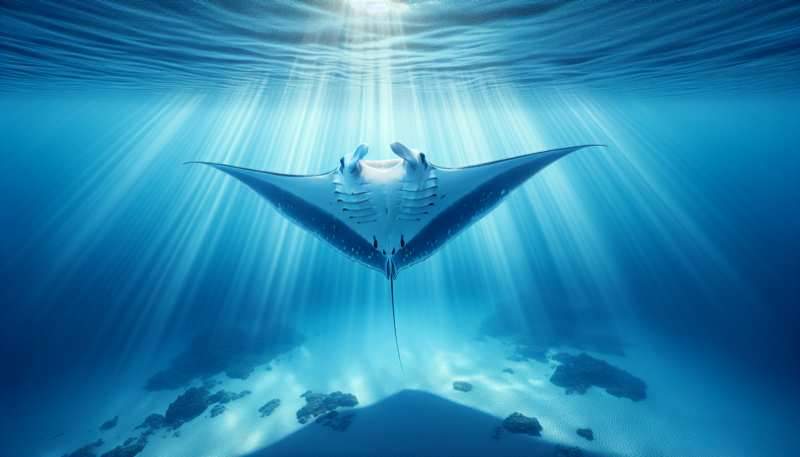
The best place to see manta rays depends on the encounter you can safely and responsibly make. Choose Coral Bay on Western Australia’s Ningaloo Coast for an accessible daytime snorkelling route within a wider reef trip; Hanifaru Bay in the Maldives for a seasonal, ranger-managed feeding aggregation where scuba is prohibited; Kona on Hawaiʻi Island for a specialist night encounter organised around lights and feeding mantas; or Revillagigedo National Park in Mexico for a remote, certification-dependent liveaboard dive route associated with giant oceanic mantas.
Those are four different products, not a universal ranking. No site guarantees an animal, calm water, good visibility, or entry on the planned day. Regulation, operator permissions, weather, sea state, wildlife behaviour, crowding, park closures, and a traveller’s swimming or diving ability can all change the answer.
Start with the reviewed manta ray species guide for the difference between reef and giant oceanic mantas. Use the manta snorkelling and diving experience guide to compare water-entry skills and operator standards, then open the Ningaloo wildlife planning guide if Coral Bay fits. The reviewed Manta Trust support record keeps conservation giving separate from encounter sales.
Best manta ray destinations by trip type
| Destination | Best fit | Typical encounter logic | Ability and access | Main limitation to verify |
|---|---|---|---|---|
| Coral Bay, Ningaloo Coast, Australia | First daytime manta snorkelling trip within a broader reef holiday | Licensed boats search for wild reef mantas in and around the reef-lagoon setting | Boat boarding, open-water snorkelling, and current operator requirements; ask about a ride-along alternative | Conditions and animal movement; Coral Bay is not interchangeable with Exmouth |
| Hanifaru Bay, Baa Atoll, Maldives | Seasonal feeding aggregation under a protected-area visitor system | Plankton conditions can concentrate reef mantas; access is snorkelling or freediving, not scuba | Confident snorkelling, official guide arrangements, and current protected-area access | The live opening window, visitor controls, weather, and whether an aggregation is present |
| Kona Coast, Hawaiʻi, United States | Night snorkelling or diving with a specialist briefing | Operator lights concentrate plankton and mantas may feed around the lit area | Dark-water confidence, boat entry, surface flotation or dive certification as applicable | Crowding, operator conduct, current permits and safety controls, and the still-draft manta-specific rule package |
| Revillagigedo National Park, Mexico | Experienced divers prioritising remote pelagic diving | Liveaboards reach offshore dive sites associated with giant oceanic mantas and other pelagic wildlife | Current scuba certification, experience appropriate to conditions, long vessel journey, and park-compliant guide | Remote access, currents, park closures, daylight-only diving, and no single-species guarantee |
If one row does not match your ability, do not force the destination to fit. Hanifaru is not a scuba destination. Revillagigedo is not a beginner snorkel excursion. A Kona night product adds darkness and a concentrated group around lights. Coral Bay can be the most straightforward starting point in this shortlist, but it still involves a boat, open water, variable conditions, and a wild animal.
Two manta species change the comparison
“Manta ray” can mean two different species. Manta Trust’s species and conservation overview distinguishes the reef manta, Mobula alfredi, from the giant oceanic manta, Mobula birostris. It reports the reef manta as Vulnerable and the oceanic manta as Endangered. The ventral spot pattern can help researchers identify individuals, but it is not an invitation for a swimmer to move underneath an animal for a photograph.
Reef mantas are strongly associated with many of the cleaning-station and feeding-aggregation encounters marketed in tropical reef regions. Giant oceanic mantas use wider oceanic space and are the species most closely associated with the Revillagigedo route in this shortlist. A seller should name the likely species and encounter type, while admitting that wildlife and conditions decide what appears.
NOAA’s current giant manta conservation page says the global population is unknown and identifies targeted fishing, bycatch, vessel strikes, entanglement, and poorly managed tourism among the pressures. That is why this guide does not repeat a global manta total, promise a harmless encounter, or treat a close pass as evidence that the animal consented to pursuit.
Feeding aggregation, cleaning station, and night-light encounter
The same animal can be encountered in settings with very different disturbance risks. At a feeding aggregation, plankton and water movement bring mantas into a productive area. Hanifaru is the clearest example here. Swimmers must avoid splitting feeding lines, blocking movement, or diving down into an animal’s path.
At a cleaning station, mantas visit a site where smaller fishes remove parasites or dead tissue. A diver who settles on the station, rises into the approach corridor, or crowds the animal’s preferred path can interrupt the behaviour that made the site important. Manta Trust-linked cleaning-station research supports keeping observers away from the functional station rather than treating its centre as the best camera position.
In a night-light encounter, lights concentrate plankton and may attract feeding mantas. This is not feeding a manta by hand, but it is still a deliberately concentrated tourism setting. The group layout, number of vessels, light placement, swimmer control, propeller safety, guide ratio, and exit method all matter. “The manta came close” does not excuse reaching out, duck-diving into its path, or surrounding it.
Coral Bay: the clearest first daytime snorkel choice
Western Australia’s parks authority describes Coral Bay as a base at the heart of the Ningaloo Coast, with shore snorkelling plus licensed snorkel and dive operators offering manta-ray swims. That official visitor route is why Coral Bay is this guide’s strongest fit for a first daytime manta-focused trip. It is not a claim that Coral Bay has the world’s highest sighting rate, that every tour enters the water, or that a manta appears throughout every month.
Do not book an “Ningaloo” trip without checking the departure town. Coral Bay and Exmouth are separate bases with different road distances, operators, reef access, and trip menus. The Ningaloo Marine Park visitor page should be checked for the current activity, zoning, alerts, and access context. A beach that appears close to reef on a map is not automatically a safe, legal, or suitable entry.
The UNESCO Ningaloo Coast listing describes a large marine and terrestrial World Heritage property where a near-shore reef meets an arid landscape. Make that complete ecosystem the reason for the journey. Reef fish, corals, shoreline ecology, Cape Range, and guided interpretation provide a successful trip even if weather cancels the manta day or the search finds no manta.
Learmonth Airport is the usual air gateway. The Shire of Exmouth’s airport information places it roughly 36 kilometres south of Exmouth and 120 kilometres north of Coral Bay. Pre-book the correct transfer or rental, verify collection hours, and do not assume an accommodation shuttle covers both towns. Check current Western Australia weather and warnings, DBCA alerts, road conditions, and the operator’s cancellation policy immediately before travel.
Questions for a Coral Bay operator
- Does the commercial operation hold the permissions required for this exact marine-park activity and departure?
- Is the day specifically organised around mantas, or is manta one possible species on a general reef trip?
- What swimming ability, flotation use, boat ladder, surface conditions, and guide ratio apply?
- How many swimmers enter together, and how does the crew respond if another vessel is already with the animal?
- What happens after no sighting, unsafe conditions, illness, or a cancelled departure?
- Which wildlife rules are included in the briefing, and can a guest remain aboard without pressure?
Hanifaru Bay: seasonal feeding aggregation, snorkelling only
Hanifaru’s strength is not year-round convenience. The Maldives’ official Hanifaru Region protected-area page describes the bay’s importance as a western-monsoon feeding and aggregation area and exposes live visitor-booking information. Use the dates shown by the current official system for the year of travel; do not copy a previous season window into a future booking.
The Baa Atoll authority’s published guide process makes the activity boundary clear: authorised guiding and snorkelling or freediving are part of the visitor format, while scuba is not. The CMS Maldives shark-and-ray tourism factsheet also describes controls such as visitor and time limits and a scuba prohibition.
Those controls do not create a sighting guarantee. Plankton concentration, current, tide, weather, animal movement, capacity, and ranger decisions still shape the visit. A responsible resort or liveaboard should explain how it secures current access, who the certified guide is, how many guests enter, what happens when the bay is closed or quiet, and which alternative activity replaces the excursion.
Do not accept a seller’s suggestion that a scuba entry just outside a boundary is “basically Hanifaru” without exact legal and geographic evidence. Ask for the named site, managing authority, vessel permission, activity, and current rule. Marketing language can blur an atoll, a biosphere reserve, a protected bay, and a nearby dive site even though they are not interchangeable.
Kona: choose the night format deliberately
Kona’s manta encounter is a specialist night product rather than a natural-light reef snorkel. Boats take snorkellers or divers to an area where lights concentrate plankton; mantas may arrive to feed. Travellers should decide whether darkness, a surface float or dive position, multiple participants, boat traffic, and a night exit suit them before comparing photographs or prices.
Hawaiʻi’s Department of Land and Natural Resources documented crowding and safety concerns in the Kona manta industry when proposing a management package. However, the department’s current draft-rules page still lists the manta-specific package under draft rules. Do not present proposed zones, ratios, or equipment provisions as settled current law.
Current commercial activity is not rule-free. A 2025 state enforcement operation checked commercial vessels, safety compliance, licences, and permits. Before paying, ask the operator which current permits and commercial requirements apply, how it handles an already crowded site, whether it voluntarily follows stronger manta-specific practices, and how guests are positioned to avoid contact.
A strong briefing covers passive body position, no touching, no diving down from the snorkel group, no blocking a feeding path, controlled cameras, remaining with the assigned flotation or guide, boat entry and exit, and what to do if a manta approaches. Ask about prescription-mask needs, wetsuit or exposure protection, seasickness, mobility on the ladder, swimming ability, and a dry ride-along. A night activity should never be sold as effortless simply because a surface support is provided.
Revillagigedo: advanced, remote, oceanic manta diving
Mexico’s official Revillagigedo National Park page identifies giant oceanic mantas among the pelagic wildlife associated with a globally recognised diving destination. The islands are far offshore, so ordinary visitor access is by liveaboard rather than a casual day boat. The complete trip must be worthwhile for remote marine ecology and the legal dive programme, not for one promised species.
The official park management publication sets important operating boundaries, including current certification, qualified guide requirements, group controls, authorised sites and schedules, daylight operations, and the possibility of closures or restrictions. Open the current park rules and operator permit evidence before booking because the management framework, site access, conservation operations, or enforcement can change.
Ask the liveaboard for the minimum certification and logged experience it requires for each site, not merely the legal minimum. Discuss current, negative or blue-water entries, ascent and separation procedures, surface signalling equipment, dive computer expectations, nitrox if offered, medical screening, chamber and evacuation planning, vessel communications, weather rerouting, and missed-departure consequences. A traveller who is not ready for the conditions should build experience elsewhere rather than treating a premium booking as training.
Mexico announced further work against illegal fishing in Revillagigedo in a 2026 environment-ministry update. That context can inform questions about park fees, reporting, vessel tracking, fishing-line encounters, and conservation briefings. It does not prove that one liveaboard funds a particular enforcement outcome; ask the operator to itemise park charges and document any additional conservation claim.
Why other famous manta places are not ranked here
Raja Ampat, Komodo, Nusa Penida, the Great Barrier Reef, Yap, Mozambique, the Galápagos, Isla de la Plata, and other regions can all be connected with manta observations or tourism. A place name in a species range, dive-site nickname, resort article, social-media reel, or marketplace listing is not enough for a source-reviewed recommendation.
To add another destination to this shortlist, the evidence should identify the likely manta species, public visitor route, exact snorkel or dive method, current managing authority, operator permissions, seasonal mechanism, wildlife rules, ability requirement, safety context, and no-sighting or cancellation terms. Until then, those places remain research leads rather than a ranked promise. The oceans and reefs habitat guide is a better starting point for broad ecosystem discovery.
The three-metre baseline is not a target
Manta Trust’s tourism-interaction research found that passive approaches were less disturbing and that close, direct, chasing, or blocking approaches increased avoidance responses. Use three metres as a minimum planning baseline around a manta unless a local rule, guide, site layout, or the animal requires more space. It is not a target to close from five metres to three.
- Enter only when the guide says the route is clear, then remain calm and horizontal where instructed.
- Approach from the side at the guide’s pace; never chase from behind or cut across the head.
- Do not touch, hold, ride, feed, encircle, or block a manta.
- Do not dive down onto a feeding animal or rise through its path from below.
- Stay away from the working area of a cleaning station and do not rest equipment on living reef.
- If a manta approaches, remain passive, avoid sudden kicks or camera thrusts, and let it choose the exit.
- If behaviour changes, crowding builds, or the guide ends the encounter, increase distance or leave without arguing for one more photograph.
The CMS responsible shark-and-ray tourism guide provides a wider framework for operators, protected-area managers, and travellers. A local legal minimum remains a floor. Lower swimmer numbers, a shorter encounter, or no entry can be the better response to the actual animal and water.
Operator checklist before paying
- Name the product. Is it daytime snorkelling, night snorkelling, recreational scuba, freediving, a general reef tour, or a remote liveaboard?
- Name the species and behaviour. Is the likely animal a reef or oceanic manta, and is the site used for feeding, cleaning, transit, or opportunistic searching?
- Verify authority. Which park, marine, commercial-vessel, guide, and wildlife permissions apply to the exact departure?
- Match ability. Obtain written minimum age, swimming, snorkelling, certification, recent-dive, medical, mobility, and equipment requirements.
- Audit group control. Ask for maximum guests, swimmers or divers per guide, entries at once, in-water time, vessel plan, and the response to another group.
- Read the encounter code. It should prohibit touching, pursuit, blocking, feeding, riding, and intrusive camera behaviour while allowing the guide to end the attempt.
- Read no-sighting terms. Separate a refund, partial refund, rebooking, standby place, alternative activity, and a weather cancellation; they are not the same remedy.
- Check safety. Review boat licensing, flotation, oxygen and first aid, crew training, communications, missing-person procedure, evacuation, and dive emergency planning as relevant.
- Test conservation claims. Ask where each fee goes, whether data are shared with a named programme, and whether guests can opt out of promotional image use.
A marketplace listing is a discovery lead, not proof. Identify the actual operating company, read its own current terms, then verify permissions with the managing authority where practical. A high review score cannot replace the correct licence, a safe briefing, or behaviour witnessed on the day.
Safety, health, and insurance
Mantas are not a reason to ignore the risks around them. Boats, propellers, ladders, current, swell, surge, darkness, heat, sun, seasickness, dehydration, marine stings, panic, equalisation, decompression illness, separation, and remote evacuation may matter more than the animal. Give a qualified travel-health or dive-medicine professional the exact activities, medical history, destinations, and remoteness.
For Australia, use the official visa list and current travel-health guidance rather than a copied entry or vaccination shortcut. Apply the same principle to the Maldives, United States, and Mexico using the official sources for the passport and activities involved.
Insurance must cover the actual activity and route: recreational scuba at the planned depth, liveaboard travel, snorkelling, pre-existing conditions, missed connections, weather disruption, emergency treatment, medical evacuation, and repatriation as applicable. Ask who pays first and which evidence is required. “Adventure cover” is not a reliable substitute for reading exclusions.
Manta photography without manufacturing proximity
Practise camera controls before entering. Secure equipment without creating an entanglement hazard, disable flash where the code or guide requires it, and use a field of view that records the manta in habitat without extending a pole into its path. Never ask the guide to reposition the group for a head-on pass.
A ventral identification image may have research value when captured passively and submitted to the programme requested by the local operator or research partner. Ask before the trip how images, time, general site, and personal data are handled. Do not publish live locations, infer a cleaning station’s precise coordinates, or tag an unauthorised access point.
Conservation support is separate from a manta booking
Manta tourism can create local economic reasons to protect living animals, support guides, and contribute observations, but those outcomes are not automatic. Vessel disturbance, crowding, reef damage, emissions, weak enforcement, and misleading donation claims can coexist with wildlife branding.
The reviewed Manta Trust support record links to a verified organisation and explains the type of support described by its official material. WhereAnimalsLive receives no conservation referral fee from that record. A donation does not buy animal contact, a sighting, research access, a restricted gift to the individual in a photograph, or permission to ignore visitor rules.
Before donating through any operator or charity, confirm the legal recipient, programme scope, whether the gift is restricted, currency, fees, recurring-payment status, cancellation, privacy, tax treatment in the donor’s jurisdiction, and how results are reported. The endangered-animal support guide provides the broader due-diligence checklist.
Frequently asked questions
Where is the best place to see manta rays for the first time?
Coral Bay is the clearest first daytime snorkelling choice in this reviewed shortlist because the Western Australian parks authority identifies licensed manta-ray swims within a broader, accessible reef destination. The answer still depends on swimming ability, boat access, current conditions, and operator quality.
Where can you snorkel with manta rays?
Coral Bay, Hanifaru Bay, and Kona all support snorkelling formats, but they are not equivalent. Coral Bay is a daytime reef route, Hanifaru is seasonal and snorkel or freedive only under protected-area controls, and Kona is a specialist night-light encounter.
Where can you scuba dive with manta rays?
Kona offers dive products alongside snorkelling, while Revillagigedo is the specialist remote liveaboard route in this shortlist. Hanifaru prohibits scuba. Certification alone may not be enough for a given current, depth, night, or offshore itinerary.
When is manta ray season?
There is no useful worldwide manta season. Hanifaru’s visitor window follows a seasonal aggregation and must be checked live. Coral Bay products, Kona operations, and Revillagigedo itineraries follow different ecological and operating calendars. Verify the exact year, site, activity, and operator.
Will a tour guarantee a manta sighting?
No responsible interpretation of a wild encounter should guarantee a manta. Read how the operator distinguishes no sighting from weather cancellation, unsafe water, park closure, mechanical failure, and guest cancellation.
Can you touch a manta ray?
No. Do not touch, hold, ride, feed, chase, encircle, or block a manta. A close voluntary pass is a reason to remain passive, not permission to reach out.
Are manta rays dangerous?
Do not reduce the safety question to the animal. Mantas are large wild animals that deserve space, while most trip hazards arise from water, boats, darkness, current, diving, exposure, equipment, and remoteness. Follow the guide and increase distance whenever needed.
Choose the encounter you can do well
Choose Coral Bay for a first daytime manta snorkel, Hanifaru for a seasonal protected feeding aggregation, Kona for a deliberately managed night format, or Revillagigedo for advanced remote diving. Then verify the current authority, operator, ability threshold, conditions, wildlife code, cancellation terms, and conservation claims for the exact departure.
The best manta destination is not the place that promises the closest pass. It is the place where the trip fits your skills, the wider ecosystem remains worth visiting without a sighting, and guides can give the animal more space—or cancel the encounter—without pressure from the booking.